Category: Blog

  • Where Rescue Donations Actually Go

    Where Rescue Donations Actually Go

    People assume the adoption fee covers the dog. For the dogs breed rescues actually take in, it rarely covers half.

    This sets out where the money goes, and how to check any animal charity’s claims yourself rather than taking them on trust.

    The short version

    • Veterinary care is the overwhelming majority of what a foster-based rescue spends.
    • One medically complex dog can cost more than several adoption fees combined.
    • A volunteer-run rescue has almost no overhead, which is checkable rather than claimed.
    • Any US charity’s filings are public. Look before you give, to anyone.

    Veterinary invoices and paperwork on a desk
    Photo by https://kaboompics.com/ on Pexels

    What taking in one dog costs

    These are indicative ranges for the kind of dog a breed rescue typically receives — an owner surrender or bereavement case, usually middle-aged or older, frequently with untreated problems.

    ItemTypical rangeHow often needed
    Intake examination and bloodwork$150–$350Every dog
    Vaccinations and microchip$120–$250Most dogs
    Spay or neuter$200–$800Where not already done
    Dental treatment with extractions$500–$2,000Very common
    Skin and ear investigation and treatment$300–$1,200Common in this breed
    Parasite treatment$40–$120Every dog
    Ongoing medication while in care$30–$200 monthlyFrequent
    Transport and supplies$50–$200Most dogs
    Indicative New England ranges. A straightforward dog sits at the bottom of each row; a neglected one sits at the top of several at once.

    Set that against an adoption fee and the gap is obvious. Our adoption fees page explains what the fee contributes towards, and the veterinary care every rescue Westie receives lists what is completed before placement.

    Why foster-based rescues spend differently

    A rescue with a building has premises, utilities, insurance and paid staff before it treats a single dog. A foster-based rescue has none of that.

    CostShelter with premisesFoster-based volunteer rescue
    Premises and utilitiesSubstantialNone
    Paid staffUsually the largest lineUsually none
    Veterinary careSignificantThe overwhelming majority of spending
    Food and daily suppliesSignificantLargely absorbed by foster carers
    TransportModerateVolunteer drivers, fuel reimbursed on request
    AdministrationModerateMinimal — volunteer time
    The trade-off is capacity. A foster-based rescue can only take as many dogs as it has spare rooms, which is why fostering is the binding constraint.

    That constraint is the honest reason most breed rescues turn dogs away — what fostering actually involves explains what opening one costs a household, which is less than people assume.
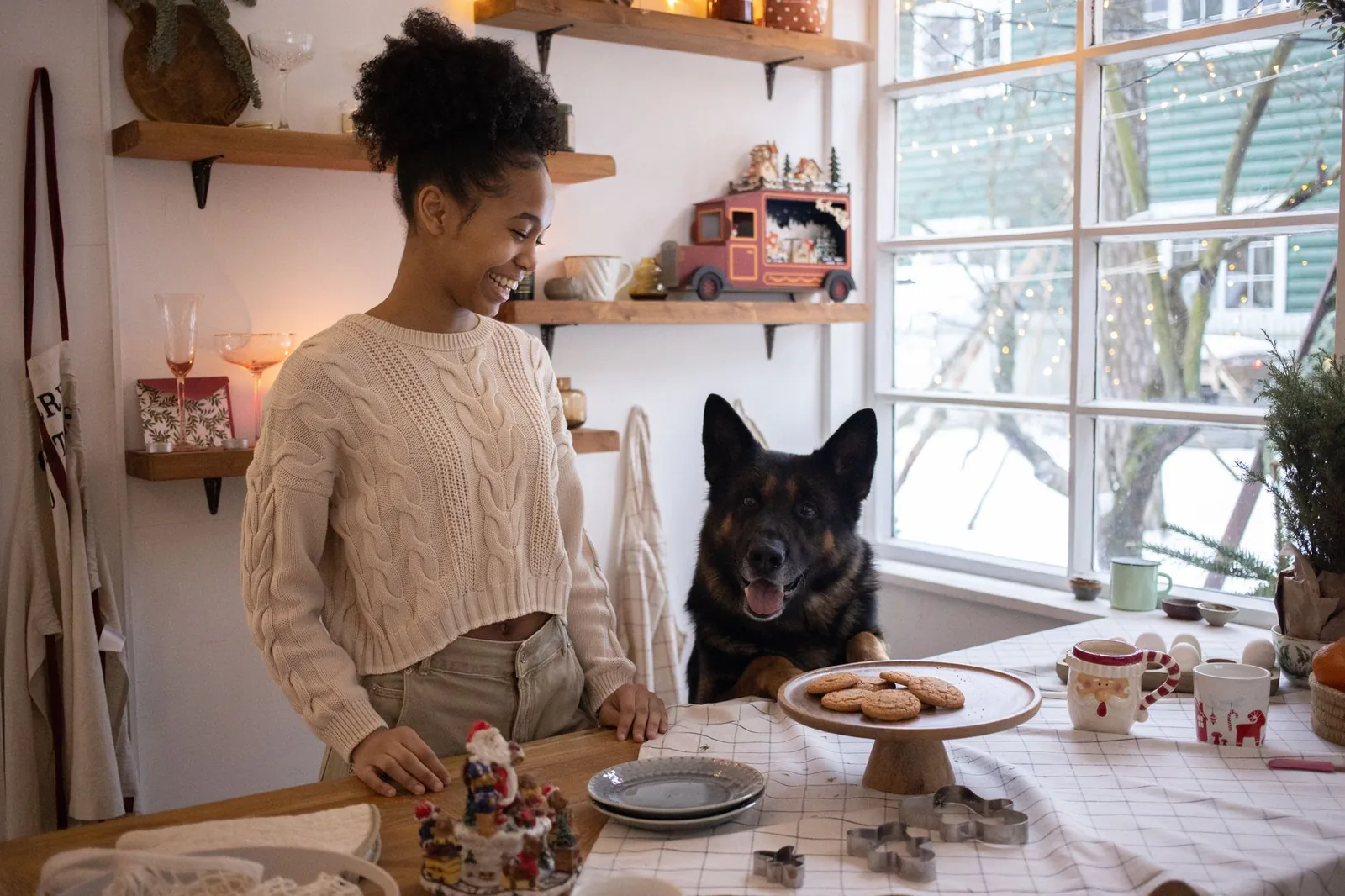
    A foster carer with a dog at home
    Photo by KATRIN BOLOVTSOVA on Pexels

    How to check any charity, including this one

    Do not take a claim about efficiency on trust from anybody. US nonprofits file annually and those filings are public.

    1. Confirm the registration. A 501(c)(3) can be verified independently through the IRS exempt organizations search.
    2. Read the Form 990. It shows revenue, expenses by category, and any compensation paid.
    3. Look at the expense split. For a foster-based animal rescue, program expense should dominate heavily.
    4. Check for paid staff. Not a red flag in itself, but it should match what the organization says about itself.
    5. Look for consistency over years, rather than judging a single filing.
    6. Ask directly. An organization that will not discuss its finances is telling you something.

    Candid, which operates GuideStar, aggregates nonprofit filings and transparency data for US charities, and is the simplest starting point for checking any of this.

    What different amounts actually buy

    AmountRoughly covers
    $25A month of parasite prevention, or a bag of prescription food
    $50A month of medication for a dog with managed skin disease
    $100An intake examination, or a course of treatment for an ear infection
    $250Vaccinations, microchip and parasite treatment for one dog
    $500A substantial contribution towards dental surgery
    $1,000+A full dental with extractions, or months of hospice care
    These are indicative rather than promises. What a specific donation funds depends on which dogs are in care that month.

    The dental row recurs because dental disease is the most common finding in this breed and the most common thing found untreated at intake — our guide to dental care explains why it tops the list.

    A person reviewing financial documents beside a laptop
    Photo by Yan Krukau on Pexels

    The dogs nobody else takes

    The reason donations matter more to a breed rescue than the adoption numbers suggest is the dogs that never get adopted at all.

    A dog in long-term care generates no adoption fee, ever, and continues to need medication, monitoring and eventually end-of-life care. Those dogs are funded entirely by donations.

    Our long-term care and hospice program covers what that involves, and sponsoring a dog in our care is the mechanism that funds a specific dog rather than the general pot.

    Ways to help that are not money

    • Foster. The single biggest constraint on how many dogs can be taken.
    • Transport. Occasional, flexible, and chronically short-handed.
    • Home visits. Two hours, and it unblocks an adoption.
    • Administration and applications. A backlog here stalls everything behind it.
    • Photography. A good photograph shortens how long a dog waits.
    • Sharing a listing. Most adopters first heard about a dog from someone they know.

    The roles and what each asks are set out in our guide to the volunteer roles beyond fostering.
    A dog crate secured in the back of a car
    Photo by Robert So on Pexels

    On giving generally

    Give where you can verify what happens to the money, and prefer regular small amounts to occasional large ones. Predictable income is what lets a rescue commit to a dog before knowing what it will cost.

    That applies to any organization. You should not need to take our word for it either.

    A senior dog resting on a blanket in a foster home
    Photo by https://kaboompics.com/ on Pexels

    Frequently asked questions

    Does the adoption fee cover the dog’s costs?

    Rarely, for the dogs breed rescues typically take in. Intake examination, vaccination, spay or neuter and dental treatment alone commonly exceed the fee, before any chronic condition is treated.

    How do I check whether an animal charity is legitimate?

    Verify the 501(c)(3) registration independently, read the Form 990 for revenue and expenses by category, look at consistency across years, and ask the organization directly. All of it is public.

    What proportion of donations should go to the animals?

    For a volunteer-run foster-based rescue, program expense should dominate heavily, because there are no premises and usually no salaries. Compare what the filings show against what the organization says about itself.

    Is it better to donate money or supplies?

    Usually money, because veterinary care is the overwhelming cost and cannot be donated in kind. Supplies help foster carers, but treatment is what the funding gap actually is.

    What is the most useful thing I can do if I cannot donate?

    Foster, if you possibly can — it is the constraint on how many dogs can be taken. Transport, home visits, application processing and photography all directly unblock adoptions.

    A small dog settled happily in its new home
    Photo by Ayyeee Ayyeee on Pexels

    If you want to help

    Sponsoring a dog in our care funds a named dog’s treatment, and our donations page covers general giving. Our tax information page has the registration details you would need to verify any of the above.

    And if you are reading this because you are worried about affording your own dog’s care, that is a different conversation — our guide to planning for veterinary costs covers the options, and contacting us early is better than late.

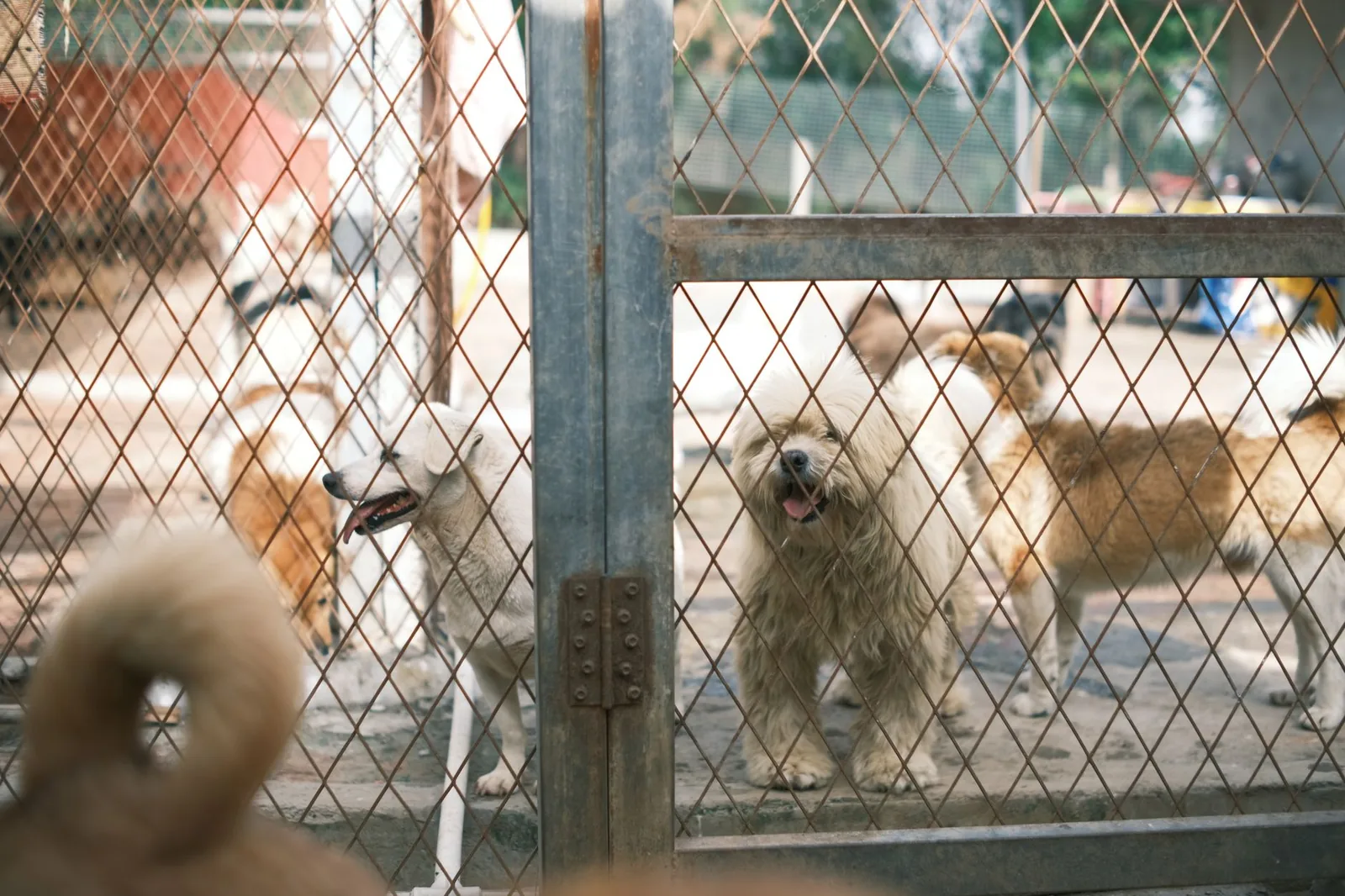
  • Kennel Cough and Contagious Illness in Dogs

    Kennel Cough and Contagious Illness in Dogs

    A newly adopted dog that starts coughing a few days after coming home is a common and usually unalarming event. Any group setting is a place respiratory infections circulate.

    Most cases are mild and resolve on their own. The useful skill is recognizing the ones that are not, and in an older Westie there is a specific alternative worth ruling out.

    The short version

    • A honking cough with a bright, well dog is usually uncomplicated.
    • Incubation is typically two to ten days, so it often appears after homecoming.
    • Use a harness rather than a collar while a dog is coughing.
    • A persistent dry cough in an older Westie is a different question entirely.
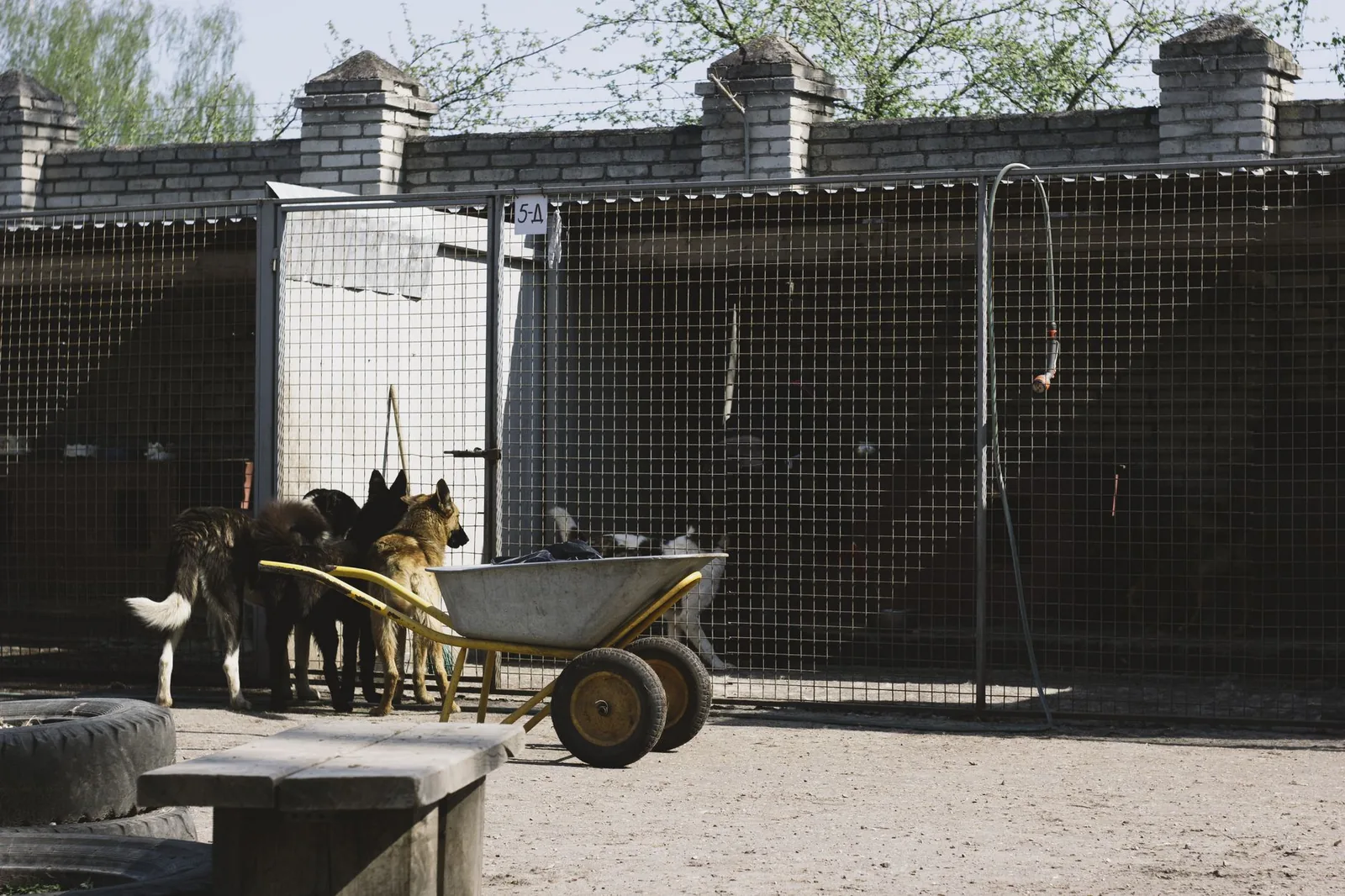
    Dogs in adjacent kennel runs
    Photo by Mia X on Pexels

    What kennel cough actually is

    It is not one disease. It is a syndrome caused by several bacteria and viruses, often more than one at once, affecting the upper airway.

    It spreads through the air and on shared surfaces, which is why it circulates anywhere dogs are close together — boarding, daycare, shelters, grooming salons, classes and dog parks alike.

    The classic sign is a sudden, harsh, honking cough, often ending in a retch that owners mistake for vomiting. The dog is usually otherwise bright, eating and interested in walks.

    Typical course, and when to worry

    FeatureUncomplicatedNeeds veterinary attention
    The dog itselfBright, eating, wants to walkLethargic, off food
    CoughHarsh, honking, in boutsWet, productive, or constant
    TemperatureNormalFever
    BreathingNormal between boutsFast, labored, or effortful at rest
    DischargeClear if anyGreen or yellow from nose or eyes
    DurationImproving within 7–10 daysBeyond three weeks, or worsening
    Age and healthHealthy adultPuppy, senior, or immune-compromised
    The right-hand column is where secondary pneumonia becomes a possibility, which is the complication that matters.

    Breathing difficulty at rest is an emergency rather than a wait-and-see — our first aid guide covers what warrants an immediate visit.

    A veterinarian listening to a dog’s chest
    Photo by Mikhail Nilov on Pexels

    The Westie-specific question

    In an older Westie, a persistent dry cough deserves more thought than in most breeds.

    Canine idiopathic pulmonary fibrosis is strongly associated with this breed, usually appears after eight, and presents as a dry cough with crackly breathing and reduced exercise tolerance.

    The distinction matters. Infectious cough comes on suddenly in an otherwise well dog and improves within days. Pulmonary fibrosis develops gradually, does not resolve, and is easily dismissed as the dog slowing down.

    Any cough in an older Westie that lasts beyond a couple of weeks should be investigated properly — our guide to what the breed is actually prone to covers Westie lung in more detail.

    Managing an uncomplicated case

    1. Switch to a harness. Pressure on the throat from a collar triggers coughing directly.
    2. Rest. Short lead walks only, and no excitement, which sets off bouts.
    3. Humidity helps. Sitting in a steamy bathroom for ten minutes eases the airway.
    4. Keep the dog eating and drinking, softening food if swallowing is uncomfortable.
    5. Isolate from other dogs for the duration and a week beyond.
    6. Call rather than visit in the first instance, so the practice can advise on avoiding its waiting room.

    Most uncomplicated cases resolve in one to three weeks without antibiotics, which are reserved for cases with signs of bacterial involvement rather than given routinely.

    A dog resting alone in a quiet room
    Photo by André Fernandes on Pexels

    Other contagious illnesses worth knowing

    IllnessSignsPrevention
    Kennel cough complexHonking cough, otherwise wellBordetella vaccine reduces severity; not fully protective
    Canine influenzaCough, fever, nasal discharge, lethargyVaccine available where risk exists
    ParvovirusSevere vomiting and bloody diarrhea; emergencyCore vaccination; highly effective
    DistemperRespiratory then neurological signsCore vaccination
    GiardiaLoose stool, often after shared waterHygiene; treatable
    LeptospirosisVague illness, then organ involvementVaccine advised in New England
    The Bordetella vaccine reduces severity rather than preventing infection, which is why vaccinated dogs still cough sometimes.

    What is core and what is optional is set out in our guide to vaccinations and preventive care. Tufts publishes veterinary health resources covering infectious disease in companion animals if you want more depth.

    A small dog wearing a harness
    Photo by Ayyeee Ayyeee on Pexels

    If you have other dogs

    Assume a new arrival could be incubating something for the first two weeks, which is sensible practice regardless of where it came from.

    • Separate food and water bowls, which you should be doing anyway during introductions.
    • Avoid shared toys until the settling period is over.
    • Wash hands between dogs if one is unwell.
    • Keep the coughing dog away from puppies and seniors, who are at higher risk of complications.
    • Stay away from parks, classes and daycare until a week after the cough stops.

    Most of this overlaps with sensible introduction practice anyway — our guide to introducing a new dog to a resident dog covers the rest.

    An older dog lying down indoors
    Photo by T on Unsplash

    Frequently asked questions

    How long does kennel cough last?

    Usually one to three weeks, with improvement within seven to ten days in uncomplicated cases. A cough that is worsening, or persisting beyond three weeks, needs investigating.

    Does kennel cough need antibiotics?

    Often not. Most cases are self-limiting and antibiotics are reserved for dogs showing signs of bacterial involvement — fever, lethargy, discharge or a productive cough — rather than given routinely.

    Can a vaccinated dog still get kennel cough?

    Yes. The Bordetella vaccine covers one common contributor among several and reduces severity rather than preventing infection outright.

    My newly adopted dog is coughing. Is that normal?

    It is common. Incubation is typically two to ten days, so a cough often appears after homecoming. If the dog is bright and eating, monitor it. If it is lethargic, off food or breathing hard, see a vet.

    When should I worry about my dog’s cough?

    Lethargy, loss of appetite, fever, colored discharge, labored breathing, or a cough lasting beyond three weeks. In an older Westie, a persistent dry cough warrants investigation for pulmonary fibrosis.

    A dog walking happily outdoors again
    Photo by gabesdotphotos photographer on Pexels

    What we do at intake

    Incoming dogs are assessed and, where they have come from a group setting, kept separate from resident dogs in the foster home for an initial period.

    Where a dog arrives coughing, it is treated and settled before being made available, and adopters are told. The veterinary care every rescue Westie receives sets out what is completed first, and the first 30 days with a rescue Westie covers what else to expect in that window.

  • Adopting a Dog in Later Life

    Adopting a Dog in Later Life

    Older adopters are often the best homes available for the dogs that wait longest, and frequently the ones who talk themselves out of applying.

    The concerns are real and all addressable, through matching properly and planning for changed circumstances.

    The short version

    • Match on energy and needs, not on the adopter’s age.
    • A settled senior dog is frequently the easiest dog in any rescue.
    • Name a guardian and a fallback before you adopt, not later.
    • A good rescue will help you plan this rather than decline you for asking.
    An older person walking a small dog on a quiet path
    Photo by Alexis B on Pexels

    Why the fit is often excellent

    The dogs that wait longest are seniors and dogs with medical needs, and what they want is a quiet house, a predictable routine and someone at home — a description of many retired households.

    The companionship runs both ways, and the practical benefits are well documented. AARP publishes material on pet ownership and wellbeing for older adults.

    Matching on the right things

    What to match onWhy it matters more than age
    Daily energy the dog needsA senior dog needing three short walks suits many households a young one would not
    Physical handling requiredLifting a 17-pound dog into a car is different from lifting a Labrador
    Medical routineA tablet twice daily is easy; weekly medicated baths are not
    Strength on the leadA dog that pulls hard is a genuine fall risk
    Noise levelRelevant in a retirement community or shared building
    Grooming demandsWhether you will do it or budget for it
    Stairs in the homeAffects which dog, and whether ramps are needed
    None of these are about the adopter’s age. All of them determine whether a specific dog and a specific household will work.

    The pulling row is the one most worth taking seriously. Our guide to loose leash walking covers the equipment that reduces the risk.

    A small dog resting on a person’s lap indoors
    Photo by Malcolm Winter on Pexels

    The contingency plan

    This is what turns a reasonable worry into a solved problem, and it is worth doing before you apply rather than being asked about it.

    1. Name a guardian who has agreed in advance, and a backup.
    2. Name the rescue as a fallback, having asked us first. We will note it.
    3. Write it into your will, or set up a pet trust if you want funds ringfenced.
    4. Carry an emergency card saying you have a dog at home and naming two contacts with a key.
    5. Keep a care file — vet details, medication, routine, microchip number, behavioral notes.
    6. Arrange short-term cover for a hospital stay, which is far more likely than the worst case.

    The hospital point is the practical one. Most contingency planning imagines death and ignores the far commoner scenario of two weeks away unexpectedly.

    The full version is in our guide to planning for your dog if something happens to you, which applies to every owner but matters most here.

    The lifespan question

    People worry about the dog outliving them. It is worth thinking about plainly rather than avoiding.

    DogTypical remaining yearsSuits
    Puppy or young adult12–16Adopters confident about the long term
    Adult, 5–86–10Most households; a middle path
    Senior, 9–123–6A realistic and often excellent match
    Geriatric, 12+1–4Adopters who want companionship without a long horizon
    Hospice placementMonthsPeople who want to give a good ending
    The bottom two rows are the hardest placements any rescue makes, and the adopters who take them are usually older people who have done this before.

    That last row is real work rather than a euphemism — our guide to hospice and end-of-life care sets out what it involves.

    Documents and a pen laid out on a table
    Photo by RDNE Stock project on Pexels

    Practical adjustments worth making

    • A well-fitted harness rather than a collar, for control with less force.
    • A shorter fixed leash, never retractable, which is a trip hazard.
    • Ramps rather than lifting, for the car and the sofa.
    • Raised bowls to reduce bending.
    • A dog walker one or two days a week.
    • Delivery of food and supplies, so heavy bags are not a limiting factor.

    The dog walker does double duty: somebody who already knows your dog is who can step in at short notice.

    What a rescue should ask, and what it should not

    A reasonable conversation covers your routine, your physical capacity, who else could help, and the plan if you become unwell. An unreasonable one applies an age cutoff, which serves nobody — the dog simply waits longer for a home that may not come.

    If you have been declined on age alone, it is worth asking another organization — how to find a Westie rescue in your state covers where else to look.

    Two people outdoors with a small dog
    Photo by Rufina Rusakova on Pexels

    If you are helping a parent or relative

    A common situation: an older relative wants a dog, and the family is worried. The useful contribution is not talking them out of it, but helping with matching, being the named guardian, and arranging practical support.

    Fostering is also an option with less commitment, where the rescue keeps responsibility and covers costs — what fostering actually involves sets out how.

    A senior dog resting on a blanket
    Photo by https://kaboompics.com/ on Pexels

    Frequently asked questions

    Am I too old to adopt a dog?

    Age alone should not disqualify anyone. What matters is matching the dog to your energy, physical capacity and routine, and having a plan for who takes the dog if you cannot. Older adopters are often ideal for senior dogs.

    Will a rescue turn me down because of my age?

    Some apply informal cutoffs, which serves nobody well. A good rescue assesses the match and the contingency plan instead. If you are declined on age alone, try another organization.

    What happens to my dog if I go into hospital?

    This is more likely than the worst case and worth arranging first. Name two people who hold a key and have agreed, carry an emergency card, and keep a written care file with routine and medication.

    Should an older adopter get a puppy or a senior dog?

    Usually a settled adult or senior. They are calmer, already house trained, need less exercise and are the dogs waiting longest, which makes it a good match in both directions.

    Can I adopt if I have limited mobility?

    Often yes, with the right dog. A small dog that walks calmly on a harness, does not pull and needs three short outings suits many households. Be specific about what you can and cannot do.

    A person and a small dog sitting together outdoors
    Photo by RDNE Stock project on Pexels

    If you are considering it

    Tell us what your days look like and what you can manage physically. That produces a better match, not a rejection.

    The Westies currently available for adoption note the energy and handling each one needs, and our guide to adopting a Westie in New England explains the process. If a permanent commitment feels like too much, say so — there are other ways to have a dog in your life.

  • Building Confidence in a Fearful Dog

    Building Confidence in a Fearful Dog

    The instinct with a frightened dog is to reassure it and gently insist. Both usually make things worse.

    Confidence is not built by exposure. It is built by giving the dog control over what happens to it.

    The short version

    • Let the dog choose. Every interaction the dog can end is one it learns from.
    • Distance is the tool. Work far enough away that the dog can still think.
    • Never lure a frightened dog past its threshold with food.
    • Progress is months, and it is never a straight line.
    A person sitting still while a dog observes from nearby
    Photo by Boys in Bristol Photography on Pexels

    Why exposure backfires

    The reasoning behind “he needs to get used to it” is sound in principle and usually applied wrongly in practice.

    Habituation only happens below the threshold at which a dog panics. Above it, each repetition confirms that the thing is dangerous and that the dog could not escape it. That is sensitization, and it is the opposite of the intended result.

    The practical version: a dog that will not take food, cannot look away, or is frozen is over threshold. Nothing useful is being learned, and something harmful probably is.

    Reading the threshold

    StateWhat you seeWhat to do
    ComfortableLoose body, sniffing, willing to take foodThis is where learning happens
    AwareNotices the trigger, still able to disengageGood working distance
    ConcernedStiffening, watching hard, food less interestingIncrease distance now
    Over thresholdWill not eat, cannot look away, frozen or strainingLeave. Nothing useful happens here
    Shut downStill, unresponsive, appears calmFrequently mistaken for coping
    The last row causes real harm. A dog that has stopped responding is not relaxed, and it is often described as being fine.

    The full signal ladder is in our guide to reading canine stress signals, which is worth learning properly before doing any of this.

    A dog approaching cautiously across a room
    Photo by Erik Mclean on Pexels

    The method: give the dog choice

    1. Stop approaching. Sit down, side-on, and do something else. Let the dog come to you or not.
    2. Reward every voluntary approach by tossing food away from you, so the dog can retreat and repeat.
    3. Never reach for the dog. The moment approaching you predicts being grabbed, it stops.
    4. Work at a distance where the dog can eat. If it will not, you are too close.
    5. Let sessions end early. Stopping while the dog is still comfortable is what builds willingness.
    6. Repeat identically. Predictability is what a frightened dog is short of.

    The tossing-away detail matters. Food thrown past the dog lets it retreat to eat, so approaching never traps it — and a dog that is never trapped approaches more.

    Fearful Dogs publishes owner resources specifically for living with and rehabilitating fearful dogs, which is one of the few sources devoted entirely to this.

    What builds confidence fastest

    ActivityWhy it worksEffort
    Scentwork and find-it gamesThe dog succeeds repeatedly, on its own termsLow
    Predictable daily routineRemoves uncertainty, which is most of the problemLow
    A confident resident dogFearful dogs copy; often faster than human effortDepends on the household
    Choice-based handlingGrooming and vet handling taught with consentModerate
    Short familiar walk routesMastery of one place beats noveltyLow
    Puzzle feedersProblem-solving success without social pressureLow
    Nosework is the highest-value activity for a fearful dog, because success is entirely under its own control and involves no people.

    The enrichment options are covered in our guide to exercise and enrichment, and the companion-dog point in our guide to introducing a new dog.

    A dog searching for scattered treats
    Photo by Alberlan Barros on Pexels

    What to avoid

    • Flooding. Taking the dog to the busy place until it copes. It does not cope; it shuts down.
    • Luring past threshold. Food that draws a frightened dog closer than it chose to go teaches it not to trust food.
    • Forced handling. Holding a dog still for grooming or greeting removes the choice that builds trust.
    • Strangers offering treats. It creates approach-avoidance conflict, which is where bites happen.
    • Punishing fear responses. Growling and retreating are communication.
    • Comparing to a timeline. Other dogs progressing faster tells you nothing about this one.

    A realistic timeline

    BackgroundMeaningful progressBroadly settled
    Under-socialized but home-raised2–6 weeks3–6 months
    One bad experience, otherwise confidentWeeksMonths
    Long-term kennel background2–3 months6–18 months
    Retired breeding dog6–8 weeks for first change9–18 months
    Fearful of one specific thingWeeks with targeted workMonths
    Setbacks are part of every row. A dog that regresses after a fright has not lost the progress, it has had a bad week.

    The kennel and breeding rows are covered in detail in what adopting a retired breeding Westie involves.

    A quiet path early in the morning
    Photo by Johannes Plenio on Pexels

    When to get help

    Fear that involves aggression, that is getting worse rather than better, or that prevents necessary veterinary care warrants professional input rather than more reading.

    Look for a qualified behaviorist working with positive reinforcement, and be wary of anyone promising fast results or describing the dog as dominant.

    Medication is also worth discussing for severely fearful dogs. A dog that cannot settle enough to learn will not learn, and reducing that baseline anxiety is what makes the behavior work possible.

    A relaxed dog lying near people indoors
    Photo by Taha Samet Arslan on Pexels

    Frequently asked questions

    How do you build confidence in a fearful dog?

    By giving it choice rather than exposure. Let the dog approach on its own terms, work at a distance where it can still eat, reward voluntary approaches by tossing food away so it can retreat, and keep everything predictable.

    Will my fearful dog get better with time alone?

    Rarely on its own. Time plus a predictable routine helps, but fear that is being rehearsed daily tends to entrench. Structured work at the right distance is what changes it.

    Is exposure good for a fearful dog?

    Only below the threshold at which the dog panics. Above it, repetition confirms the fear rather than reducing it. If the dog will not take food or cannot look away, you are too close.

    Should strangers give my fearful dog treats?

    Generally no. It draws the dog closer than it chose to go and creates conflict between wanting the food and wanting distance, which is where defensive bites happen.

    How long does it take for a fearful rescue dog to settle?

    Weeks to months for an under-socialized home-raised dog, and six to eighteen months for one from a kennel or breeding background. Setbacks after a fright are normal rather than lost progress.

    A happy dog outdoors in sunshine
    Photo by Helena Lopes on Pexels

    The dogs this applies to

    A significant share of what we take in is frightened rather than badly behaved, and those dogs wait longest because nervousness reads badly in a photograph.

    They are also, consistently, the placements adopters describe as the most rewarding. The Westies currently available for adoption say plainly which dogs need this kind of patience, and the first 30 days with a rescue Westie covers the window before any of this work begins.

  • Planning for Veterinary Costs Before They Arrive

    Planning for Veterinary Costs Before They Arrive

    Money is one of the most common reasons dogs reach rescue, and it is almost never the routine costs. It is the four-figure bill that arrives without warning.

    Most of that is foreseeable in outline, if not in timing. This is how to plan for it, and what exists if you are already past the planning stage.

    The short version

    • Budget for the lifetime, not the first year. Costs rise sharply after eight.
    • Insure early or save deliberately. Intending to save is what fails.
    • Ask for a written estimate before treatment, always. It is normal and expected.
    • If you cannot pay, say so before treatment rather than after.
    An itemized invoice on a table
    Photo by Niepoddawajsie.pl Luk on Pexels

    What it actually costs

    StageAnnual rangeWhat drives it
    Year one after adoption$800–$1,600Setup, first vet visit, insurance, initial training
    Healthy adult, 2–7$1,000–$2,000Food, grooming, routine care, prevention
    Adult with managed skin disease$1,800–$3,500Medication, repeat cytology, prescription diet
    Senior, 8–12$1,500–$3,000Twice-yearly visits, bloodwork, dental, early arthritis
    Geriatric, 12+$2,000–$4,000Ongoing medication, monitoring, mobility support
    A single emergency$1,500–$6,000Out-of-hours fees, imaging, surgery, hospitalization
    Indicative New England ranges. The bottom row is the one that ends placements, and it can arrive in any of the rows above it.

    The skin row is not hypothetical for this breed — our guide to why Westies itch sets out what management costs at each severity.

    The three ways to cover it

    InsuranceDedicated savingsNeither
    Covers a bad first yearYes, after waiting periodsOnly if you saved enoughNo
    Covers chronic conditionsYes, if insured before diagnosisYes, but you fund it indefinitelyNo
    Monthly costFixed, rising with ageWhatever you chooseNothing until it is
    Money if never neededGoneStill yoursStill yours
    Discipline requiredNoneConsiderableNot applicable
    Typical outcomeTreatment proceedsDepends on the balanceBorrowing, or a decision nobody wants
    The third column is where most households actually sit, and it is the one that produces surrenders.

    If you go the savings route, automate it. A standing transfer of forty or fifty dollars a month into a separate account is the version that works — our guide to pet insurance for a Westie covers the alternative and why timing matters so much here.

    Coins beside a savings jar
    Photo by Towfiqu barbhuiya on Pexels

    Talking about money with your vet

    Veterinary teams are entirely used to this conversation and would far rather have it early. What they cannot do is help with a constraint they do not know about.

    1. Ask for a written estimate before agreeing to anything non-urgent. This is normal and expected.
    2. Ask what is essential and what is optional. There is usually a difference between the ideal work-up and the necessary one.
    3. Ask whether it can be staged — the diagnostic now, the elective part later.
    4. Ask about payment plans and whether the practice works with charitable funds.
    5. Ask what happens if you do less, plainly. Sometimes the answer is “very little”; sometimes it is not.
    6. Say the number you can manage. A vet can work within a budget they know.

    Veterinary Partner publishes owner-facing explanations of conditions and treatment options, which is useful for understanding what is being proposed before you decide.

    If you cannot afford treatment now

    There are more options than most people realize, and the time to explore them is before a decision becomes urgent.

    • Practice payment plans, which many offer and few advertise.
    • Veterinary charitable funds, including breed-specific health funds.
    • Veterinary schools, which sometimes treat at reduced cost through teaching clinics.
    • Low-cost clinics for vaccination, spay and neuter and some dentistry.
    • Third-party medical credit, which is genuine help but read the deferred interest terms carefully.
    • Breed rescue, which can sometimes advise or contribute even where it cannot take the dog.

    That last option is worth using. Contact us through the surrender and rehoming page before assuming the only route is giving the dog up — our guide to rehoming options opens with problems that turn out to be solvable.

    A veterinary clinic entrance lit in the evening
    Photo by Erik Mclean on Pexels

    Reducing the foreseeable costs

    A meaningful share of lifetime veterinary spending is preventable, and the preventable parts are the cheap ones.

    PreventionCostWhat it avoids
    Brushing teethPenniesExtractions at $50–$150 per tooth
    Keeping the dog leanFree — less foodJoint disease, diabetes risk
    Year-round parasite prevention$150–$300Treatment, and allergy flares
    Regular nail trimmingFree at homeGait problems and joint loading
    Weekly ear checksFreeRepeated infection courses
    Twice-yearly visits after eight$100–$200 extraLate-stage disease that costs far more
    Every row here costs less than the thing it prevents, usually by an order of magnitude.

    The dental row alone is the highest-value habit available in this breed — our guide to dental care explains why it tops the list of what Westies are seen for.

    A veterinarian explaining options to an owner
    Photo by Tima Miroshnichenko on Pexels

    What adoption already covers

    An adopted dog arrives with a good deal already done, which is worth counting when comparing routes.

    Spay or neuter, vaccinations, microchip, parasite treatment, dental work where needed and any outstanding condition are all addressed before placement, and the adoption fee rarely covers half of it.

    Our adoption fees page sets out what the fee contributes towards, and the veterinary care every rescue Westie receives lists what is completed first.

    An older dog resting indoors
    Photo by Harry Tucker on Pexels

    Frequently asked questions

    How much does a dog cost per year?

    Roughly $1,000 to $2,000 for a healthy adult, rising to $2,000 to $4,000 for a geriatric dog or one with a managed chronic condition. A single emergency can add $1,500 to $6,000 on top.

    Is pet insurance or saving better?

    Insurance covers a bad year immediately; saving keeps the money if you never need it but requires real discipline. The worst outcome is intending to save and not doing it, which is where most households sit.

    Can I ask my vet for a cheaper option?

    Yes, and you should. Ask for a written estimate, ask what is essential versus optional, and say what you can manage. Veterinary teams work within budgets routinely when they know there is one.

    What help exists if I cannot afford treatment?

    Practice payment plans, veterinary charitable funds, breed health funds, teaching hospitals, low-cost clinics and third-party medical credit. Ask before the decision becomes urgent, because options narrow.

    Should I give up my dog if I cannot afford its care?

    Talk to a breed rescue first. Sometimes the outcome is advice, a referral or help with a bill rather than the dog leaving at all. Contacting someone early gives far more room than contacting them late.
    A healthy dog relaxing at home
    Photo by Impact Dog Crates on Pexels

    Why we publish this

    Cost is behind a large share of the surrenders we see, and in a good number of those cases something could have been done earlier.

    If you are approaching that point, contact us before you have decided. Sponsorship is what funds treatment for the dogs where nobody could pay, and it exists precisely because this problem is common.

  • Adopting a Bonded Pair: What It Really Involves

    Adopting a Bonded Pair: What It Really Involves

    Bonded pairs arrive together, usually after an owner has died or a household has broken up, and they wait far longer for homes than single dogs.

    The usual framing is an appeal: please take both. This is the more useful version, which includes the cases where separating them is the right answer.

    The short version

    • A genuine bond is distress on separation, not simply living together happily.
    • Two dogs is roughly double the cost, not one and a half times.
    • Pairs often settle faster than single dogs, because each has something familiar.
    • Sometimes separating is kinder, and a good rescue will say so.
    Two dogs asleep curled against each other
    Photo by Helena Lopes on Pexels

    What a bond actually is

    Two dogs that lived in the same house are not automatically bonded. The label gets applied loosely, and it matters because it decides whether they must be placed together.

    Genuinely bondedSimply housemates
    Distress when separated, even brieflyBarely notice the other leaving
    Sleep in contact, not just nearbySleep in separate places by choice
    One will not eat when the other is absentEat normally apart
    Seek each other out on wakingIndependent routines
    One noticeably calmer with the other presentNo observable effect
    Vocalize or pace when apartSettle normally alone
    Foster carers test this deliberately, by separating the dogs briefly and watching what happens. It is the only way to know.

    How that observation is done is covered in our guide to how rescues assess temperament.

    The honest costs

    Two dogs is close to double, not one and a half times. The savings people expect mostly do not exist.

    CostOne dogBonded pair
    Food$300–$600$600–$1,200
    Routine veterinary care$300–$700$600–$1,400
    Grooming$400–$800$800–$1,600
    Insurance$400–$900$800–$1,800
    Parasite prevention$150–$300$300–$600
    Boarding or sitterStandard rateUsually a reduced second-dog rate
    Adoption feeStandardOften reduced for a pair
    Only the last two rows offer meaningful savings. Everything recurring roughly doubles, and both dogs age at the same time.

    That last point deserves weight. Two dogs of similar age means two sets of senior veterinary costs arriving together, and often two losses close together — our guide to caring for a Westie after ten covers what that period involves.

    Two dog bowls placed apart on a floor
    Photo by Chris F on Pexels

    What is genuinely easier

    It is not all cost. Pairs bring real advantages that single placements do not.

    • Faster settling. Each dog has one familiar thing in an unfamiliar house, which shortens decompression noticeably.
    • Less separation distress. Not a cure, but company through a working day helps many dogs.
    • Built-in enrichment. Two dogs occupy each other in ways a person cannot.
    • The confident one teaches. A nervous dog frequently learns house routines by copying its companion.
    • Walks are barely different. Two small dogs on leads is not twice the work.

    The confidence point matters most with dogs from kennel backgrounds, where a steady companion often does more than months of human effort — what adopting a retired breeding Westie involves explains why.

    When separating is the right answer

    This is the part usually left out, and pretending otherwise does not serve the dogs.

    SituationConsideration
    One dog bullies or guards resources from the otherThe bond may be dependence rather than affection
    One is markedly more anxious in the other’s presenceSeparation may reduce stress for both
    Very different needs — one geriatric, one activeOne may be compromised to accommodate the other
    Months with no application for the pairTwo good separate homes beat continued waiting
    Assessment shows little distress apartThey were housemates rather than bonded
    A rescue that will never separate under any circumstances is applying a rule rather than judging the individual dogs.

    Where a pair is separated, it should be deliberate, assessed and explained — not a quiet decision made because a single dog is easier to place.

    A person walking two small dogs on leads
    Photo by Алексей Вечерин on Pexels

    Managing a pair well

    1. Feed separately from day one, in different rooms or behind a gate.

    2. Give each its own bed, even if they choose to share one.
    3. Walk them separately sometimes, from the start, so neither becomes unable to cope alone.
    4. Train them individually. Two dogs learning together learn half as much each.
    5. Take them to the vet separately once settled, so a future solo visit is not a crisis.
    6. Watch for one dog doing all the deciding, which can mask a problem.

    The third point is the one people skip, and it matters. A pair that has never been apart copes very badly when one is hospitalized or dies.

    The ASPCA’s professional resources cover sheltering practice including placement of bonded animals if you want the sector view.

    A dog waiting alone near a door
    Photo by Mehmet Turgut Kirkgoz on Pexels

    When one of them dies

    This is the hardest part of adopting a pair, and it comes sooner than people expect when both dogs are of similar age.

    The survivor usually shows several behavioral changes for weeks or months — eating less, seeking attention, searching. It is genuine grief and it passes.

    Our guide to helping a dog through the loss of a companion covers what helps, and why getting another dog immediately is usually the wrong response.

    Two dogs waiting together at a veterinary clinic
    Photo by Tima Miroshnichenko on Pexels

    Frequently asked questions

    What does bonded pair mean?

    Two dogs that show genuine distress when separated — not eating, pacing, vocalizing — rather than simply living together happily. Foster carers test this by separating them briefly and observing.

    Is it twice as expensive to adopt two dogs?

    Close to it. Food, veterinary care, grooming, insurance and parasite prevention all roughly double. Only the adoption fee and boarding rates typically offer a reduction.

    Are bonded pairs harder to look after?

    Not usually day to day. They often settle faster, occupy each other and cope better with being left. The hard parts are cost and the fact that both dogs age at the same time.

    Should bonded pairs ever be separated?

    Sometimes. If one bullies the other, if their needs differ sharply, or if assessment shows little distress apart, separating can be kinder. It should be a deliberate judgment rather than a convenience.

    Will two dogs prevent separation anxiety?

    Not reliably. If the attachment is to a person rather than the other dog, a companion does not substitute, and you may end up with two anxious dogs instead of one.

    Two dogs relaxing together on a rug at home
    Photo by King Ho on Pexels

    If you are considering a pair

    Be honest with yourself about cost and about what happens in eight years when both dogs are elderly at once. Those are the two things that catch people out.

    If you can absorb both, a pair is frequently an easier adoption than a single dog. The Westies currently available for adoption say plainly whether dogs must be placed together, and what makes an adoption application strong covers how to describe a household that could take two.

  • Living With a Dog on Long-Term Medication

    Living With a Dog on Long-Term Medication

    A dog on lifelong medication is not a difficult dog. It is a dog with a routine, and the routine determines whether treatment works.

    This is the practical side prescriptions do not come with: getting the tablet in, keeping the schedule, monitoring, and paying for it.

    The short version

    • Missed doses are the commonest reason treatment appears to stop working.
    • Attach the dose to something you already do daily, not to a reminder.
    • Never stop or adjust a long-term medication without talking to your vet.
    • Ask about generics and larger quantities. Costs vary more than people expect.
    A tablet being hidden in a soft treat for a dog
    Photo by Towfiqu barbhuiya on Pexels

    The compliance problem

    Doses get forgotten more often as treatment becomes routine, and nobody is prompted by feeling unwell. A dog whose skin has settled is easy to under-dose, and the first sign is a flare that looks like the drug failing.

    ApproachReliabilityWhy
    Attach it to a mealBestYou already do it twice daily without prompting
    Weekly pill organizerVery goodYou can see at a glance whether it was given
    Shared household checklistVery goodPrevents double-dosing and missed doses
    Phone alarmModerateEasily dismissed and forgotten
    RememberingPoorIt works until the week something changes
    In a multi-person household, a visible record matters more than any reminder. Double-dosing is as common as missing one.

    Getting the tablet in

    1. Try it in food first. Many dogs take a tablet in something soft without noticing.
    2. Use the three-treat method: a plain treat, then the loaded one, then another plain one, given quickly.
    3. Check it went down. Terriers are expert at holding a tablet in a cheek and spitting it out later.
    4. Ask whether it can be crushed before crushing anything. Coated and slow-release tablets must not be.
    5. Ask about alternative forms. Liquids, chews and transdermal preparations exist for some drugs.
    6. Ask about compounding if nothing works. A pharmacy can sometimes reformulate into a flavored liquid.

    If you are fighting the dog daily, say so. There is usually another way, and a twice-daily battle damages everything else.

    A weekly pill organizer on a kitchen counter
    Photo by Rufina Rusakova on Pexels

    Monitoring

    Most long-term medications require periodic bloodwork, and it is not defensive box-ticking. It is how organ effects get caught while they are still reversible.

    What is monitoredWhyTypical frequency
    Liver and kidney valuesMany long-term drugs are processed by bothBaseline, then every 6–12 months
    Blood cell countsSome immune-modulating drugs affect themAs directed
    Body weightDose is weight-dependent; weight changes silentlyEvery visit
    Symptom diaryThe only record of whether it is actually workingOngoing, by you
    Blood pressureRelevant with some conditions and drugsAs directed
    Skipping monitoring to save cost is a false economy. It is cheaper than treating the problem the monitoring exists to catch.

    The FDA maintains information on approved animal drugs and adverse event reporting, which is where to check a formal product record if you want it.

    Keep a diary

    This is the single most useful thing an owner contributes, and almost nobody does it.

    A line a day: doses given, how the dog seemed, any flare, any side effect. Over six months it shows patterns that memory cannot — seasonal flares, a dose that stopped holding, a side effect that started with a change of brand.

    A veterinary blood sample being prepared for testing
    Photo by Gustavo Fring on Pexels

    What not to do

    • Do not stop because the dog seems better. Improvement is usually the medication working, not the condition resolving.
    • Do not adjust the dose yourself, in either direction.
    • Do not use leftover medication from a previous episode without asking.
    • Do not give human painkillers. Ibuprofen and acetaminophen are toxic to dogs.
    • Do not add supplements silently. Some interact with prescribed drugs.
    • Do not skip the recheck because the dog looks fine.

    The human painkiller point is the one that causes genuine emergencies — our guide to household items dangerous to dogs covers what to do if it happens.

    Planning for the cost

    A chronic prescription is a standing monthly cost for the life of the dog, so treat it as a budget line rather than a series of surprises.

    • Ask whether a generic exists. Price differences can be substantial.
    • Ask about three-month quantities, which are often cheaper per dose.
    • Ask for a written prescription if an external pharmacy is cheaper, which is your right in most states.
    • Ask about practice health plans, which sometimes bundle monitoring.
    • Factor in the bloodwork, not just the drug.

    Where cost is genuinely a barrier, say so early rather than quietly reducing doses — our guide to planning for veterinary costs covers the options, and our guide to pet insurance explains why timing matters so much in this breed.

    An open notebook and pen on a table
    Photo by David Bares on Pexels

    Adopting a dog already on medication

    More straightforward than people expect, because everything is known in advance rather than discovered later.

    Ask what the condition is, what the monthly cost is, what monitoring it needs, what happens if it progresses, and what the dog is like on a good day. A rescue that has been managing it for months can answer all five.

    These dogs wait longer for homes than almost any other group, and the daily reality is usually a tablet in a piece of cheese — our adoptable dogs page states what each dog needs plainly.

    A calculator and receipts on a desk
    Photo by https://kaboompics.com/ on Pexels

    Frequently asked questions

    What if I miss a dose of my dog’s medication?

    Call your vet rather than guessing, because the right response differs by drug. Never double up to catch up. If missed doses are becoming routine, change the system rather than trying harder to remember.

    How do I give a tablet to a dog that spits it out?

    Hide it in something soft and use the three-treat method — plain, loaded, plain, given quickly. Check the dog actually swallowed it. If it keeps failing, ask about liquids, chews or compounding.

    Can I stop medication if my dog seems better?

    No. Improvement usually means the medication is working rather than the condition having resolved. Stopping is a conversation with your vet, and some drugs need tapering rather than stopping abruptly.

    Why does my dog need regular blood tests?

    Many long-term medications are processed by the liver and kidneys, and monitoring catches effects while they are still reversible. It also confirms the dose is still right as the dog’s weight changes.

    How can I reduce the cost of long-term medication?

    Ask about generics, three-month quantities, a written prescription for an external pharmacy, and practice health plans. Raise cost with your vet directly rather than quietly reducing doses.

    A content dog resting comfortably at home
    Photo by Jairo Chaves on Pexels

    Why we take these dogs

    Dogs with chronic conditions are among the hardest to place and among the least difficult to live with once the routine is established.

    The veterinary care every rescue Westie receives sets out what is stabilized before placement, and sponsoring a dog in our care is what funds ongoing treatment for the dogs who stay with us.

  • How Commercial Dog Breeding Actually Works

    How Commercial Dog Breeding Actually Works

    Buyers are given a short set of reassurances: USDA licensed, health guarantee, family-raised, vet checked. Each sounds meaningful and none of them is.

    Understanding how the industry is actually structured is what makes that clear, and it explains why so many of these dogs reach breed rescue as adults.

    The short version

    • A USDA license permits large-scale commercial breeding. It is not a quality standard.
    • A broker layer sits between breeder and seller, which is why origins get obscured.
    • Federal minimum standards are lower than most buyers assume.
    • The dogs that reach rescue from this system are usually the breeding stock, not puppies.
    A row of kennel runs
    Photo by Plato Terentev on Pexels

    What the licenses actually are

    The Animal Welfare Act requires wholesale breeders and dealers to be licensed and inspected. There are three relevant classes.

    LicenseWhat it permitsWhat buyers assume it means
    Class ABreeding and selling animals the licensee bredThat the facility met a quality standard
    Class BBuying and reselling animals bred by othersUsually not known to buyers at all
    Class TCommercial transport of animalsNot known to buyers
    A license is permission to operate commercially, subject to minimum standards. It is not an endorsement, a rating, or evidence of good conditions.

    The distinction that matters most is Class B. A broker buys puppies from multiple breeders and resells them, which means the seller a buyer deals with frequently has never seen where the puppy was born.

    The Michigan State Animal Legal and Historical Center maintains detailed legal analysis of commercial breeding regulation in the US, which sets out the framework and its gaps in full.

    The chain

    A puppy typically passes through more hands than the buyer realizes.

    1. Breeder produces litters at scale, often with many breeding females on site.

    2. Broker buys from multiple breeders, consolidates, and resells.
    3. Transporter moves puppies across state lines, sometimes long distances.
    4. Seller — a pet store, a website, or an individual presenting as a small home breeder.
    5. Buyer receives a puppy whose actual origin is several steps back and frequently not disclosed.

    Each transfer adds distance between the buyer and the conditions the dog came from, and each is a point at which the story can be reshaped.

    A travel crate loaded in a vehicle
    Photo by Impact Dog Crates on Pexels

    Why the standards are lower than people expect

    Buyers assumeThe federal minimum permits
    Room to move and exerciseEnclosures only modestly larger than the dog itself
    Regular exercise outdoorsNo requirement for exercise for most dogs
    Solid, comfortable flooringWire flooring, subject to conditions
    Retirement after a few littersNo limit on breeding frequency across a lifetime
    Frequent inspectionInspection intervals stretched across a small national workforce
    Socialization with peopleNo meaningful requirement
    These are minimum legal standards for licensed facilities, not descriptions of every licensed operation. Many exceed them. The point is that meeting them proves very little.

    The enforcement side compounds it: a small inspector workforce covers all facilities regulated under the Act, not only dog breeders, so inspection is infrequent by necessity.

    Why this reaches breed rescue

    Rescues rarely see the puppies. They see the breeding stock, several years later, when it stops producing.

    Those dogs arrive having spent years in a run: no house training, no experience of stairs, carpet or a washing machine, and frequently no idea what a person kneeling down means.

    Dental disease is near-universal, and skin and ear conditions are common. The behavioral picture takes far longer to resolve than the medical one — what adopting a retired breeding Westie really involves sets out the timeline honestly.

    A person browsing listings on a phone
    Photo by Vitaly Gariev on Pexels

    How the reassurances work

    PhraseWhat it can mean
    USDA licensedPermitted to breed commercially at scale
    Health guaranteeOften a replacement puppy rather than veterinary costs; read it
    Family raisedUndefined and unregulated
    Vet checkedA single examination, which says little about the parents
    Home rearedUndefined
    We do not ship — we deliverA distinction without a difference
    You can meet us halfwayYou will not see where the dog was born
    The reliable test is not what a seller says. It is whether you can see the mother with the litter, in the place they live.

    The warning signs in checklist form are in our guide to what Westie rescues actually have, and the comparison with a genuinely responsible breeder is in adopting a Westie versus buying from a breeder.

    A nervous small dog pressed into a corner
    Photo by Ольга А on Pexels

    What actually changes it

    • See the mother with the litter, where they live. Not a car park, not a photograph.
    • Ask which state the puppy was born in, and how it travelled.
    • Ask what happens to the parents when they stop breeding.
    • Refuse anything shipped sight-unseen, whatever it is called.
    • Consider an adult instead. The demand for puppies is what sustains the model.

    That last point is the only one that changes the industry rather than avoiding it. The dogs already produced still need homes — the Westies currently available for adoption include several who came out of this system.

    A mother dog resting with her litter in a home
    Photo by Daka on Pexels

    Frequently asked questions

    Does USDA licensed mean a breeder is good?

    No. A USDA license permits commercial breeding at scale subject to minimum federal standards. It is permission to operate rather than a quality rating, and the minimum standards are lower than most buyers assume.

    What is a puppy broker?

    A licensed dealer who buys puppies from multiple breeders and resells them to stores or buyers. It means the seller you deal with has often never seen the facility the puppy was born in.

    How can I tell where a puppy really came from?

    Insist on seeing the mother with the litter in the place they live. If that is refused, redirected or replaced with a meeting point, treat the stated origin as unverified.

    What happens to breeding dogs when they retire?

    Some are surrendered to rescues, some are sold on, and some are euthanized. The ones that reach breed rescue are typically four to eight years old with untreated dental disease and no experience of living in a house.

    Is buying from a pet store the same as a puppy mill?

    Not automatically, but stores that sell puppies are generally supplied through the commercial breeder and broker chain rather than by local hobby breeders. Ask where the puppy was born and how it arrived.

    A small white dog resting on a sofa in a home
    Photo by susana MaRo on Pexels

    What we see

    We do not campaign on this, and we place no judgment on people who bought a dog in good faith from a seller who told them what they wanted to hear.

    We do see the other end of it regularly, and those dogs recover. Our success stories include a number of them, and fostering is what makes taking them possible.

  • Arthritis in Older Dogs: Spotting It and Managing It

    Arthritis in Older Dogs: Spotting It and Managing It

    Arthritis is common in older small dogs and routinely goes untreated, because dogs rarely do the one thing owners watch for. They do not limp dramatically — they get quieter, and everyone says the dog is slowing down.

    The short version

    • Hesitation before jumping is an earlier sign than limping.
    • Weight control is the single most effective intervention available.
    • Management is multimodal: medication plus environment plus exercise plus weight.
    • Grip and warmth at home often do more than any single treatment.
    A small dog standing beside a sofa
    Photo by https://kaboompics.com/ on Pexels

    What you will actually see

    SignWhat it looks likeHow early
    Hesitation before jumpingA pause before the sofa it used to take easilyEarliest
    Standing up in stagesBack end lifting separately, or a stretch firstEarly
    Reluctance on stairsParticularly going down, which loads the frontEarly
    Changed sleeping positionMoving beds at night, unable to settleEarly
    Slower on walksLagging on the way home rather than the way outMiddle
    Irritability when handledSnapping when touched along the back or hipsMiddle
    Muscle loss over the hindquartersVisible narrowing, often one side firstMiddle
    Licking one jointPersistent attention to a specific spotAny stage
    LimpingUsually the last thing to appear, not the firstLate
    Almost everything useful is in the top half of this table. By the time a dog limps consistently, the arthritis is well established.

    The irritability row is worth flagging: sudden snappiness in an older dog is far more often pain than temperament — our guide to reading canine stress signals covers the warnings that precede it.

    Getting it diagnosed

    Ask specifically. “He is just getting old” is a conclusion, not a diagnosis, and a great deal of what gets filed under it is treatable.

    A vet will examine range of motion, feel for crepitus and muscle loss, and often take radiographs. Bloodwork checks whether the dog can safely take anti-inflammatories.

    Bring video. A dog in a consulting room is adrenalized and moves better than it does at home. Film it rising from a nap and going downstairs.

    The single most informative test is often a pain trial: a course of medication, and an honest assessment of whether the dog is different afterwards.

    A long runner rug laid across a hard floor
    Photo by Elina Fairytale on Pexels

    Multimodal management

    No single thing manages arthritis well. The evidence favors combining several approaches, each contributing a share.

    ComponentWhat it doesRelative impact
    Weight reductionRemoves load from every joint on every stepThe largest single factor
    Anti-inflammatory medicationControls pain and inflammation directlyLarge
    Monoclonal antibody injectionTargets a pain-signalling pathway, monthlyLarge for suitable dogs
    Environmental changeGrip, ramps, bedding, warmthLarge and immediate
    Controlled exerciseMaintains muscle, which supports jointsModerate to large
    Omega-3 supplementationAnti-inflammatory dietary effectModest but real
    Physiotherapy or hydrotherapyBuilds muscle without loading jointsModerate, where available
    Joint supplementsVariable evidence between productsModest
    The top and fourth rows cost the least and are the most often skipped. Weight is the intervention with the best evidence behind it.

    Canine Arthritis Management publishes owner-facing resources on recognizing and managing canine osteoarthritis, including practical assessment tools.

    The weight point, plainly

    Overweight is already among the five most common findings in this breed. In an arthritic dog it is the difference between managing and not.

    Every extra pound is carried by joints that are already sore, on every step, all day. Controlled weight loss frequently produces more improvement than adding a second medication.

    It is also harder than it sounds, because an arthritic dog exercises less. That means the reduction has to come from the bowl — our guide to feeding and portions covers how to assess body condition by hand.

    A veterinarian examining a dog’s hind leg
    Photo by Tima Miroshnichenko on Pexels

    Changes at home

    1. Non-slip runners on every hard floor route the dog uses. Slipping is painful and frightening, and fear of slipping reduces movement further.
    2. A ramp or steps to the sofa and the car, removing repeated impact.
    3. An orthopedic bed away from drafts, thick enough not to bottom out.
    4. Raised food and water bowls to reduce neck and shoulder strain.
    5. Keep nails short. Overlong nails alter gait and load joints wrongly.
    6. Warmth. Cold stiffens arthritic joints noticeably, and a coat outdoors is not decorative.

    The nail point is genuinely underrated — our guide to nail and paw care explains the mechanics, and cold weather care covers why winter is harder.

    Exercise: less, but not none

    The instinct is to rest an arthritic dog. That accelerates muscle loss, and muscle is what supports the joint.

    The pattern that works is little and often: three or four short walks rather than one long one, on level ground, at the dog’s pace. Consistency matters more than distance.

    What to avoid is the weekend spike — a sedentary week followed by a long Sunday walk is the reliable route to a dog that cannot get up on Monday.

    A low ramp set up for a dog to avoid jumping
    Photo by Shahil Jung Karki on Pexels

    Tracking whether it is working

    Decline is gradual and memory adjusts to it, so score rather than remember.

    • Film the same thing monthly — getting up from the same bed, or the same set of stairs.
    • Score mobility weekly out of five and keep the sheet.
    • Note how long the dog takes to settle after a walk.
    • Track weight monthly, not by eye.
    • Review medication with your vet at least twice yearly, with bloodwork.

    The same scoring approach carries into later stages — our guide to hospice and end-of-life care covers judging quality of life honestly when it comes to that.

    An older dog walking slowly on grass
    Photo by Max on Pexels

    Frequently asked questions

    How do I know if my dog has arthritis?

    Look for hesitation before jumping, standing up in stages, reluctance on stairs and changed sleeping positions. Limping is usually a late sign rather than an early one, so waiting for it means waiting too long.

    Can arthritis in dogs be cured?

    No, but it is very manageable. Combining weight control, medication, environmental changes and controlled exercise usually produces substantial improvement in comfort and mobility.

    What helps a dog with arthritis at home?

    Non-slip flooring, a ramp instead of jumping, a thick orthopedic bed away from drafts, short nails and warmth. These are cheap, immediate and frequently do more than adding another medication.

    Should an arthritic dog still be walked?

    Yes, but little and often. Rest accelerates muscle loss, and muscle supports the joint. Three or four short walks on level ground beat one long one, and avoid the sedentary week followed by a long weekend walk.

    Do joint supplements work?

    Evidence varies considerably between products. Omega-3 supplementation has reasonable support; other supplements are more modest. None substitutes for weight control or prescribed pain relief.

    A dog asleep on a thick padded bed
    Photo by Su La Pyae on Pexels

    Arthritic dogs in rescue

    A great many of the dogs we take in are arthritic, often undiagnosed, and the change once it is treated is one of the more striking things in rescue work.

    Dogs described as withdrawn or grumpy frequently turn out to have been in pain for years. Our guide to caring for a Westie after ten covers the wider picture, and sponsoring a dog in our care funds exactly this kind of ongoing treatment.

  • Nail and Paw Care: The Problem Hiding in Plain Sight

    Nail and Paw Care: The Problem Hiding in Plain Sight

    Overgrown nails are the third most common problem Westies are seen for in general practice, behind only dental and ear disease. Ahead of the skin conditions everyone worries about.

    It sounds cosmetic. It is not, and the reason is mechanical.

    The short version

    • A nail that touches the ground when the dog stands is too long.
    • Overlong nails change the toe angle and alter gait, which loads joints wrongly.
    • Every 3–4 weeks for most dogs; more often for dogs walked on grass.
    • Trim little and often. The quick recedes as the nail shortens.
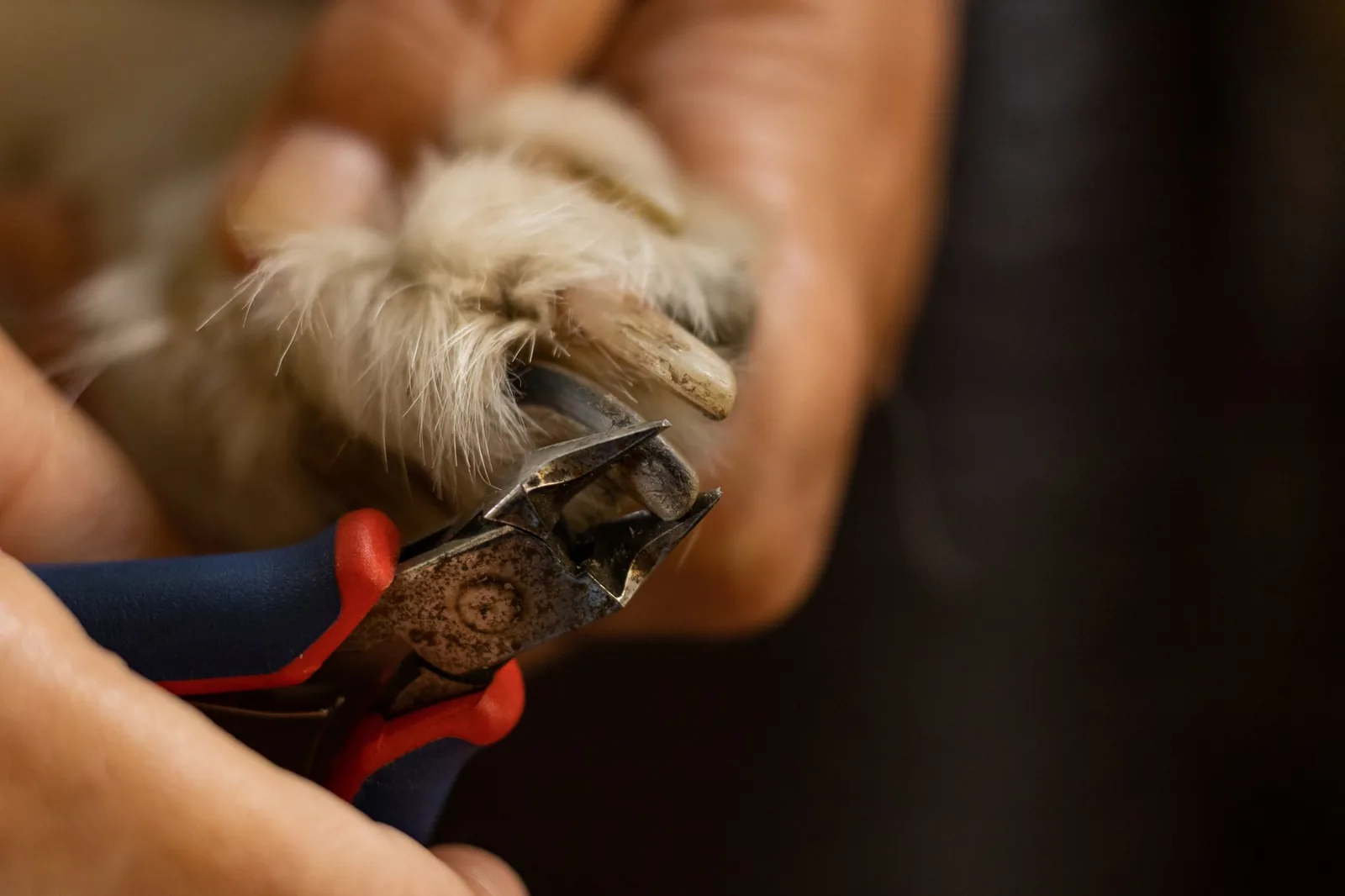
    A small dog’s nails being trimmed with clippers
    Photo by Mirko Fabian on Pexels

    Why length matters mechanically

    A dog’s weight should sit on the pads. When nails are long enough to contact the floor, they push the toes upward and backward on every step.

    That shifts weight off the pads and onto the joints behind them. Over months it changes posture, reduces grip on hard floors, and adds load to hips and knees that may already be arthritic.

    It also hurts. A dog that has stopped wanting to walk on laminate is often not being difficult — it has no traction and sore toes.

    In an older dog this compounds fast, and it is one of the cheapest interventions available — our guide to arthritis and mobility in older dogs covers what else helps.

    How to tell if they are too long

    TestWhat you are looking for
    Stand the dog on a hard floorNo nail should touch. If they do, they are long
    ListenClicking on tile or laminate means too long
    Look from the sideNails should not extend past the pad when standing
    Check the dewclawsThey never wear down and are the most commonly missed
    Watch the gaitSplayed toes or a shuffling step suggests discomfort
    Check for curlingA nail curving toward the pad will eventually grow into it
    Dewclaws are the ones that cause real damage. They bear no weight, wear down never, and can curl into the leg unnoticed under a coat.
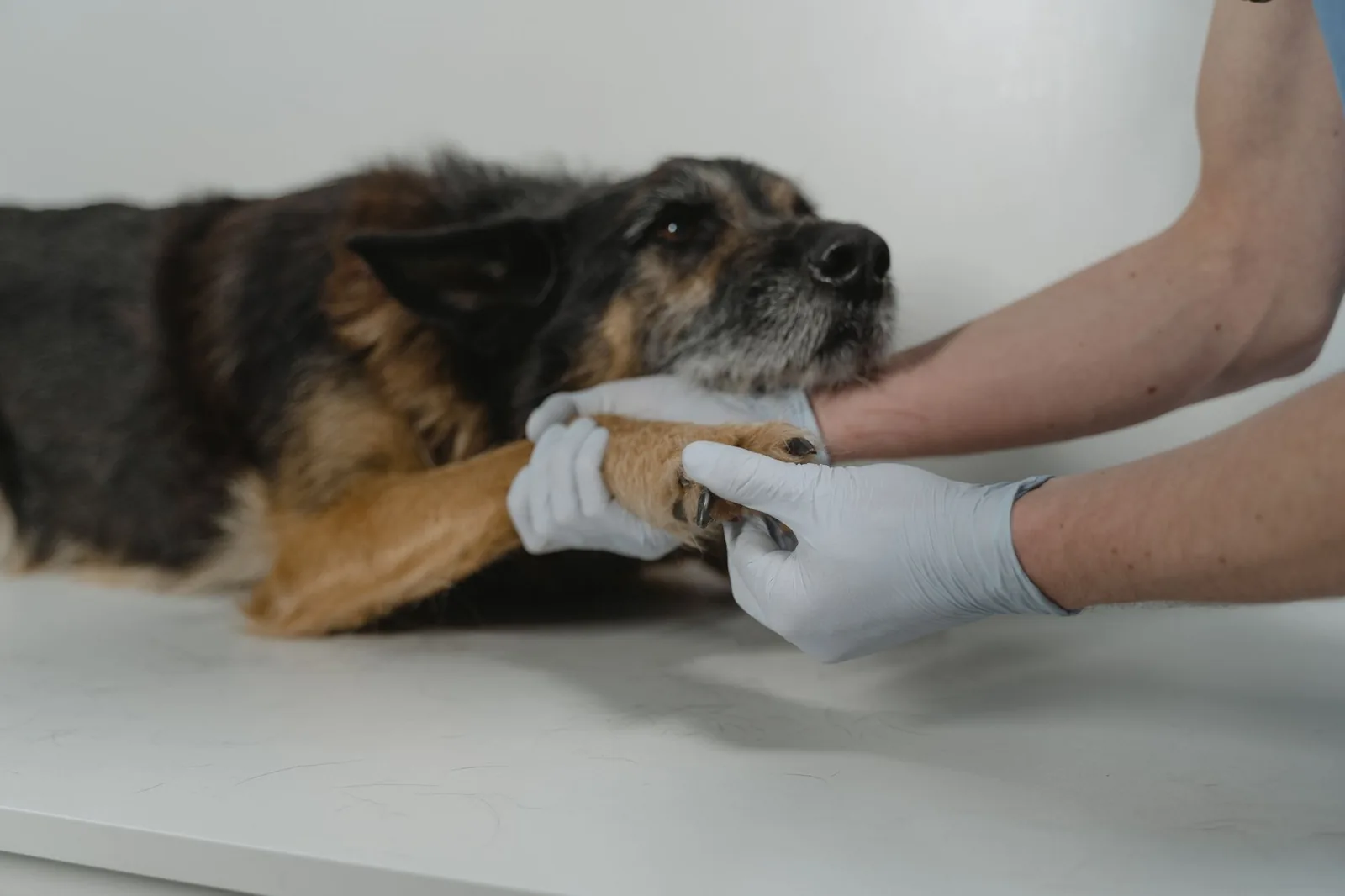
    A dog’s paw held gently in a person’s hand
    Photo by Ivan Babydov on Pexels

    Trimming without a disaster

    Most owners stop trimming because they once cut the quick, the dog bled and screamed, and neither party wanted to try again.

    1. Take tiny amounts. Several small cuts beat one confident one. You can always take more.
    2. Look at the cut end. A white or chalky center means keep going; a gray or pink oval appearing means stop.
    3. Cut at a slight downward angle, following the natural curve rather than straight across.
    4. Do one nail a day if the dog is worried. There is no rule that says all sixteen at once.
    5. Keep styptic powder within reach before you start, not after you need it.
    6. Pay well afterwards, every time, so the association improves rather than degrades.

    Black nails hide the quick, which is why little-and-often matters more than confidence. Trim weekly by a millimetre and the quick recedes, letting you get shorter over a month or two without ever hitting it.

    Clippers or a grinder

    Scissor clippersGuillotine clippersRotary grinder
    SpeedFastFastSlow
    PrecisionGoodModerateVery good
    Risk of over-cuttingModerateHigherLow
    Noise and vibrationMinimalMinimalSignificant — needs habituation
    Suits nervous dogsSometimesRarelyOnce introduced properly
    Leaves a smooth edgeNoNoYes
    Best for black nailsWorkable with careNot idealBest option
    A grinder is the safer tool and the harder sell. Introduce it switched off first, then running nearby, then touching one nail.

    The National Dog Groomers Association publishes grooming standards and a directory of certified groomers if you would rather have it done than do it.

    A person checking between a dog’s toes
    Photo by Inge Van den Heuvel on Pexels

    Paws, not just nails

    The weekly nail check is a good moment to look at everything else down there, because feet tell you a lot.

    • Rust-stained fur between the toes — saliva from licking, which usually means itching.
    • Redness or moisture between pads — yeast likes warm damp gaps.
    • Cracked or dry pads — common in winter, made worse by de-icing salt.
    • Matted fur under the paw — removes grip and traps grit.
    • Grass seeds or grit lodged between toes, which migrate and abscess.
    • A nail growing into the pad, which is painful and needs a vet.

    The staining point is the one that matters most in this breed. Persistent paw licking is an allergy sign until ruled out — our guide to why Westies itch explains the work-up, and our guide to coat staining covers why the color appears.

    Close-up detail of a dog’s paw pad
    Photo by RDNE Stock project on Pexels

    Seasonal paw care

    SeasonRiskWhat to do
    WinterDe-icing salt burns; ice balling between toesRinse after every walk; trim the fur between pads
    SummerHot asphalt burns pads in secondsTest with the back of your hand; walk early or late
    Spring and fallGrass seeds; mud packing between toesCheck feet after every off-path walk
    Year-roundRough ground wearing padsBuild up distance gradually on new surfaces
    The five-second rule for asphalt: if you cannot hold the back of your hand on it comfortably, it is too hot for pads.

    The winter salt problem is covered in more detail in cold weather care for a Westie.

    A dog walking comfortably along a firm path
    Photo by Bethany Ferr on Pexels

    Frequently asked questions

    How often should I cut my dog’s nails?

    Every three to four weeks for most dogs, and more often for dogs walked mainly on grass, which wears nails down far less than sidewalks. The test is whether nails touch the floor when the dog stands.

    How do I cut black nails without hitting the quick?

    Take very small amounts and look at the cut end. A white chalky center means you can continue; a gray or pink oval means stop. Trimming weekly by a small amount lets the quick recede over time.

    What do I do if I cut the quick?

    Apply styptic powder with firm pressure, and keep the dog quiet for a few minutes. It looks dramatic and stops quickly. Have the powder ready before you start rather than after.

    Are overgrown nails actually harmful?

    Yes. Nails long enough to touch the ground push the toes back on every step, shifting weight off the pads onto the joints. It reduces grip, alters gait and adds load to joints that may already be arthritic.

    Why are my dog’s paws orange?

    Saliva staining from licking. In a Westie, persistent paw licking is an allergy sign until proven otherwise, so the color is worth investigating rather than washing.

    An older dog standing squarely on grass
    Photo by 🇻🇳🇻🇳 Việt Anh Nguyễn 🇻🇳🇻🇳 on Pexels

    Nails at intake

    Badly overgrown nails are among the most common findings in dogs arriving at rescue, and one of the first things addressed.

    Where nails have curled into the pads, that is a veterinary job rather than a grooming one. The veterinary care every rescue Westie receives covers what is done before placement, and our grooming guide sets out the routine that keeps it from recurring.