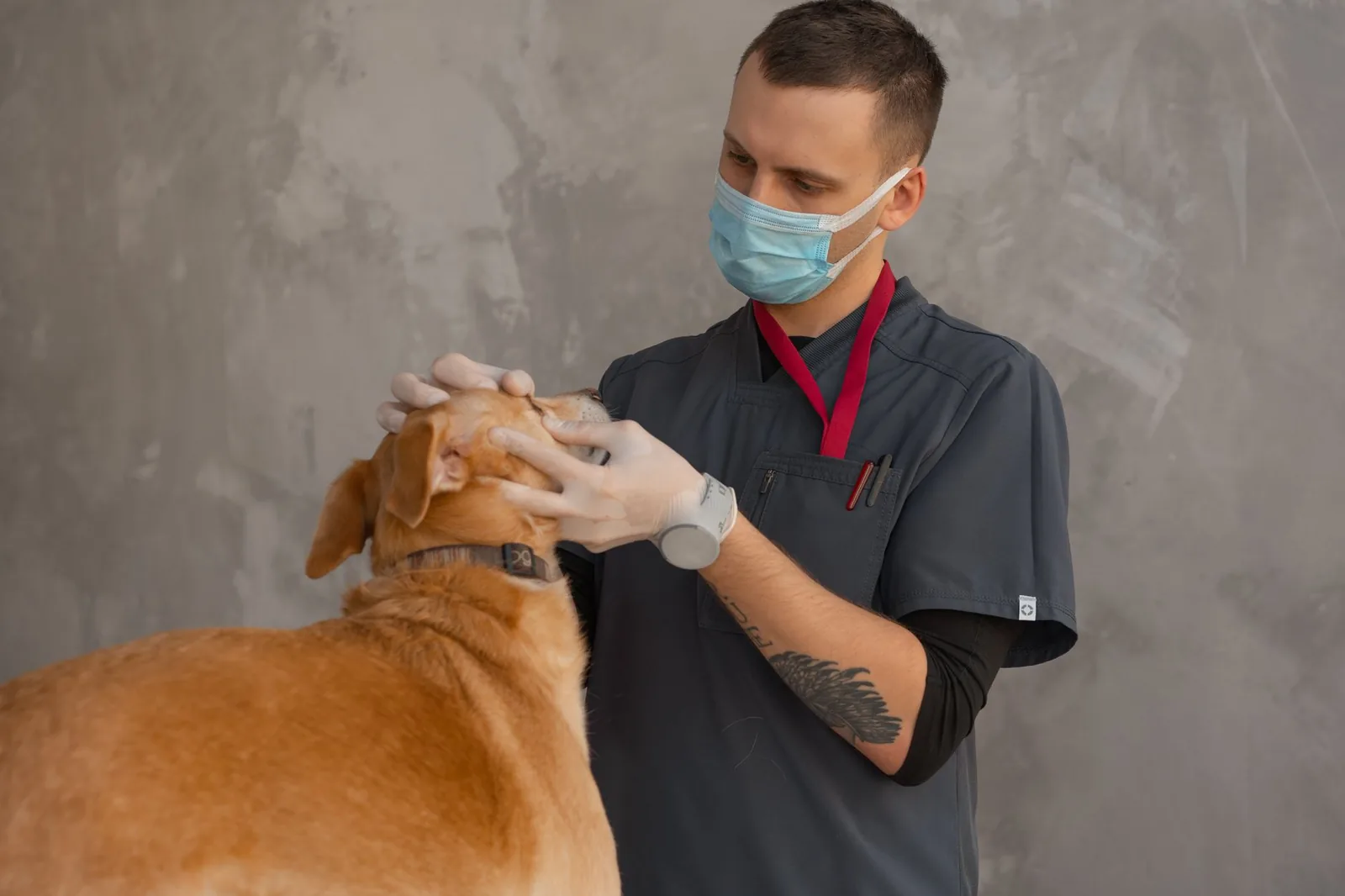
First aid for a dog is stabilization and transport. It is not treatment, and almost nothing on this page is a substitute for getting to a vet.
What it does is buy time, prevent the situation getting worse, and stop well-meaning interventions that cause harm.
The short version
- Call the clinic on the way rather than deciding at home whether to go.
- Muzzle an injured dog if you must handle it — pain makes any dog bite.
- Never induce vomiting, and never give human painkillers.
- Pale, white or brick-red gums mean go now.
What counts as an emergency
| Sign | Why it matters | Action |
|---|---|---|
| Pale, white or brick-red gums | Shock, blood loss or heat injury | Go now |
| Difficulty breathing | Airway, lung or heart problem | Go now, keep the dog calm |
| Distended, hard abdomen with retching | Possible bloat — rapidly fatal | Go now, do not wait |
| Seizure lasting over 3 minutes | Risk of brain injury | Go now |
| Uncontrolled bleeding | Blood loss | Pressure, then go |
| Collapse or inability to stand | Many causes, all serious | Go now |
| Repeated unproductive vomiting | Obstruction or bloat | Go now |
| Known toxin ingestion | Delayed effects are common | Call poison control, then go |
The toxin row is covered separately in our guide to foods and household items dangerous to dogs.
Before you touch an injured dog
A dog in pain will bite, including yours, including one that has never shown aggression in its life. That is not temperament; it is reflex.
- Approach quietly and low, side-on, speaking calmly.
- Improvise a muzzle with a bandage or a leash if you must handle a conscious injured dog — never on a dog that is vomiting or struggling to breathe.
- Support the whole body when lifting; use a board or a blanket as a stretcher for a suspected spinal injury.
- Keep the dog warm unless the problem is overheating.
- Have someone else drive if at all possible.
The body language that precedes a defensive bite is set out in our guide to reading canine stress signals.

The situations worth knowing
| Situation | Do | Do not |
|---|---|---|
| Bleeding | Firm direct pressure with a clean cloth for 5 minutes | Lift the cloth to look; apply a tourniquet |
| Choking | Look in the mouth; sweep only what you can clearly see and reach | Blind finger sweeps, which push objects further in |
| Heatstroke | Move to shade, wet with cool water, offer small drinks, go | Use ice or ice water, which constricts vessels |
| Seizure | Clear the space, time it, dim the lights, stay back | Put hands near the mouth or restrain the dog |
| Suspected fracture | Keep still, support, transport carefully | Attempt to splint |
| Insect sting | Remove a visible sting, apply a cool compress, watch closely | Give any human antihistamine without veterinary advice |
| Paw cut | Rinse, pressure, bandage lightly | Use antiseptic meant for humans |

Heatstroke in a white double-coated dog
Westies overheat faster than owners expect. The coat insulates in both directions, and a dog that has been running does not always stop when it should.
Early signs are heavy panting, thick drool, bright red gums and a dog that lies down and will not get up. Later signs are vomiting, wobbliness and collapse.
Cool with room-temperature water rather than ice, get air moving, and travel with the windows down. Do not delay to cool completely — cool and go at the same time.
The coat insulates against cold as well, and the winter thresholds are set out in cold weather care for a Westie.
What belongs in a kit
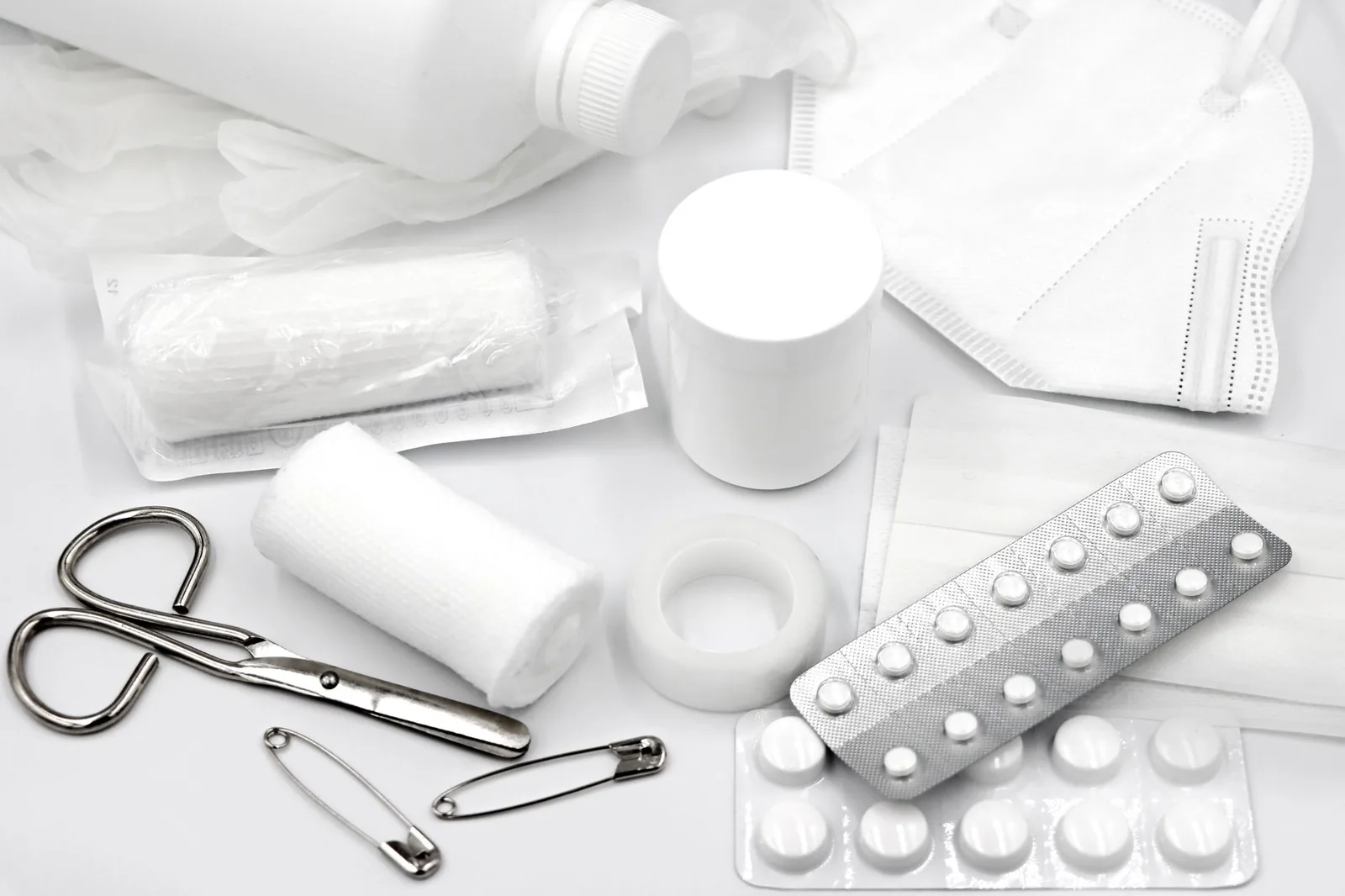
- Gauze, self-adhesive bandage and blunt scissors.
- A clean towel for pressure, warmth or as a stretcher.
- Digital thermometer and lubricant — normal is roughly 101 to 102.5 degrees Fahrenheit.
- Tick remover and tweezers.
- Saline for flushing eyes or wounds.
- A copy of vaccination records and current medications.
- Your vet, the nearest 24-hour clinic and a poison line, written down, not only in a phone.
The American Red Cross publishes pet emergency and disaster preparedness guidance, including what to have ready before you need it.

Know your dog when it is well
Most of first aid is noticing that something has changed, which requires knowing the baseline.
Check gum color and how quickly it refills after pressing. Learn where the pulse is. Know the resting breathing rate. Do all of it on a healthy calm dog, once, so the comparison exists when you need it.
For an older dog, that baseline shifts — what changes in a Westie after ten covers what is age and what is illness.

Frequently asked questions
What should I do if my dog is bleeding heavily?
Firm direct pressure with a clean cloth, held for a full five minutes without lifting to check, and go to a vet. Do not apply a tourniquet, which causes more damage than it prevents in untrained hands.
Can I give my dog human painkillers?
No. Ibuprofen and acetaminophen are toxic to dogs and cause kidney, liver and stomach damage. Give nothing without veterinary instruction, even if the dog is clearly in pain.
How do I know if my dog has heatstroke?
Heavy panting, thick drool, bright red gums, and a dog that lies down and will not get up. Cool with room-temperature water rather than ice and travel to a vet immediately rather than waiting to see improvement.
What should I do during a seizure?
Clear hard objects away, dim the lights, time it, and stay back. Do not put hands near the mouth or restrain the dog. Anything past about three minutes, or repeated seizures, is an emergency.
What should be in a dog first aid kit?
Gauze, self-adhesive bandage, blunt scissors, a clean towel, a thermometer, tweezers, saline, vaccination records, and written emergency numbers. The numbers matter more than the supplies.

Sort the numbers now
The most useful thing on this page is not a technique. It is knowing, before you need it, where the nearest clinic open at two in the morning actually is.
Write it on the refrigerator alongside your own vet and a poison line. If you have just adopted, do it in the first week — our guide to the first 30 days covers the rest of the setup, and planning for your dog if something happens to you covers the reverse situation.