
Almost every bite described as coming out of nowhere was preceded by a long sequence of signals. The dog was not being unpredictable. It was being ignored.
Learning to read that sequence is the single most useful skill for anyone living with a dog, and it matters most in households with children.
The short version
- Dogs escalate through a predictable ladder. Growling is near the top, not the start.
- A wagging tail means arousal, not friendliness.
- Punishing a growl removes the warning and keeps the feeling.
- The reliable rule for children: let the dog choose to approach, always.

The ladder of signals
Dogs work up this sequence, usually in order. Most people notice from about step seven, by which point the dog has been asking for six steps.
| Level | What it looks like | What the dog is saying |
|---|---|---|
| 1. Subtle | Blinking, yawning, nose licking | I am uncomfortable |
| 2. Avoidance | Turning the head away, looking away | Please stop |
| 3. Disengaging | Turning the whole body away, walking off | I am removing myself |
| 4. Appeasing | Scratching, sniffing the ground, shaking off | I am trying to defuse this |
| 5. Freezing | Going completely still, hard stare | I am serious now |
| 6. Warning | Lip curl, showing teeth, low growl | Last verbal warning |
| 7. Snap | Air snap, no contact | A deliberate miss |
| 8. Bite | Contact, graded by intent | Nothing else worked |
What the tail actually tells you
The most persistent myth is that a wagging tail means a friendly dog. Wagging signals arousal, and arousal can be happy, anxious or aggressive.
- Loose, sweeping, whole-body wag — relaxed and genuinely friendly.
- High, stiff, fast wag — tense and aroused. Approach with care.
- Low, tucked, fast wag — anxious and appeasing.
- Tail held very high and still — alert, possibly confrontational.
- Tail clamped underneath — frightened.
Read the whole dog rather than one part. A soft face with a loose body and a wagging tail is a relaxed dog; a hard stare with a stiff high wag is not, and the tail looks similar in a photograph.

Relaxed versus tense, side by side
| Body part | Relaxed | Tense or worried |
|---|---|---|
| Eyes | Soft, blinking normally | Wide, whites showing, or hard staring |
| Mouth | Slightly open, loose | Closed tight, or panting with a tight jaw |
| Ears | Neutral or forward and loose | Pinned back, or rigidly forward |
| Body | Curved, weight even | Stiff, leaning forward or away |
| Fur | Flat | Raised along the shoulders or spine |
| Tail | Loose, mid-height | High and stiff, or clamped |
| Movement | Loose and bouncy | Slow and deliberate, or frozen |

Children and dogs
Most bites to children happen at home, with a familiar dog, during ordinary interaction. The dog usually gave warnings that an adult did not recognize.
The single rule worth teaching is that the dog chooses. If it moves away, it is finished. If it does not come over, it does not want to be touched.
- Never disturb a sleeping or eating dog.
- No hugging around the neck. Dogs do not experience it as affection.
- No climbing, riding or leaning on the dog.
- Leave the dog alone in its bed. The bed is inviolable.
- Pet the chest and shoulder, not the top of the head.
- Supervise actively. Being in the room is not supervision.
Dogs Trust publishes illustrated owner guidance on canine body language and safe interaction, which is particularly useful for teaching children.
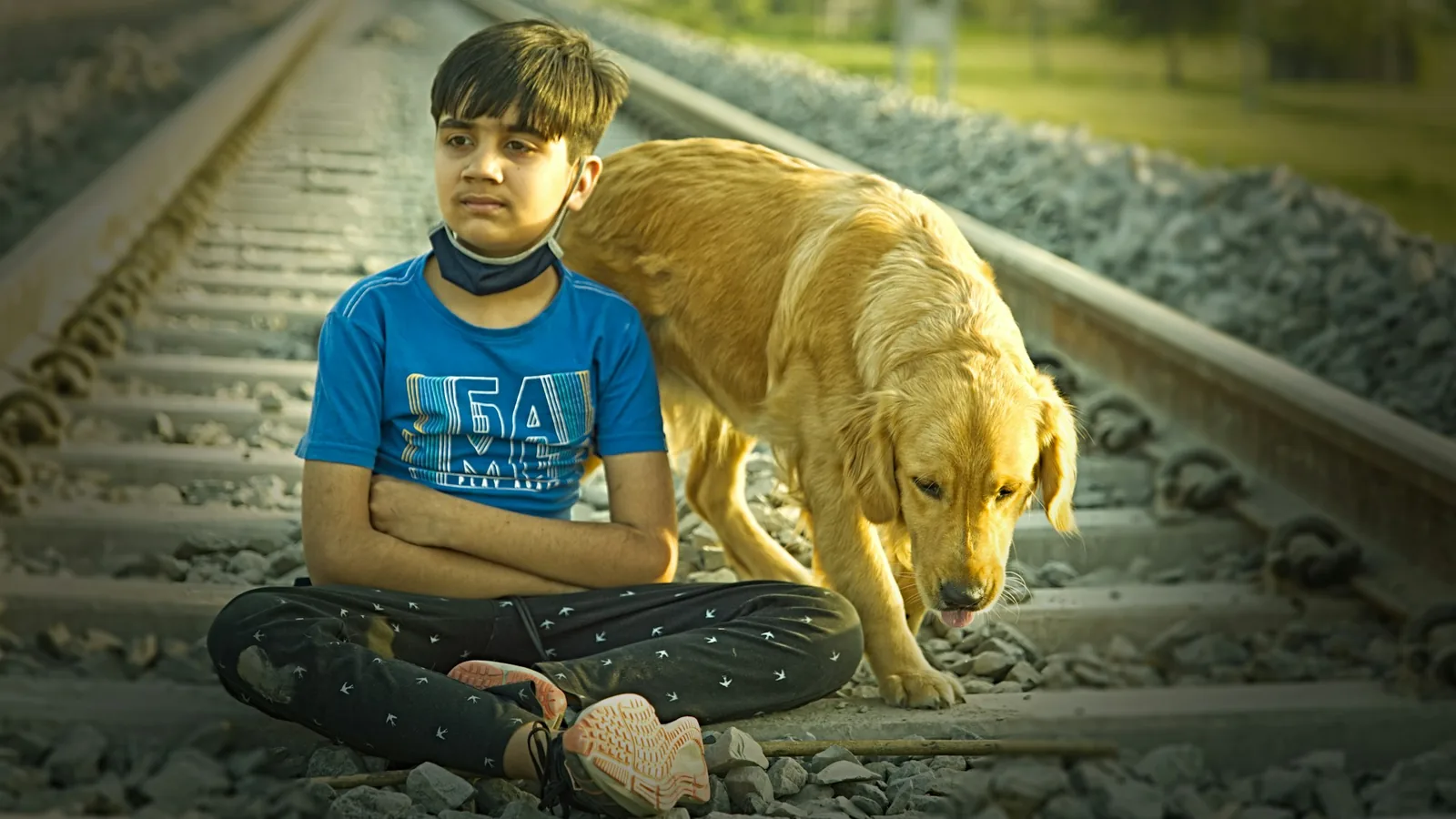
Why punishing a growl is a mistake
A growl is a dog telling you clearly that it is uncomfortable, before doing anything about it. It is the most useful thing a dog can do.
Punish it and the growl disappears. The discomfort does not. You have taught the dog that warning does not work, and the next escalation may skip straight to contact.
The correct response is to increase distance, work out what caused it, and change the situation. Our guide to terrier behavior covers the training approaches that address the cause rather than the signal.

Signals in a newly adopted dog
A dog in its first two weeks is stressed by definition, and will show far more of the lower rungs than it will later. That is normal.
It also means you are meeting a dog that is not yet itself, which is why temperament assessments made in week one are unreliable.
Give space, watch rather than interact, and let the dog approach on its own terms. What to expect in the first 30 days with a rescue Westie covers the wider settling picture, introducing a new dog to a resident dog applies the same signals to dog-to-dog meetings, and the signals that mean genuine distress when you leave are a separate matter again.

Frequently asked questions
Does a wagging tail mean a dog is friendly?
No. Wagging indicates arousal, which can be happy, anxious or aggressive. A loose sweeping wag with a relaxed body is friendly; a high stiff fast wag with a hard stare is not.
What are the first signs a dog is uncomfortable?
Blinking, yawning out of context, licking the nose, turning the head away and sniffing the ground. These come long before any growl and are the point at which to give space.
Should I punish my dog for growling?
No. A growl is a warning you want the dog to keep giving. Punishing it can remove the warning while leaving the underlying discomfort, which makes a bite without warning more likely.
How do I teach my child to be safe around dogs?
One rule covers most of it: the dog chooses. No hugging, no disturbing a sleeping or eating dog, no touching a dog in its bed, and pet the chest rather than the head. Supervise actively.
Why do dogs bite “without warning”?
They almost never do. The warnings were given at lower levels and missed, or the dog was previously punished for growling and has learned that warning does not help.
Why this matters in rescue
Foster carers spend weeks recording exactly these signals, which is what makes an honest assessment possible. A dog described as “not suited to young children” usually earned that note through observation, not incident.
The Westies currently available for adoption carry those notes, and our honest guide to Westies in family households explains why the age question comes up in every adoption conversation.