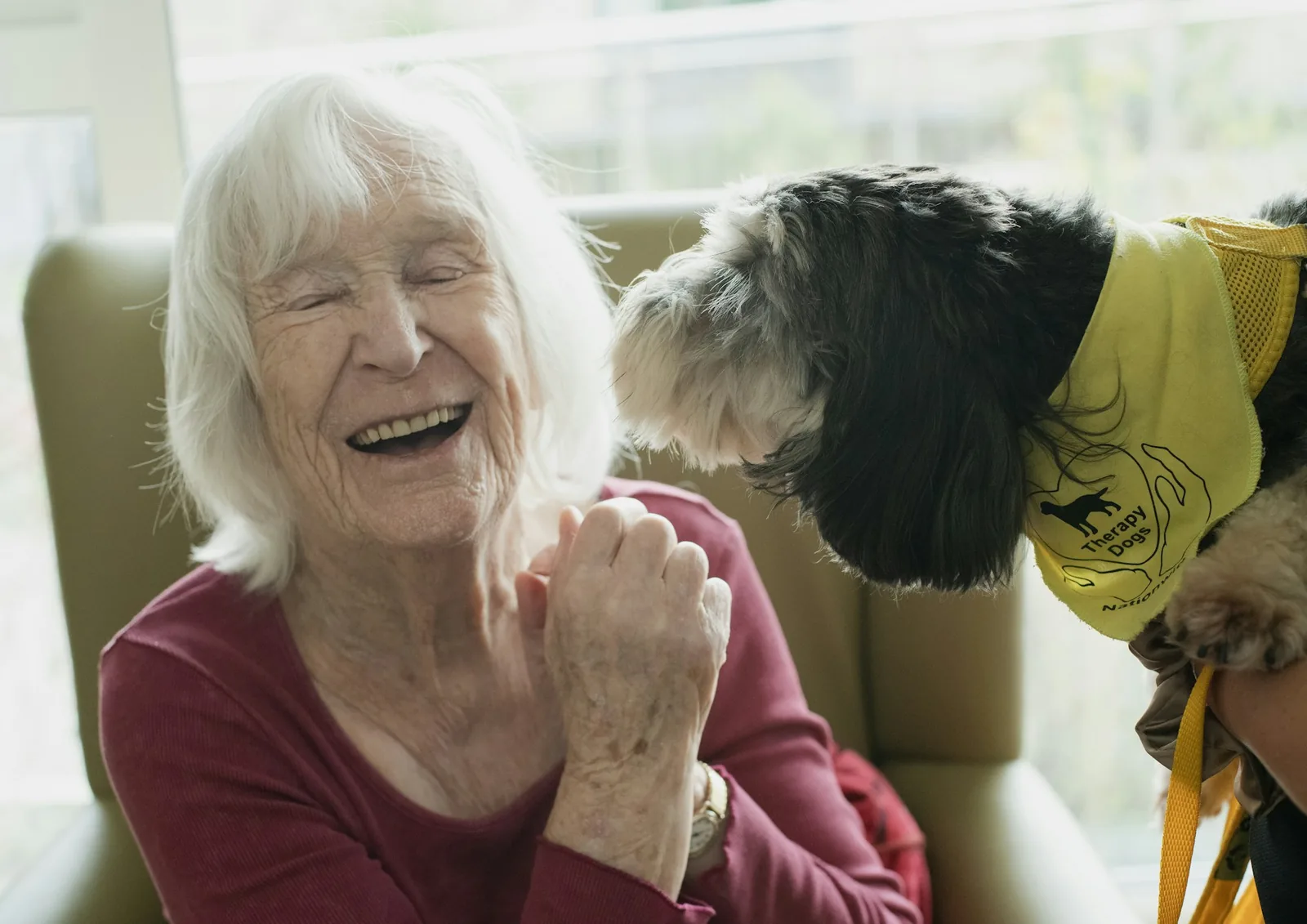
A significant share of the dogs that reach breed rescue arrive for the same reason: their owner died, or went into hospital or care, and nobody knew what was supposed to happen next.
The dogs are usually elderly and almost always came from homes where they were loved. What was missing was not care, but a written plan.
The short version
- Without a plan, your dog is legal property and your executor decides its fate.
- A named guardian in a will is the minimum. A pet trust is the stronger instrument.
- Ask the person first. A surprise bequest is how dogs end up in shelters anyway.
- The emergency card in your wallet matters as much as the legal document.

What happens if you do nothing
This is the part most people have never thought through, because it is not how anyone feels about their dog.
Legally, a dog is personal property. With no instruction, it passes into your estate and your executor decides — typically a relative dealing with a funeral, a house and a dog they did not expect.
The usual outcomes are a hurried rehoming, a shelter surrender, or a call to a breed rescue weeks later when an informal arrangement has collapsed.
The three levels of planning
| Informal agreement | Guardian named in a will | Pet trust | |
|---|---|---|---|
| Legally binding | No | Yes, transfers ownership | Yes, and enforceable on terms |
| Takes effect | Immediately, if honored | After probate — weeks or months | Immediately on death or incapacity |
| Covers incapacity as well as death | Depends | No | Yes |
| Can allocate money for care | No | A bequest, but unrestricted | Yes, ringfenced |
| Anyone can enforce care standards | No | No | Yes, via the trustee |
| Cost to set up | Nothing | Part of a standard will | Several hundred dollars |
| Best for | A stopgap while you arrange something | Most owners | Owners with a long-lived or high-needs dog |
Nolo publishes a plain-language overview of estate planning for pets covering how wills and pet trusts differ, which is a useful primer before you talk to a lawyer.

Choosing a guardian
The instrument is the easy part. The choice of person is what actually decides whether this works.
- Ask them, properly. Not in passing at a family gathering. A specific conversation, with the chance to say no.
- Name a backup. Circumstances change, and first choices move house, divorce and develop allergies.
- Check the practicalities. Do they have a fenced yard, other pets, hours away, a landlord who allows dogs?
- Be realistic about age. Naming someone your own age solves the problem for a decade at most.
- Leave money if you can. Not as payment, but so caring for your dog is never a financial decision.
- Name a rescue as the fallback, having asked them first.
The emergency card, which matters more than the will
A will handles death. It does nothing at all for the far more common scenario — you are taken to hospital and your dog is alone in the house.
| Where | What it should say |
|---|---|
| Wallet card | That you have a dog at home, its name, and two emergency contacts who hold a key |
| Phone lock screen or medical ID | The same two contacts |
| Front door or refrigerator | How many animals are in the house, and where |
| With your neighbor | A key, and permission to enter for the dog |
| With your guardian | A copy of records, routine and medication list |

The care file
Whoever takes your dog will be doing it on the worst week of their year. Make it as easy as possible.
- Veterinary practice details and permission for them to release records.
- Current medications, doses and what each is for.
- Microchip number and the registry it is with.
- Daily routine — feeding times, food brand, walk pattern, where the dog sleeps.
- Behavioral notes. What frightens the dog, how it is with children, strangers, other animals.
- Insurance policy details, if any.
- Your wishes on veterinary decisions and end-of-life care.
If your dog is older or has a diagnosis, add what the current stage of care involves so the next person is not starting from nothing.
If you are already in this situation
If you are reading this because a relative has died and there is a dog, or because your own health has changed, the position is more workable than it looks.
Contact a breed rescue early rather than at the point of crisis. Time is the thing that improves outcomes here, and a dog placed from a settled home does far better than one placed from an empty one.
Bring whatever records exist, even if incomplete. Our guide to rehoming options covers what to gather and how to choose between routes, and our surrender and rehoming page is where to start with us.

Frequently asked questions
What happens to my dog if I die without a plan?
Your dog is treated as personal property and passes into your estate, where your executor decides. In practice that often means a hurried rehoming or a shelter surrender, weeks after the death.
Is a pet trust worth it?
For most owners a guardian named in a will is enough. A pet trust is worth the extra cost if your dog is young, has ongoing medical needs, or you want funds ringfenced and care standards enforceable.
Can I leave money to my dog?
Not directly, because animals cannot own property. You can leave money to a named person or, with more control, to a trustee under a pet trust that specifies how it is spent.
Will a rescue take my dog if I die?
Many will, including us, but arrange it in advance rather than naming an organization that has never heard of you. Capacity is limited and a verified arrangement is far more reliable.
What should an emergency card say?
That you have animals at home, how many and where, plus two contacts who hold a key and have agreed in advance. Keep it in your wallet and on your phone’s medical ID.
Why we wrote this
Bereavement intake is among the saddest work a rescue does, and it is almost entirely preventable. The dogs are usually elderly, often bonded to one person, and grieving in a way that is difficult to watch.
An afternoon spent naming a guardian and writing a care file changes that outcome completely. If you would like your dog to come to us, contact us and we will note the arrangement.
For the dogs who arrive this way and will not be adopted again, our long-term care and hospice program is where they stay, and sponsorship is what funds it.