
Arthritis is common in older small dogs and routinely goes untreated, because dogs rarely do the one thing owners watch for. They do not limp dramatically — they get quieter, and everyone says the dog is slowing down.
The short version
- Hesitation before jumping is an earlier sign than limping.
- Weight control is the single most effective intervention available.
- Management is multimodal: medication plus environment plus exercise plus weight.
- Grip and warmth at home often do more than any single treatment.
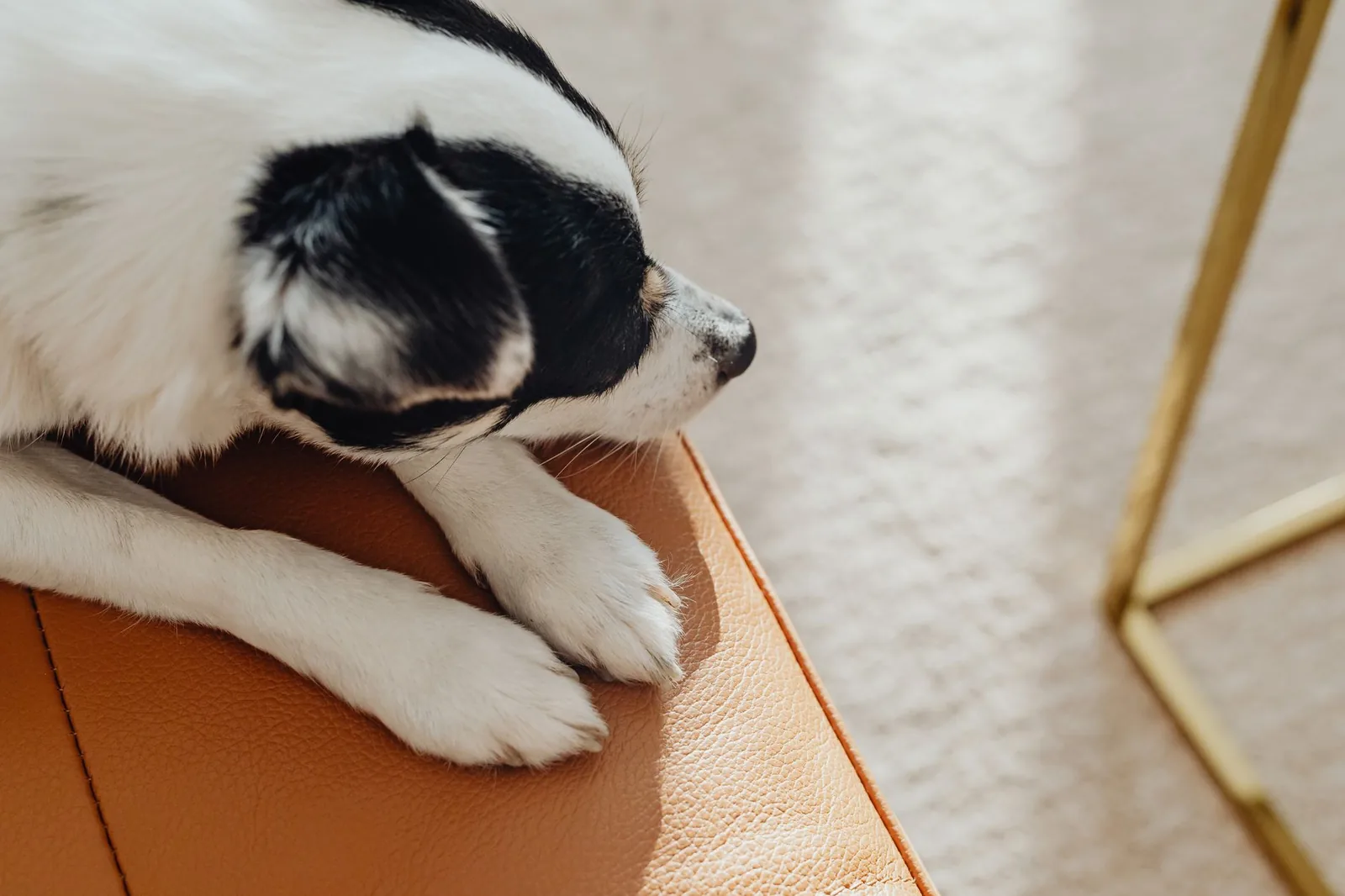
What you will actually see
| Sign | What it looks like | How early |
|---|---|---|
| Hesitation before jumping | A pause before the sofa it used to take easily | Earliest |
| Standing up in stages | Back end lifting separately, or a stretch first | Early |
| Reluctance on stairs | Particularly going down, which loads the front | Early |
| Changed sleeping position | Moving beds at night, unable to settle | Early |
| Slower on walks | Lagging on the way home rather than the way out | Middle |
| Irritability when handled | Snapping when touched along the back or hips | Middle |
| Muscle loss over the hindquarters | Visible narrowing, often one side first | Middle |
| Licking one joint | Persistent attention to a specific spot | Any stage |
| Limping | Usually the last thing to appear, not the first | Late |
The irritability row is worth flagging: sudden snappiness in an older dog is far more often pain than temperament — our guide to reading canine stress signals covers the warnings that precede it.
Getting it diagnosed
Ask specifically. “He is just getting old” is a conclusion, not a diagnosis, and a great deal of what gets filed under it is treatable.
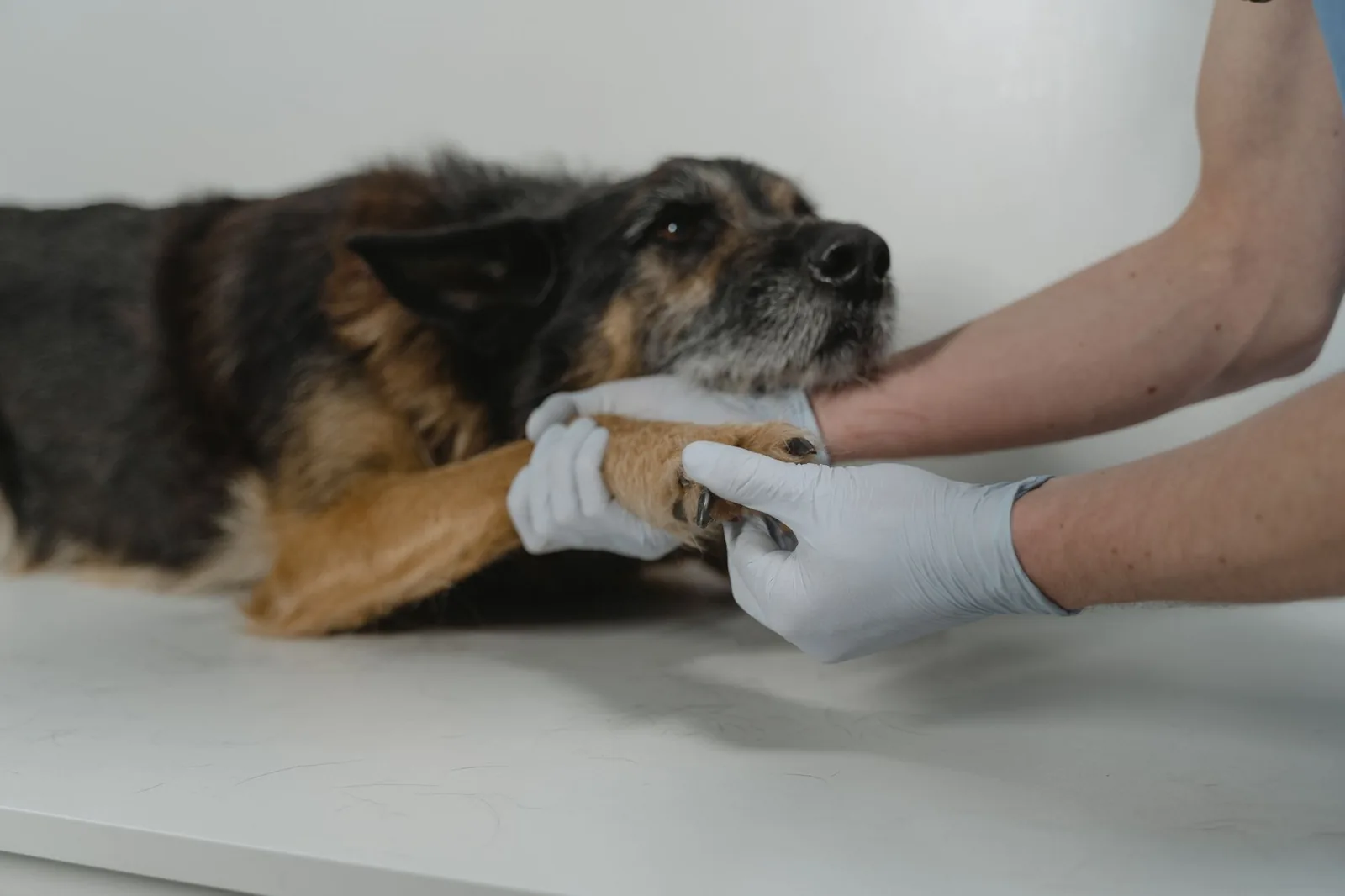
A vet will examine range of motion, feel for crepitus and muscle loss, and often take radiographs. Bloodwork checks whether the dog can safely take anti-inflammatories.
Bring video. A dog in a consulting room is adrenalized and moves better than it does at home. Film it rising from a nap and going downstairs.
The single most informative test is often a pain trial: a course of medication, and an honest assessment of whether the dog is different afterwards.

Multimodal management
No single thing manages arthritis well. The evidence favors combining several approaches, each contributing a share.
| Component | What it does | Relative impact |
|---|---|---|
| Weight reduction | Removes load from every joint on every step | The largest single factor |
| Anti-inflammatory medication | Controls pain and inflammation directly | Large |
| Monoclonal antibody injection | Targets a pain-signalling pathway, monthly | Large for suitable dogs |
| Environmental change | Grip, ramps, bedding, warmth | Large and immediate |
| Controlled exercise | Maintains muscle, which supports joints | Moderate to large |
| Omega-3 supplementation | Anti-inflammatory dietary effect | Modest but real |
| Physiotherapy or hydrotherapy | Builds muscle without loading joints | Moderate, where available |
| Joint supplements | Variable evidence between products | Modest |
Canine Arthritis Management publishes owner-facing resources on recognizing and managing canine osteoarthritis, including practical assessment tools.
The weight point, plainly
Overweight is already among the five most common findings in this breed. In an arthritic dog it is the difference between managing and not.
Every extra pound is carried by joints that are already sore, on every step, all day. Controlled weight loss frequently produces more improvement than adding a second medication.
It is also harder than it sounds, because an arthritic dog exercises less. That means the reduction has to come from the bowl — our guide to feeding and portions covers how to assess body condition by hand.
Changes at home
- Non-slip runners on every hard floor route the dog uses. Slipping is painful and frightening, and fear of slipping reduces movement further.
- A ramp or steps to the sofa and the car, removing repeated impact.
- An orthopedic bed away from drafts, thick enough not to bottom out.
- Raised food and water bowls to reduce neck and shoulder strain.
- Keep nails short. Overlong nails alter gait and load joints wrongly.
- Warmth. Cold stiffens arthritic joints noticeably, and a coat outdoors is not decorative.
The nail point is genuinely underrated — our guide to nail and paw care explains the mechanics, and cold weather care covers why winter is harder.
Exercise: less, but not none
The instinct is to rest an arthritic dog. That accelerates muscle loss, and muscle is what supports the joint.
The pattern that works is little and often: three or four short walks rather than one long one, on level ground, at the dog’s pace. Consistency matters more than distance.
What to avoid is the weekend spike — a sedentary week followed by a long Sunday walk is the reliable route to a dog that cannot get up on Monday.

Tracking whether it is working
Decline is gradual and memory adjusts to it, so score rather than remember.
- Film the same thing monthly — getting up from the same bed, or the same set of stairs.
- Score mobility weekly out of five and keep the sheet.
- Note how long the dog takes to settle after a walk.
- Track weight monthly, not by eye.
- Review medication with your vet at least twice yearly, with bloodwork.
The same scoring approach carries into later stages — our guide to hospice and end-of-life care covers judging quality of life honestly when it comes to that.
Frequently asked questions
How do I know if my dog has arthritis?
Look for hesitation before jumping, standing up in stages, reluctance on stairs and changed sleeping positions. Limping is usually a late sign rather than an early one, so waiting for it means waiting too long.
Can arthritis in dogs be cured?
No, but it is very manageable. Combining weight control, medication, environmental changes and controlled exercise usually produces substantial improvement in comfort and mobility.
What helps a dog with arthritis at home?
Non-slip flooring, a ramp instead of jumping, a thick orthopedic bed away from drafts, short nails and warmth. These are cheap, immediate and frequently do more than adding another medication.
Should an arthritic dog still be walked?
Yes, but little and often. Rest accelerates muscle loss, and muscle supports the joint. Three or four short walks on level ground beat one long one, and avoid the sedentary week followed by a long weekend walk.
Do joint supplements work?
Evidence varies considerably between products. Omega-3 supplementation has reasonable support; other supplements are more modest. None substitutes for weight control or prescribed pain relief.

Arthritic dogs in rescue
A great many of the dogs we take in are arthritic, often undiagnosed, and the change once it is treated is one of the more striking things in rescue work.
Dogs described as withdrawn or grumpy frequently turn out to have been in pain for years. Our guide to caring for a Westie after ten covers the wider picture, and sponsoring a dog in our care funds exactly this kind of ongoing treatment.