
An old dog standing in a corner facing the wall is the image most people have of canine dementia. By then it is advanced.
The early signs are quieter and easily dismissed as ordinary aging, which is why it is so often diagnosed late — what changes in a Westie after ten covers where normal aging ends.
The short version
- It is common: prevalence rises steeply after eleven.
- Several treatable conditions look almost identical. Rule those out first.
- There is no cure, but management works better the earlier it starts.
- Night-time restlessness is usually the sign that brings people to the vet.

What to look for
Veterinary behaviorists use six categories, which are useful because they give you the language your vet will ask in.
| Category | What it looks like at home |
|---|---|
| Disorientation | Getting stuck behind furniture, going to the hinge side of a door |
| Interaction changes | Less greeting, less seeking contact, or new clinginess |
| Sleep-wake changes | Awake and pacing at night, sleeping heavily through the day |
| House soiling | Accidents indoors in a dog that was reliable for years |
| Activity changes | Aimless wandering, repetitive circling, staring at nothing |
| Anxiety | New fearfulness, distress when left, difficulty settling |
The house soiling row misleads more owners than any other, because it looks like a training problem — our guide to house training an adult dog covers what to rule out before assuming either.
What else it might be
This is the part worth insisting on. Several conditions produce the same picture and most of them are treatable.
| Condition | Why it looks like dementia |
|---|---|
| Pain, usually arthritis | Restlessness, irritability, reluctance, disturbed sleep |
| Failing sight or hearing | Bumping into things, not responding, startling easily |
| Urinary infection | Sudden indoor accidents |
| Kidney disease or diabetes | Increased drinking, night waking to urinate |
| Thyroid disease | Lethargy, confusion, changed behavior |
| High blood pressure | Disorientation, sudden vision loss |
| Medication side effects | Sedation or agitation mistaken for decline |
Pain is the commonest of these by a distance — our guide to arthritis in older dogs explains why dogs so rarely show it in ways owners recognize.
Getting a diagnosis
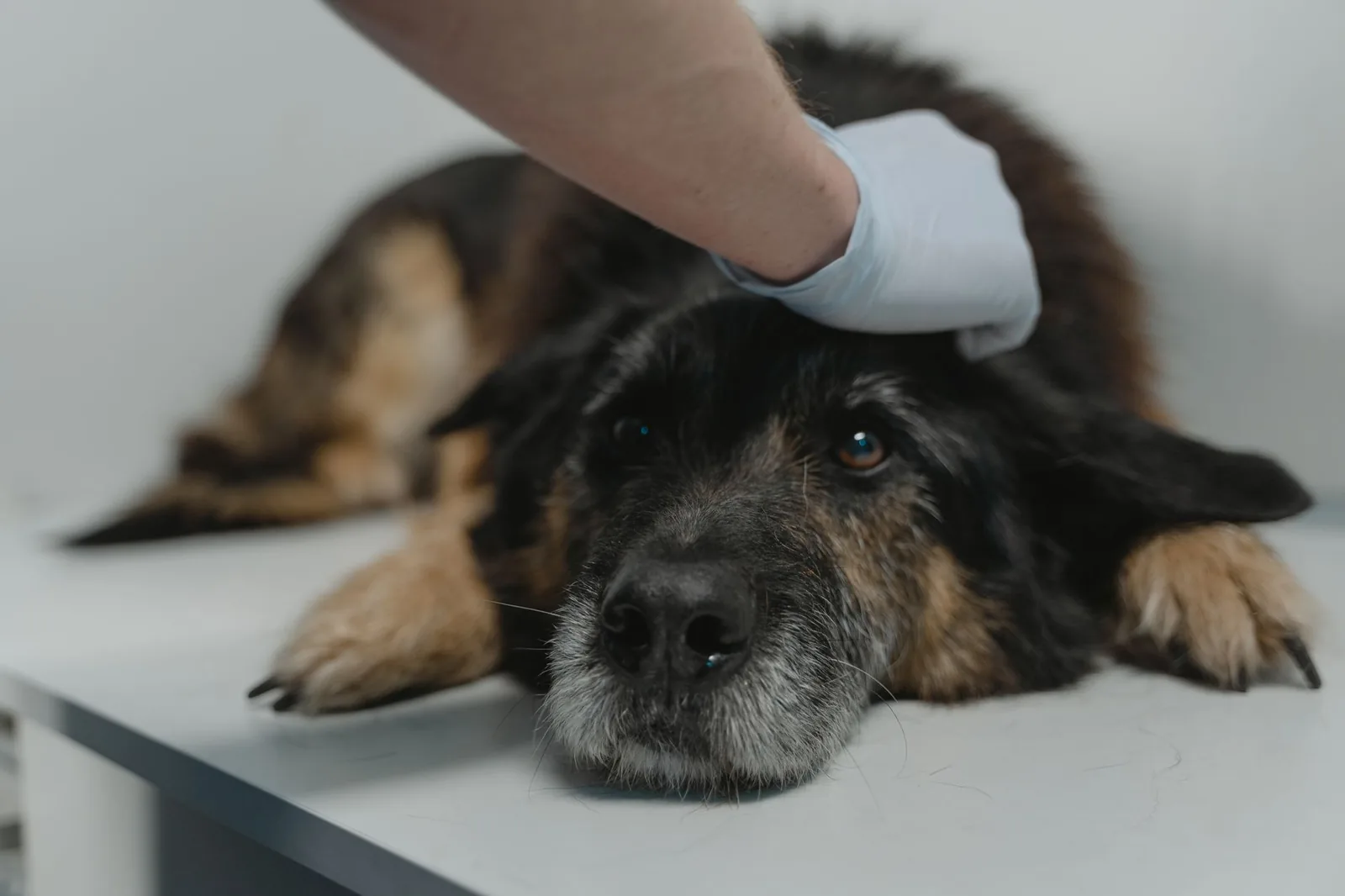
There is no single test. Diagnosis is made by excluding other causes and matching the behavioral pattern, which means the history you bring matters enormously.
- Keep a two-week diary before the appointment: what, when, how often.
- Film the behavior if it happens at night. Your vet will never see it in a consulting room.
- Expect bloodwork, urinalysis and blood pressure as a baseline.
- Ask specifically about pain, and about a trial of pain relief if there is any doubt.
- Review every current medication for sedative or agitating effects.
- Ask about a scoring tool, which makes change over time measurable rather than impressionistic.
The American College of Veterinary Behaviorists lists board-certified specialists who take referral cases, which is the route if the picture stays unclear.

What actually helps
- Keep the layout unchanged. A dog navigating from memory is badly served by rearranged furniture.
- Hold the routine steady. Same meals, same walks, same times.
- Light the route to the door at night, which reduces a great deal of nocturnal distress.
- Keep mental work going, gently. Scentwork and food puzzles suit dogs whose bodies have slowed before their noses have.
- Manage toileting proactively, with more frequent trips rather than correction.
- Discuss diet, supplements and medication with your vet. Several options have reasonable evidence behind them.
Enrichment is the part owners give up on soonest and should not — how much exercise a Westie actually needs covers low-impact options for dogs who cannot walk far.
Living alongside it
This is a progressive condition, and the hardest part for most families is the night waking rather than the confusion itself.
Score quality of life on paper rather than in the moment, weekly. Memory adjusts to gradual decline; a written record does not.
Many dogs live comfortably for a long time with good management, and the decisions that come later are easier when you have kept notes — our guide to hospice and end-of-life care sets out that framework.

Frequently asked questions
At what age does canine cognitive dysfunction usually start?
Signs typically appear from about eleven, though earlier onset happens. Prevalence rises steeply with age, and a large share of affected dogs are never formally diagnosed.
How is it diagnosed?
By excluding other causes and matching the behavioral pattern. Expect bloodwork, urinalysis and blood pressure at minimum. A diary of what you see at home is the single most useful thing you can bring.
What conditions get mistaken for dementia?
Pain from arthritis is the commonest, followed by failing sight or hearing, urinary infection, kidney disease, diabetes, thyroid disease and medication side effects. Most are treatable.
Why is my old dog awake and pacing at night?
Disrupted sleep-wake cycles are among the earliest and most common signs. It can also be pain, or needing to urinate more often. Both are worth investigating rather than accepting.
Is there any treatment?
There is no cure, but diet, supplements and medication all have a role and work better started early. Environmental consistency and a steady routine make a large practical difference.

Why this matters to a rescue
Most of the dogs we take in are seniors, and a meaningful number arrive with cognitive changes that were never investigated.
Several turn out to be in pain rather than in decline, and improve within weeks. Our long-term care and hospice program exists for the ones where it is genuinely dementia and no home is available.