
Dog food marketing is loud, expensive and largely unregulated in its claims. Almost none of it addresses the thing that actually affects a Westie’s health.
That thing is weight. Being overweight is among the five most common findings in the breed at ordinary veterinary visits, ahead of almost every condition people worry about.
The short version
- How much you feed matters far more than which brand you buy.
- A typical adult Westie needs roughly 400–550 calories a day — less than most people assume.
- Treats should be under 10% of daily intake. They are usually well over.
- Grain-free is a marketing category, not a health category, unless your vet has said otherwise.

How much a Westie actually needs
These are starting points, not prescriptions. Activity, age, neuter status and individual metabolism all shift them, sometimes by a lot.
| Dog | Weight | Rough daily calories | Notes |
|---|---|---|---|
| Active adult | 15–20 lb | 450–550 | Walked an hour or more daily |
| Typical adult | 15–20 lb | 400–480 | Neutered, moderately active |
| Senior, less active | 15–20 lb | 330–420 | Lower needs, same appetite |
| Overweight, reducing | Target weight based | ~300–380 | Set by your vet, based on goal weight not current |
| Puppy under 12 months | Growing | Higher, split into 3 meals | Follow the food’s growth guidance |
Weigh food rather than scooping it. A kitchen scale is the cheapest weight management tool available, and cup measures vary by more than most people expect.

How to tell if your Westie is the right weight
The scale is less useful than your hands. Body condition scoring takes about ten seconds and is what your vet is doing.
| Check | Too thin | Ideal | Overweight |
|---|---|---|---|
| Ribs | Visible and sharp | Easily felt under a thin layer | Have to press to find them |
| Waist from above | Severe hourglass | Clear narrowing behind the ribs | Straight or bulging sides |
| Profile from the side | Steep tuck, prominent hips | Gentle upward tuck of the belly | Belly level with or below the chest |
| Over the spine | Bones prominent | Bones felt with light pressure | Bones hard to find |
If the answer is the right-hand column, the fix is straightforward and the benefit is large — less joint pain, better breathing, lower diabetes risk. Several of the conditions in our guide to Westie health problems are worsened directly by extra weight.

What is worth paying for, and what is not
| Claim on the bag | What it actually means | Worth paying for? |
|---|---|---|
| Complete and balanced for life stage | Meets an established nutritional standard | Yes — this is the one that matters |
| Formulated by veterinary nutritionists | Qualified people set the formula | Yes, where it is genuinely true |
| Feeding trials conducted | Tested on real dogs, not just calculated | Yes — a meaningful quality signal |
| Grain-free | No grains; usually more legumes instead | Only on veterinary advice |
| Natural, holistic, premium | Nothing defined; marketing language | No |
| Human grade | Loosely defined and inconsistently used | No |
| Ancestral, ancient grains, raw-inspired | Marketing framing | No |
| No by-products | By-products include organ meat, which is nutritious | No |
Their global nutrition guidelines and manufacturer selection questions are the most useful single resource for evaluating a food, and they are written for owners as well as vets.
For specific brands, the existing guide to dog kibble brands covers what to look for on a label.

Treats: the hidden third of the diet
This is where most weight gain actually comes from, and it is almost always invisible to the household because it is spread across several people.
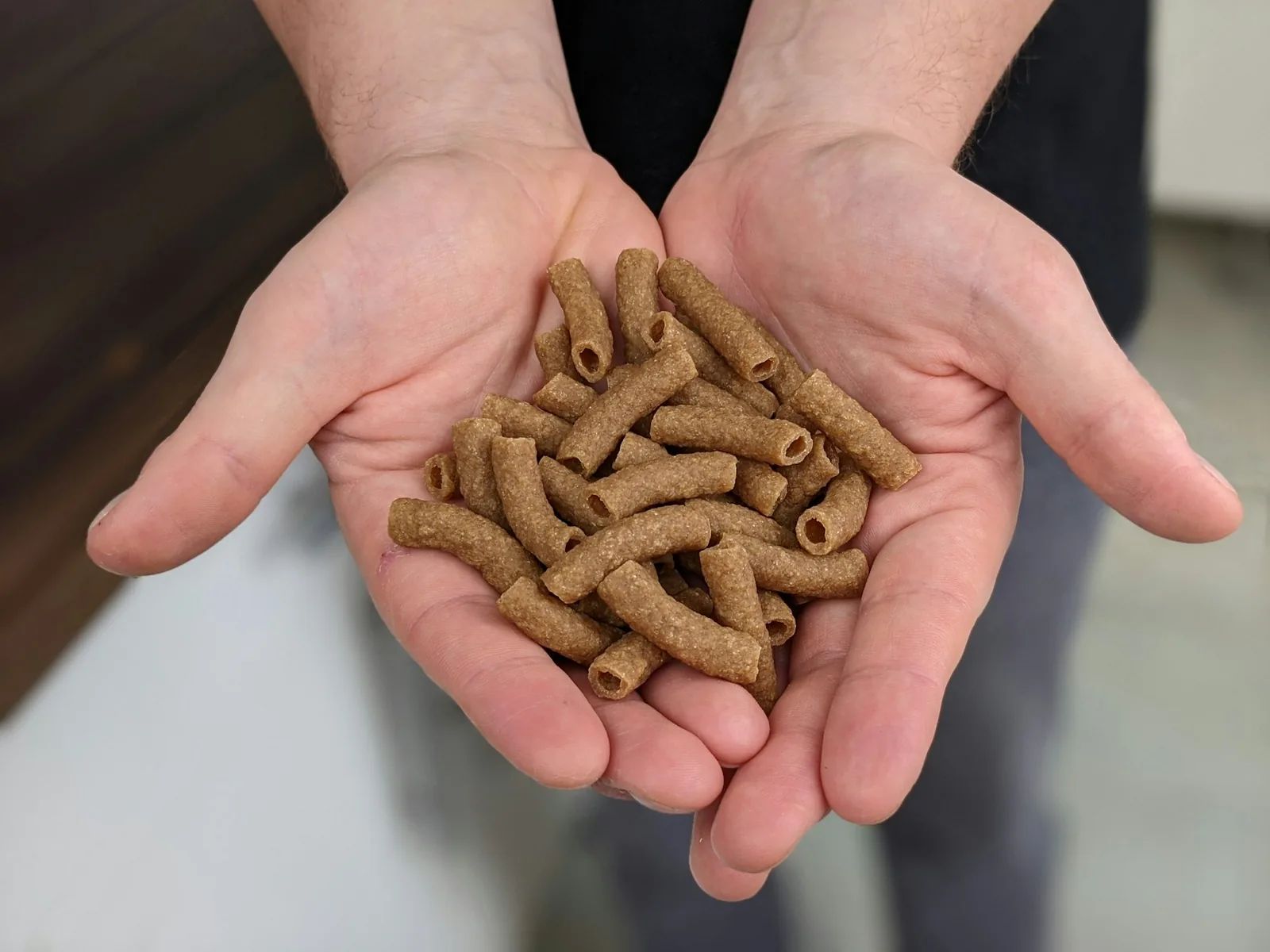
- Cap treats at 10% of daily calories. For a Westie that is roughly 40 to 50 calories — not many biscuits.
- Subtract treats from meals, rather than adding them on top.
- Use the daily ration for training. Measure the day’s food into a pot in the morning and train from it.
- Watch the dental chews. Some are 100 calories or more.
- Agree it as a household. Four people each giving one treat is four treats.
- Use vegetables. Carrot, green beans and cucumber are almost free.

Food and itching: the part that gets confused
Owners of itchy Westies are frequently told to change food, and it usually does not help, because the cause is usually environmental rather than dietary.
True food allergy exists but is less common than assumed, and the only way to identify it is a strict eight-to-twelve week elimination trial — not a brand switch, and not a mail-order allergy test.
The full method is set out in our guide to why Westies itch and what actually helps. Changing food before that has been done tends to waste months.
Frequently asked questions
How much should I feed my Westie?
Roughly 400 to 550 calories a day for a typical adult, less for a senior or a less active dog. Weigh the food rather than scooping it, and adjust based on body condition rather than the number on the bag.
How do I know if my Westie is overweight?
You should feel the ribs easily under a thin layer, see a clear waist from above, and see a gentle upward tuck of the belly from the side. The coat hides a lot, so go by touch.
Is grain-free food better for Westies?
Not as a general rule. Grain-free is a marketing category rather than a health one, and it is not a treatment for itching. Follow veterinary advice rather than the shelf.
How many treats can a Westie have?
Under 10% of daily calories, which is roughly 40 to 50 calories. Subtract them from meals rather than adding them, and count what everyone in the household gives.
Will changing food stop my Westie itching?
Only if food allergy is the cause, which is less common than assumed. Most itching in this breed is environmental allergy. A proper elimination trial is the only reliable way to find out.
Weight and the dogs we take in
A significant proportion of Westies arriving in rescue are overweight, usually because an owner became unwell and walks got shorter while portions did not.
It is one of the more satisfying things to put right. Controlled reduction improves mobility and mood within weeks, and is part of the care every rescue Westie receives before placement.
If you are considering adopting, the Westies currently available for adoption notes any dietary needs, and our honest guide to what owning a Westie involves sets out the running costs including food.