
Most training advice starts with sit. For a newly adopted dog that is close to the least useful thing you could teach.
A rescue dog needs cues that keep it safe and help it settle. Sit is a party trick by comparison, and it can wait a month.
The short version
- Teach the name first. Most rescue dogs do not know one, or knew a different one.
- Prioritize safety cues over obedience cues.
- Five short sessions a day beat one long one, especially with a terrier.
- Pay generously at the start. You are competing with a very interesting world.

The five, in order
| Cue | What it does | Why it comes first |
|---|---|---|
| 1. Name | Gets attention without pressure | Everything else depends on it, and the dog may not have one |
| 2. Look at me | Buys focus in a distracting moment | The building block of recall and disengagement |
| 3. Leave it | Interrupts before the dog commits | The cue most likely to prevent a genuine emergency |
| 4. Come | Brings the dog back | Never reliable against prey in a terrier, but worth every hour |
| 5. Settle | Teaches how to switch off | The one that makes daily life liveable |
1. The name
A rescue dog often arrives with a name it has had for a week, or one it associates with being shouted at. Either way it means nothing useful yet.
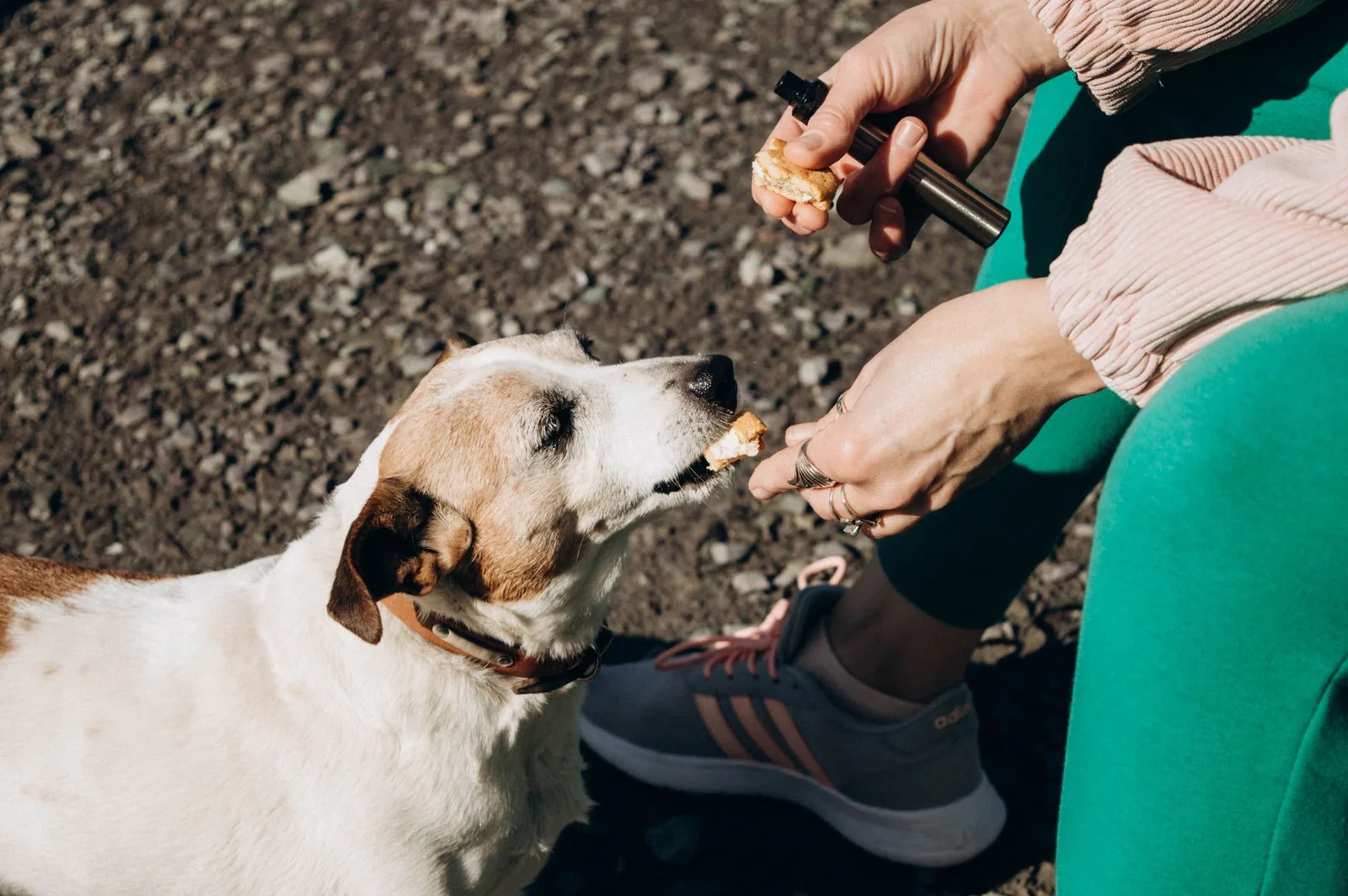
Say the name once, in a light tone, and the instant the dog looks at you, mark it and pay. Repeat ten times, three or four times a day, in a quiet room.
Never use the name to interrupt something the dog is enjoying, and never say it twice in a row. A name that predicts good things works; a name that predicts nothing gets ignored within two weeks.
2. Look at me
This is the cue that makes the others possible. A dog that can offer eye contact on request has a moment of thought available, which is exactly what is missing when a squirrel appears.
Start by simply marking any voluntary glance. Once the dog is offering it deliberately, add the word. Then practice it somewhere slightly harder, and keep raising the difficulty in small steps.
The endpoint is a dog that checks in with you by habit outdoors, which is worth more than a formal heel — our guide to loose leash walking with a terrier builds on exactly this.
3. Leave it
The highest-value cue on the list, because it works on dropped medication, chicken bones, rodent bait and the neighbor’s cat.
- Start with a covered treat in your closed hand. Wait. The moment the dog stops trying, mark and pay from the other hand.
- Add the words once the dog is backing off reliably.
- Move to the floor, covered, then uncovered, ready to cover it again.
- Generalize outdoors with low-value items before you ever need it for something high-value.
- Always pay from a different source. The dog must learn that leaving something produces something better.
The emergency version of this is what stands between a terrier and a road. It also matters for the hazards in our guide to foods and household items dangerous to dogs.

4. Come
Worth building properly, and worth being honest about: most Westies never become reliable against live prey, and planning around that is safer than believing otherwise.
| Do | Do not |
|---|---|
| Use a distinct word reserved for recall | Use the name alone |
| Pay every single time, generously | Fade rewards early |
| Practice on a long line in open ground | Test it off leash before it is solid |
| Run away as the dog comes | Move towards the dog |
| Recall for something good, then release again | Only recall to end the fun or to leave |
| Keep an emergency word held in reserve | Burn it on ordinary use |
5. Settle
Underrated, and the cue that most changes life with a terrier. It teaches a dog that switching off is an option, which does not come naturally to a breed developed to stay alert.
Put a mat down where the family sits. Reward the dog for any contact with it, then for lying on it, then for staying there while nothing happens. Feed calmly and often at first.
Done properly it becomes a portable off switch you can take to a café or a friend’s house. Karen Pryor Academy publishes training resources grounded in positive reinforcement if you want the method in more depth.
How to run the sessions
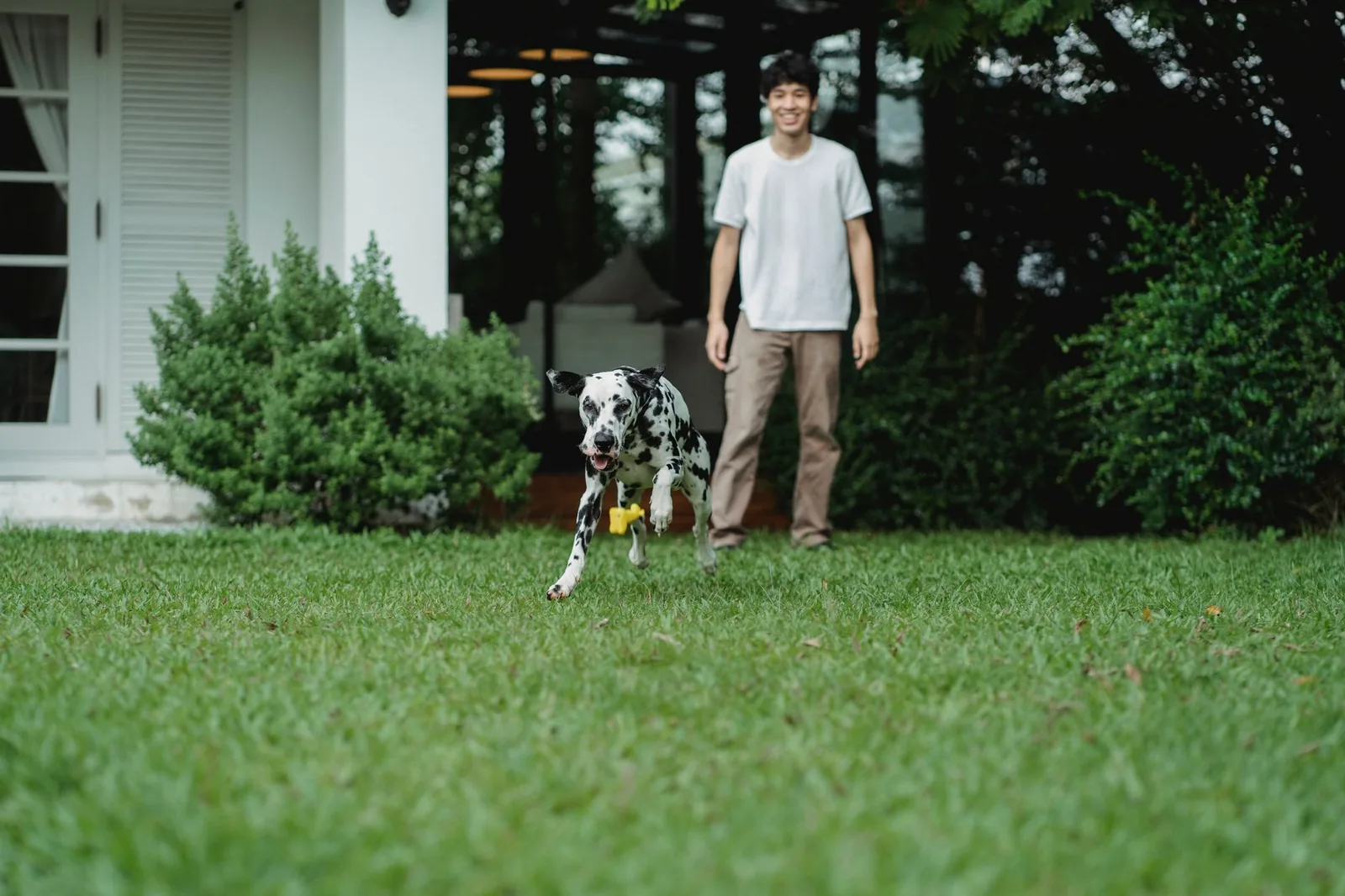
- Two to five minutes, several times a day. Terriers disengage from long sessions.
- End while the dog still wants more.
- Use genuinely good food at the start. Kibble does not compete with a front window.
- One new thing at a time, and lower the difficulty whenever you change location.
- Never train a stressed dog. A newly arrived dog may not take food at all for a week or two, which is normal.
That last point matters most in the first two weeks — what to expect in the first 30 days with a rescue Westie covers what is normal before training is even realistic.

Frequently asked questions
What should I teach a rescue dog first?
Its name, then eye contact, then leave it, come and settle. Safety and settling cues matter far more in the first months than sit or down, which can wait.
How do I teach a rescue dog its new name?
Say it once in a light tone, and mark and reward the instant the dog looks at you. Never use it to interrupt something enjoyable, or it stops working.
How long should training sessions be?
Two to five minutes, several times a day. Terriers lose interest in long sessions, and three short ones tire a dog more than one long one.
Can you train a terrier to come back reliably?
You can build a strong recall, but most Westies never become reliable against live prey. Train it thoroughly and still use a long line in unfenced ground.
My new dog will not take treats. What do I do?
Wait. A stressed dog often cannot eat for the first week or two, and that is normal rather than stubbornness. Work on routine and space first, and start training once the dog is eating comfortably.

Where this fits
These five build the foundation that everything else sits on. Once they are solid, the problem behaviors people worry about become considerably easier — our guide to barking, digging and prey drive assumes this groundwork.
If you are still deciding, our guide to adopting a Westie in New England explains the process, and the Westies currently available note what each dog already knows.