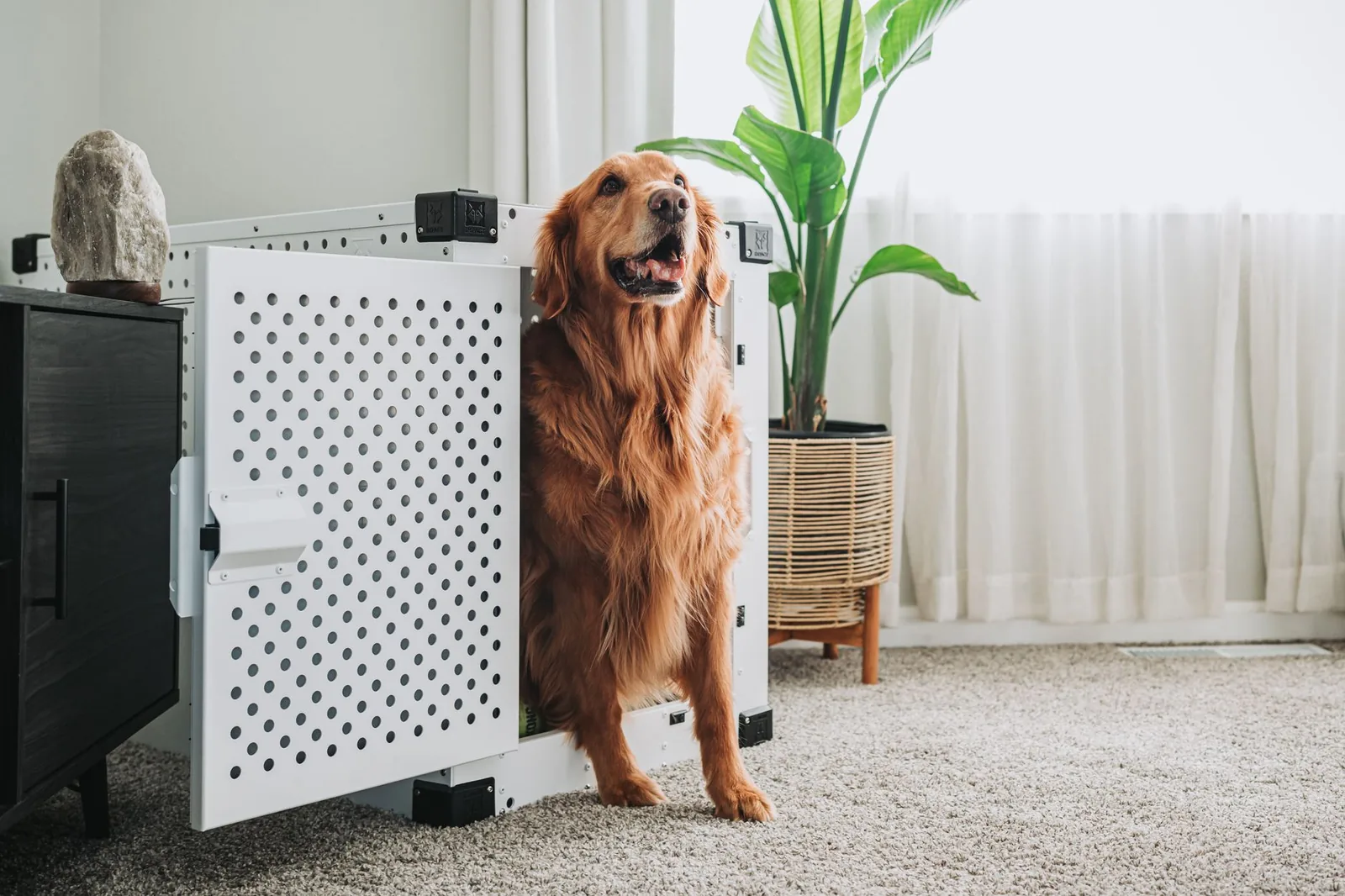
A crate gives an unsettled dog somewhere that is unambiguously its own, which is exactly what most newly adopted dogs need in week one.
It is also, for a minority of dogs, the single worst thing you could introduce. Working out which you have is the first job.
The short version
- A crate is a den, never a punishment or a way to store a dog.
- Introduce it with the door open for days before it ever closes.
- A dog with confinement distress or a kennel history may need a pen instead.
- If the dog panics rather than protests, stop and reassess.
What a crate is for
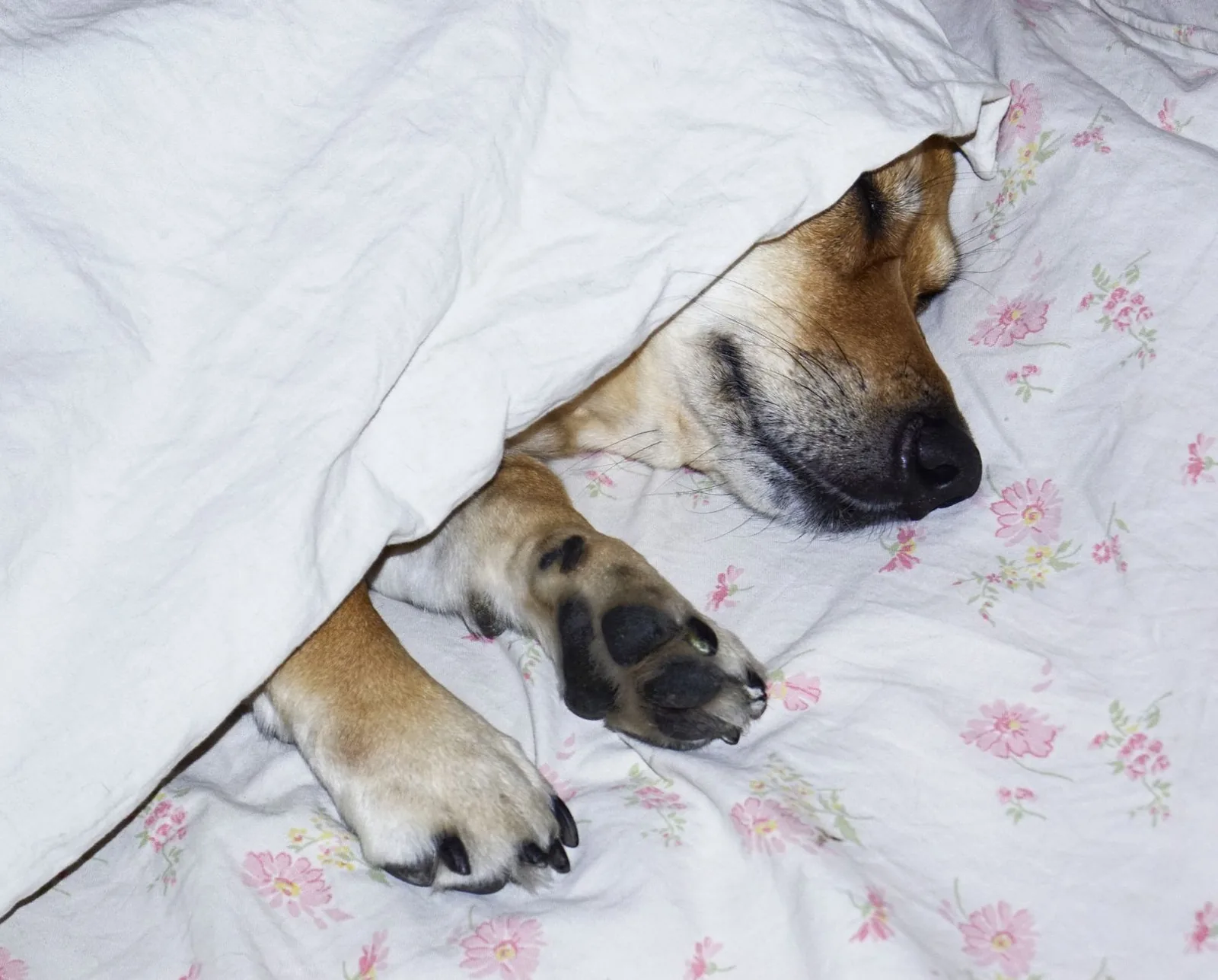
Two things: a place the dog can retreat to and not be disturbed, and short periods of safe containment when you cannot supervise.
Both are genuinely useful during settling. House training relies on a dog not wanting to soil where it sleeps, and a den reduces the pacing that comes with too much unfamiliar space too soon.
It is not a solution to being out all day, and it is not a substitute for training. What to expect in the first 30 days with a rescue Westie covers where it fits in the wider settling picture.
Which dogs it suits
| Dog | Crate? | Why |
|---|---|---|
| Newly adopted, previously home-raised | Usually yes | A den reduces overwhelm in the first weeks |
| Recovering from surgery | Yes, on veterinary advice | Enforced rest without stress |
| House training in progress | Yes, in short stints | Supports the natural den instinct |
| Nervous but not panicking | Yes, slowly, door open for a long time | Becomes a retreat once it is genuinely optional |
| Confinement distress | No | The barrier is the trigger; a crate adds to the problem |
| Long-term kennel or breeding background | Usually not at first | Has already been contained for years; a pen works better |
| Severe separation anxiety | Not as a fix | Contains the damage, not the panic |
The difference between protest and panic is set out in our guide to separation anxiety in Westies.

Introducing it, step by step
- Set it up and ignore it. Door fixed open, comfortable bedding, in a room the family uses. Leave it for two or three days.
- Feed near it, then in it. Bowl beside the entrance, then just inside, then at the back. Door stays open throughout.
- Scatter good things inside at random times so the dog finds them without you present.
- Close the door for three seconds while the dog is eating, then open it. Build to a minute over several sessions.
- Step out of sight briefly, then return before the dog reacts.
- Build duration slowly, varying it rather than always increasing.
Most adult dogs take one to three weeks. Rushing to a closed door on day one is the mistake that creates a dog that will never go in again.
Getting the setup right
| Element | What works | What does not |
|---|---|---|
| Size | Stand, turn and lie flat — roughly 24 inches for a Westie | So large the dog can soil one end |
| Location | A quiet corner of a room people use | A garage, or total isolation |
| Bedding | Washable, familiar, the dog’s own scent | Brand new and unfamiliar |
| Covering | A blanket over three sides | Fully enclosed with no airflow |
| Contents | A safe chew or stuffed food toy | Collar or harness left on |
| Door | Fixed open for the first week | Closed on the first day |
How long is too long
A crate is for short periods. An adult dog should not be crated for more than about four hours at a stretch during the day, and less while it is still learning.
Overnight is different, because the dog is asleep, but it still needs an outlet before bed and first thing.
If your working day means longer than that, the answer is a sitter, a neighbor or a pen rather than a longer crate stint — adopting a dog when you work full time covers the realistic options.
When it is not working
- Damage to the crate itself, bent bars, bloodied gums or torn nails — stop immediately.
- Drooling, panting or soiling every time the door closes.
- Refusing to enter after weeks of positive work.
- Escalating rather than settling over sessions.
Any of these means the crate is the wrong tool for this dog. A pen or a dog-proofed room gives the same containment without the barrier that triggers it.
The Certification Council for Professional Dog Trainers maintains a directory of certified trainers and standards for humane training, which is where to look if you want help rather than another article.

The kennel-background exception
A dog that spent years in a run has already been contained. It does not need a crate to feel safe, and for many the enclosure is the part they most want to leave behind.
Use an open pen with a clear sleeping area instead, and expect house training to take months rather than weeks — what adopting a retired breeding Westie really involves sets out the timeline.

Frequently asked questions
Can you crate train an adult dog?
Yes, and most adult dogs learn faster than puppies. Expect one to three weeks with the door open for much of that, and build the closed-door duration slowly.
How long can a dog stay in a crate?
Up to about four hours at a stretch during the day for an adult dog, and less while training. Overnight is acceptable because the dog is asleep, with an outlet before bed and first thing.
Is crate training cruel?
Not when the crate is a den the dog chooses to use. It becomes cruel when it is used as punishment, for long stretches, or on a dog that panics rather than settles.
What if my rescue dog hates the crate?
Stop and use a pen or a dog-proofed room instead. Damage to the crate, bleeding gums, torn nails, drooling or soiling every time the door shuts all mean this is the wrong tool for this dog.
Should I crate a dog with separation anxiety?
Not as a solution. A crate limits the damage but does nothing about the panic, and for many anxious dogs the confinement makes it worse. Graduated desensitization is the treatment.

Where this fits
Crate work supports house training rather than replacing it — our practical method for house training an adult rescue dog is the companion piece.
If you are still at the deciding stage, our guide to adopting a Westie in New England explains the process, and the Westies currently available note which dogs are already crate trained and which are not.