
Somebody names something serious, and the rest of the appointment goes past you. Most people leave holding a leaflet and remembering almost nothing.
That is normal, and it is the worst possible moment to decide anything. This is about giving yourself room to think.
The short version
- You almost never have to decide today. Ask how long you actually have.
- Write questions down beforehand, and take somebody with you.
- Ask what happens with each option, including doing nothing.
- A second opinion is normal practice, not a criticism of your vet.
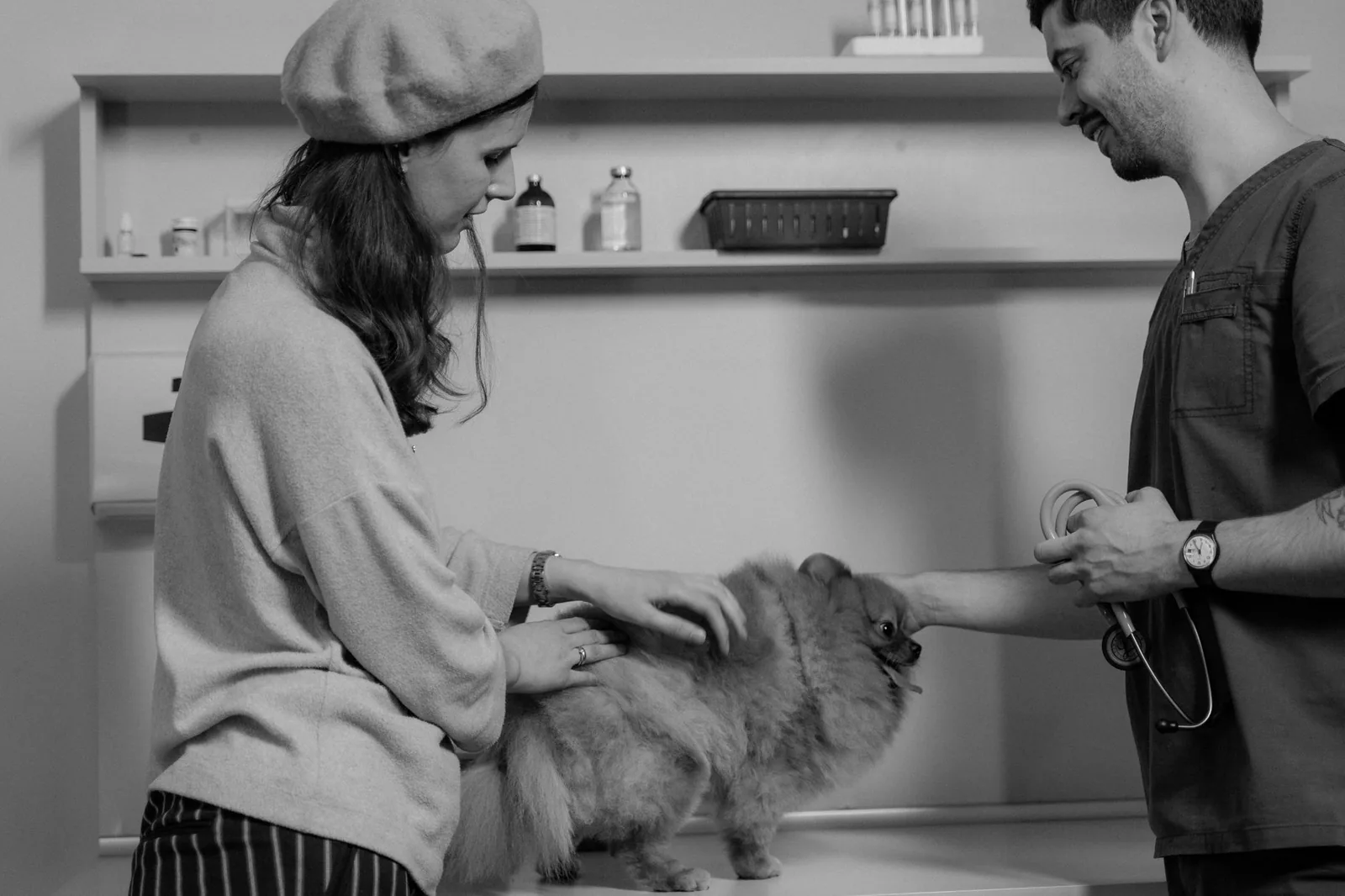
At the appointment
Three practical things make an enormous difference, and all of them are easier to arrange in advance than in the moment.
- Take somebody with you. Two people remember roughly twice as much, and one of you can write.
- Ask to record the conversation, or take notes. Most vets are entirely happy with this.
- Ask for it in writing, including the diagnosis name spelled out, so you can read about the right thing afterwards.
If the news lands badly, say so. Asking for five minutes, or to come back tomorrow with questions, is completely reasonable and commonly done.
The questions worth asking
| Question | Why it matters |
|---|---|
| What exactly is the diagnosis, and how certain is it? | Some are confirmed; some are working assumptions |
| What happens if we do nothing? | The baseline every option is measured against |
| What are the realistic options, including palliative care? | Palliation is a legitimate choice, not a failure |
| What does each option involve for the dog? | Frequency of visits, side effects, hospital stays |
| What does each cost, roughly? | Better asked now than assumed |
| How long do I have to decide? | Usually longer than it feels |
| What would you do? | Most vets will answer honestly if asked directly |
| What should make me call you sooner? | Gives you a threshold rather than worry |

Treating, palliating, and the space between
These are not two options with a right answer. They are a range, and where a particular dog sits depends on the dog rather than on principle.
| Approach | Goal | Suits when |
|---|---|---|
| Full treatment | Cure or long remission | The dog is otherwise well and can tolerate it |
| Modified treatment | Benefit with less burden | Age or other conditions make the full protocol hard |
| Palliative care | Comfort, not cure | Treatment burden outweighs likely benefit |
| Watchful waiting | Monitor, act if things change | Slow conditions found incidentally |
| Hospice | Comfort to the end | Progression is established and treatment is done |
What the last row involves is set out in our guide to hospice and end-of-life care for a Westie.
Second opinions and referral
Asking for one is routine, and any vet who takes offense has told you something useful about the practice.
It is worth doing when the diagnosis is uncertain, the treatment is major, the condition is uncommon, or you simply need to hear it twice before you can act.
Referral is different: not a second opinion but access to someone who does this specific thing daily. Ask what a specialist would add, and whether it is worth the travel for this dog.
The Veterinary Cancer Society maintains information on veterinary oncology and finding a specialist, which is one route where the diagnosis is a tumour.

Deciding without deciding in a panic
- Write down what the dog enjoys — three specific things. It becomes your measure later.
- Set a review date rather than an open-ended worry. Two weeks, then reassess.
- Agree it within the household, so nobody is deciding alone or relitigating it.
- Separate the money question and ask it out loud. Cost is a legitimate factor and pretending otherwise helps nobody.
- Score quality of life weekly, on paper. Decline is gradual and memory adjusts to it.
- Decide what you will not do, in advance and while calm.
That last point is the one experienced owners describe as most useful. A line drawn while calm is usually wiser than one drawn at two in the morning.
The money conversation
It is uncomfortable and it is unavoidable, and having it early gives you more options than having it late.
Ask for a written estimate, ask what is essential versus optional, ask whether anything can be staged, and say plainly what you can manage. Veterinary teams work within budgets routinely when they know there is one.
Deciding on cost grounds is not a moral failure — our guide to planning for veterinary costs covers the help that exists, including funds most people never hear about.

Living with it afterwards
Most serious diagnoses become, after a few weeks, a routine. Medication with breakfast, a note in a diary, a recheck in the calendar.
The anticipatory grief is real and often harder than the practical side. It helps to notice that the dog is not grieving — it is having a normal Tuesday, and can carry on doing so for a long time.
Our guide to living with a dog on long-term medication covers the routine, and caring for a Westie after ten covers what else changes alongside.

Frequently asked questions
Should I get a second opinion for my dog?
It is routine and reasonable, particularly where the diagnosis is uncertain, the treatment is major, or you need to hear it twice. Any vet who objects has told you something useful.
How do I decide whether to treat or not?
Ask what happens with each option including doing nothing, what each involves for the dog day to day, and what it costs. Then judge against what your dog actually enjoys rather than against survival time alone.
Is choosing palliative care giving up?
No. It is a clinical decision to prioritize comfort over cure, and for an older dog with other conditions it is frequently the kinder choice.
How long do I have to decide?
Usually longer than it feels. Ask directly. Very few decisions genuinely have to be made in the consulting room, and most vets will tell you plainly which ones do.
Is it wrong to consider cost?
No, and pretending otherwise helps nobody. Say what you can manage, ask for a written estimate, and ask what is essential versus optional. Options narrow the later you raise it.

If it changes what you can manage
Sometimes a diagnosis genuinely puts care beyond a household, through cost, physical demands or circumstances.
If that is where you are, talk to us early through the surrender and rehoming page rather than at the point of crisis. Dogs with medical needs are what this rescue exists for, and our long-term care and hospice program takes the ones who will not be adopted again.