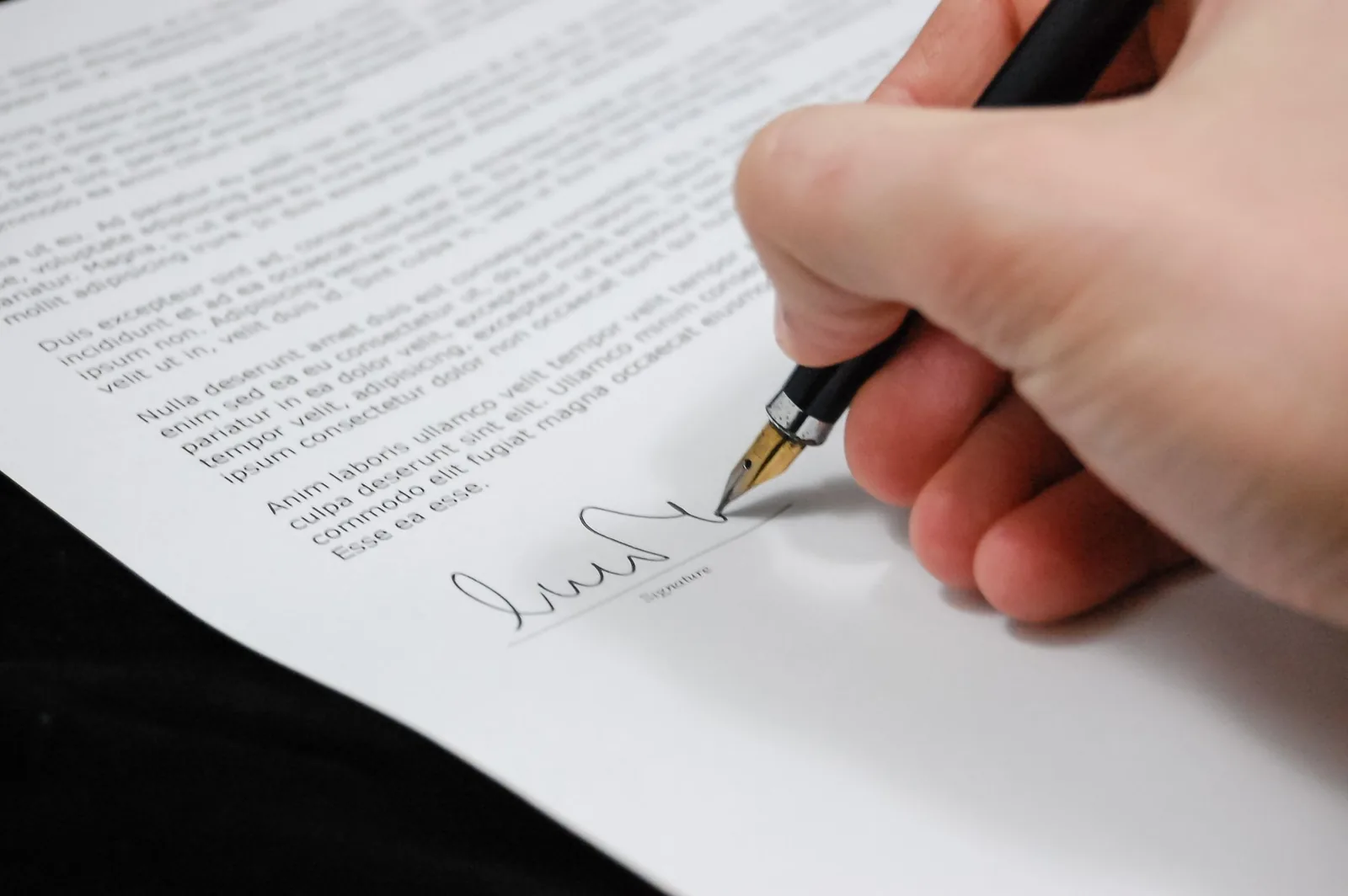
Adoption contracts are signed at handover, often on a doorstep, by someone understandably more interested in the dog than the paperwork — usually the same day as the home visit has been completed and approved.
They are short and mostly unsurprising. The clause people misread is the return clause, and it is worth understanding before the day rather than after.
The short version
- Adoption transfers ownership. The rescue does not keep the dog.
- The return clause is a right of first refusal, not continuing ownership.
- Most clauses exist because of something that once went wrong.
- Ask about anything unclear before you sign, not afterwards.

The standard clauses
Contracts vary between organizations, but the same handful of terms turn up almost everywhere.
| Clause | What it means in practice |
|---|---|
| Transfer of ownership | The dog becomes yours on signing |
| Return to rescue | If you cannot keep the dog, it comes back to us first |
| Adequate veterinary care | Routine care, not a defined spending level |
| No rehoming or sale | You do not pass the dog on privately |
| Indoor dog | The dog lives in the house, not outside |
| Identification kept current | Microchip details updated to you |
| Notification of change of address | So the microchip record stays useful |
The care standard is worth reading closely, because it commits you to something ongoing — our guide to planning for veterinary costs sets out what that realistically involves.
The return clause, properly understood
This is the one that causes confusion. People read it as the rescue retaining ownership, or as a threat that the dog could be taken back.
It is neither. It is a right of first refusal: if the placement ever ends, for any reason, the dog returns to the rescue rather than being advertised privately or taken to a shelter.
The reason is simple. We know this dog, we have its full history, and we can place it again properly. A private rehoming loses all of that, and small dogs advertised free online end up in places nobody wants to think about.
Using it is not a failure — what happens when an adoption is not working covers that conversation honestly.
What the contract does not do
| People assume | The reality |
|---|---|
| The rescue can reclaim the dog at will | No. Ownership transferred at signing |
| Home checks continue indefinitely | Follow-up is contact, not inspection |
| You must use a particular vet | You choose your own veterinarian |
| You cannot travel with the dog | You can; the address clause is about permanent moves |
| The fee is refundable if it does not work out | Usually not, because it was already spent on the dog |
| You must report every minor illness | No, though we always want to hear how the dog is doing |

Questions worth asking before you sign
- What happens if the dog turns out to have a condition nobody knew about? Ask what support exists.
- What does “return to rescue” mean in practice — who do I call, and how quickly can you take the dog?
- Is there a trial period, and what happens at the end of it?
- Who holds the microchip registration, and when does it transfer?
- What records am I getting today, and what is still to follow?
- Is there anything in this dog’s history not written down?
The records question matters more than people expect — our guide to choosing a vet for a rescue dog explains what your new vet will want to see at the first appointment.
Where the legal ground actually sits
In US law a dog is personal property, which is why adoption is handled by contract rather than by anything resembling a custody process.
That framing has consequences. A contract clause is enforceable in principle but expensive to enforce in practice, so most rescues rely on goodwill and on adopters who understood what they signed.
The Center for Animal Law Studies at Lewis & Clark publishes academic work on animal law including companion animal ownership if you want the wider legal context.

Frequently asked questions
Does the rescue still own my adopted dog?
No. Ownership transfers to you when the contract is signed. The return clause is a right of first refusal if the placement ends, not continuing ownership.
What does the return-to-rescue clause actually require?
That if you can no longer keep the dog, you contact the rescue rather than rehoming privately, selling or surrendering to a shelter. We know the dog and can place it again properly.
Can a rescue take my dog back if it disagrees with how I care for it?
Not on a whim. Contracts set a standard of care, but enforcement means a legal process, and reputable rescues raise concerns and offer help long before anything like that arises.
Is the adoption fee refundable if the adoption does not work?
Usually not. The fee typically covers only part of what the rescue already spent on that dog before placement, and that money is gone regardless of the outcome.
Should I have a lawyer look at an adoption contract?
For a standard rescue contract, no. Read it, ask about anything unclear, and keep a copy. If a contract contains something unusual or you are asked to sign without reading it, that is a reason to pause.
What we ask, and why
Our terms are published in full so nothing arrives as a surprise on handover day. Read them before you apply rather than on the doorstep.
Our adoption terms and conditions set out what we ask, and our guide to adopting a Westie in New England explains where in the process the contract appears.