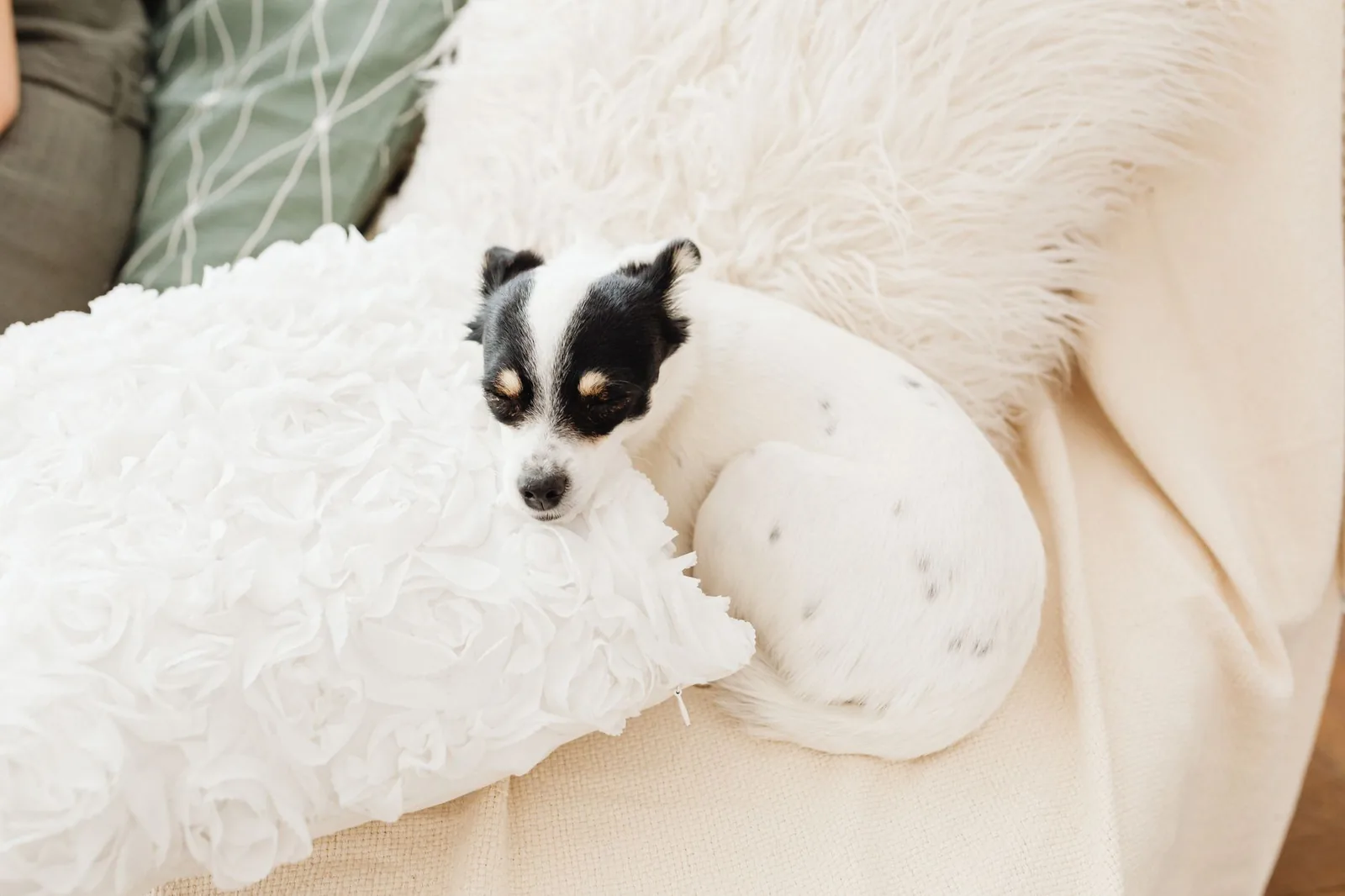
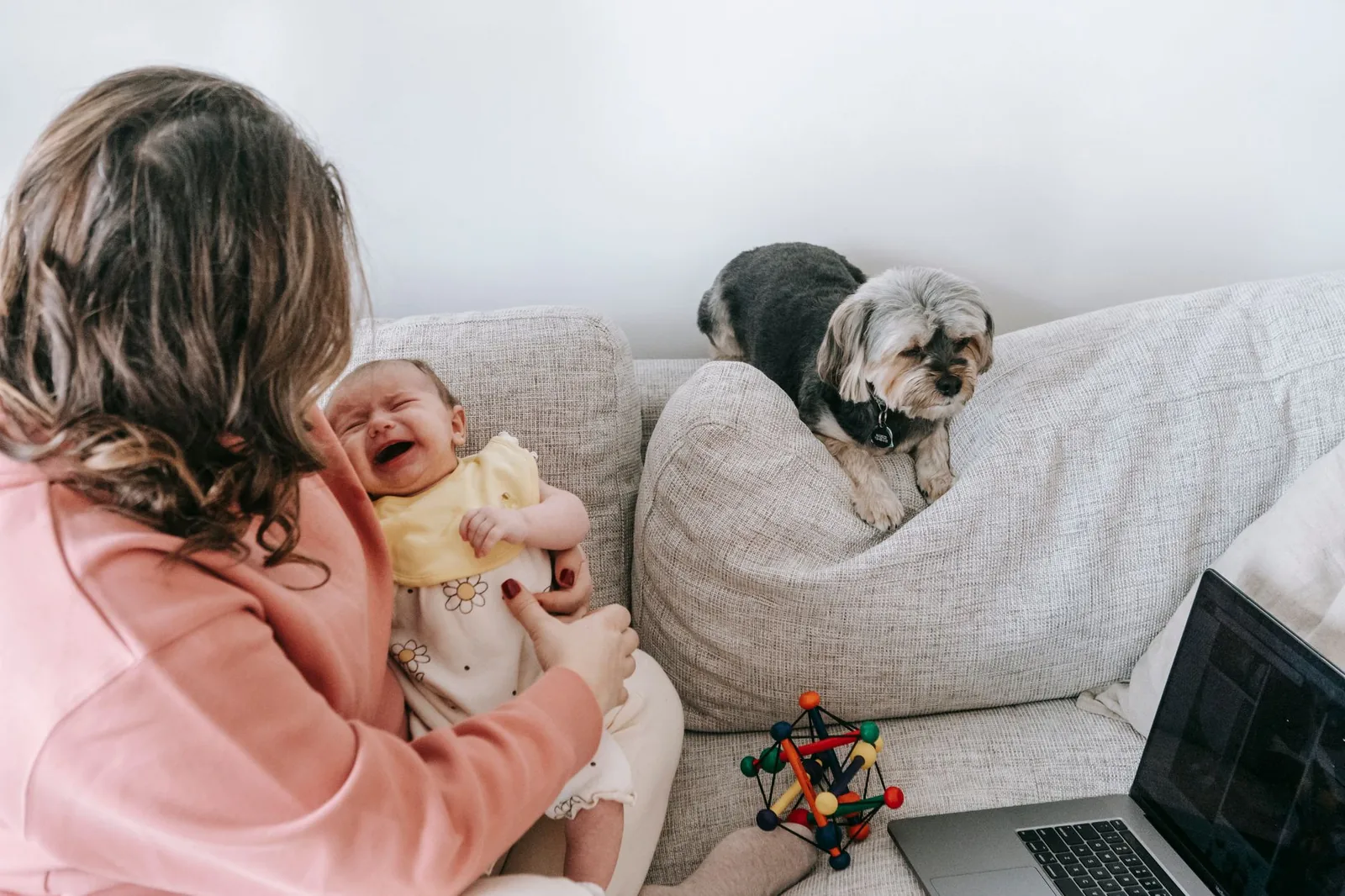
A new baby is a common reason dogs are given up, and most of it is preventable by starting early enough.
The problems rarely come from the baby, but from everything changing at once, which the dog experiences as loss.
The short version
- Start three to six months ahead. Changes made now are unconnected to the baby.
- Never leave a dog and an infant together unsupervised. No exceptions, no matter the dog.
- The dangerous stage is not the newborn. It is the crawling and toddling one.
- Teach the dog a settle and a safe space it can retreat to and not be followed.
Why timing matters
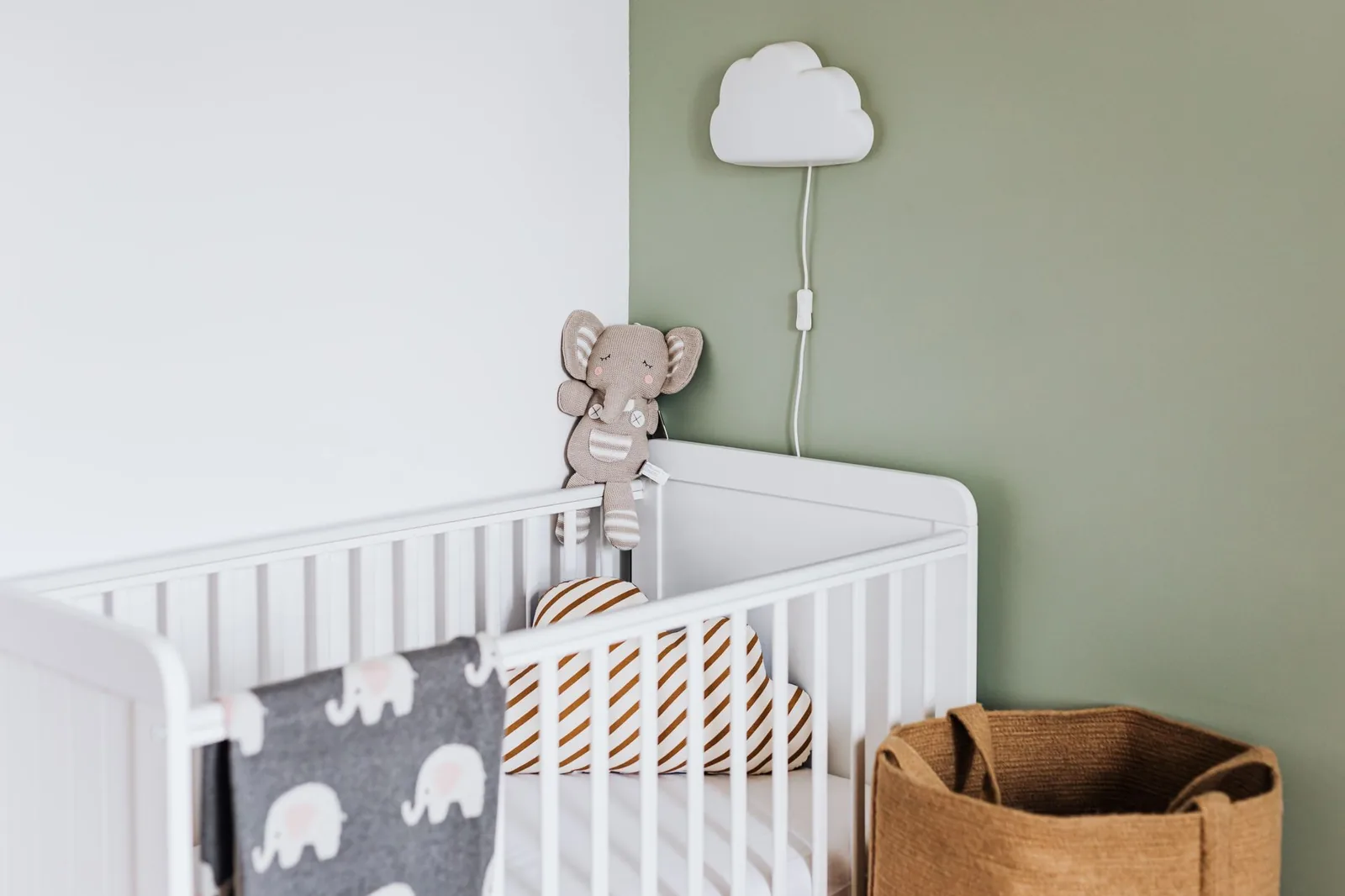
If the walk shortens, the sofa becomes off limits and the bedroom door closes in the same week the baby arrives, the dog draws the obvious conclusion. Make every change months ahead, so each is normal by the time it could be associated with anything.
| Change | When to make it | Why |
|---|---|---|
| New sleeping arrangement | 3–6 months ahead | The biggest change; needs longest |
| Any furniture rules | 3–6 months ahead | So it is not linked to the baby |
| Nursery access decided | 3 months ahead | Gate up and normal well beforehand |
| Walk time and route changes | 2–3 months ahead | Practice the realistic version |
| Whoever will walk the dog takes over | 2 months ahead | Often the less-involved parent |
| Settle on a mat taught | 2–3 months ahead | The single most useful skill |
| Baby sounds introduced quietly | 2 months ahead | Recordings, at low volume, with food |
Skills worth teaching first
- Settle on a mat. A portable off switch, so the dog can be near you without being underfoot while you are holding a baby.
- Four paws on the floor for attention, so nobody is jumped at while carrying a child.
- Go to your bed, as a cheerful cue rather than a banishment.
- Leave it, which will apply to dropped food, pacifiers and later to everything a toddler holds.
- Loose leash walking with a stroller, practiced with an empty one first.
These build on the five cues worth teaching first and loose leash walking.

The introduction
Less of an event than people imagine, and better kept low key.
Send home a blanket with the baby’s scent first, and let the dog investigate it calmly.
When you come home, have somebody else hold the baby while you greet the dog normally. Then simply exist in the same room, dog on lead or behind a gate, baby held — no face sniffing, no forced proximity, no fuss. Repeat until it is boring.
Supervision, stated plainly
This is the part where softness would be a disservice.
| Situation | Rule |
|---|---|
| Dog and infant in a room together | An adult actively watching, not present |
| Adult leaves the room, even briefly | Dog or baby goes too. Every time |
| Baby on the floor | Dog behind a gate or on a settle, at a distance |
| Baby crying or startled movement | Increase distance; watch the dog, not the baby |
| Dog choosing to leave | Let it. Never call it back or block the exit |
| Feeding times | Separate entirely |
| Night | Dog out of the nursery, door closed or gated |
Family Paws Parent Education specializes in preparing dogs for babies and toddlers, with support for expecting families, and is worth contacting where a dog has any history of guarding or reactivity.
The stage people underestimate
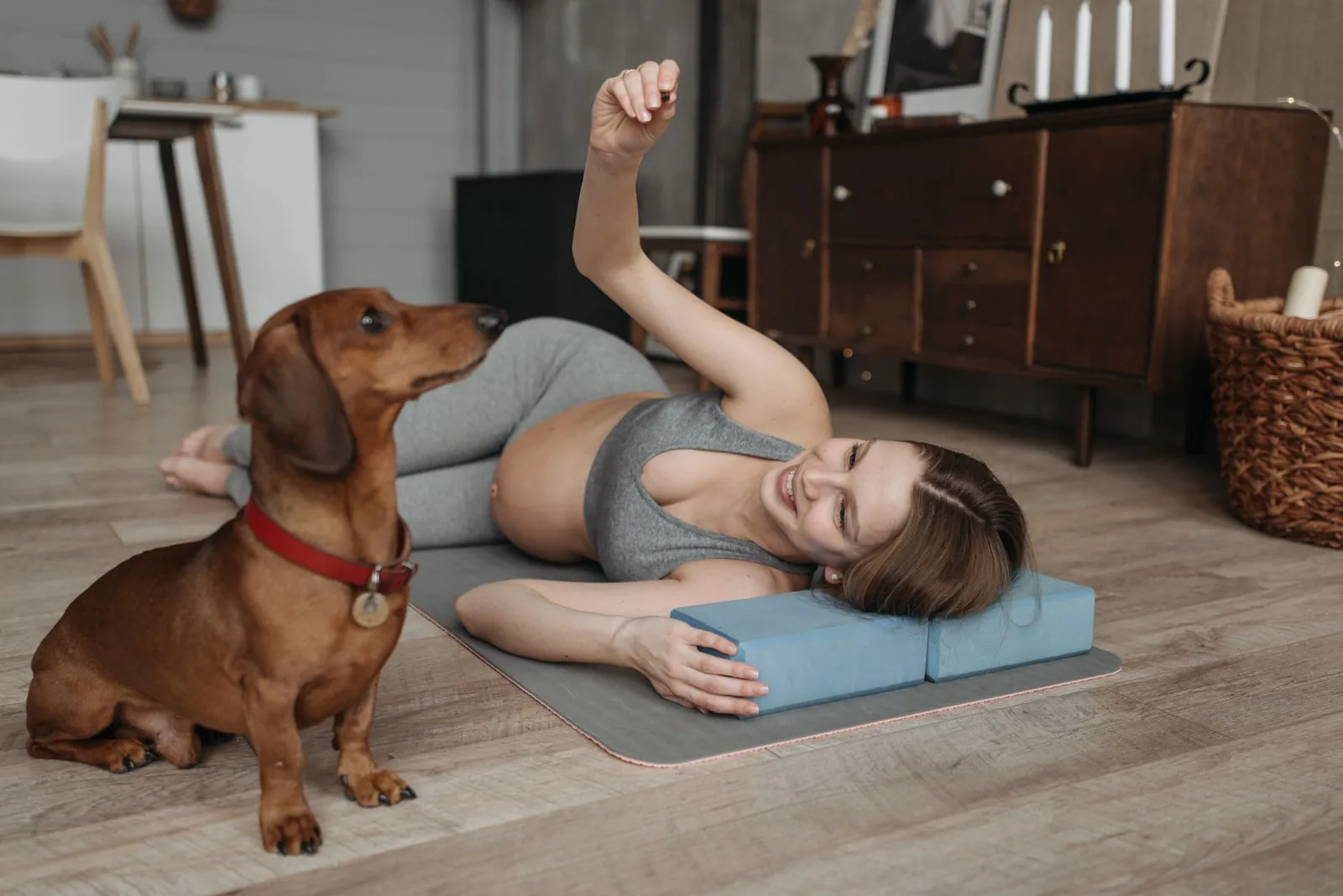
The difficulty arrives at six to twelve months, when the baby becomes mobile, grabs, and moves unpredictably at the dog’s eye level.
Terriers dislike being grabbed, and a dog patient for a year can react in a second when cornered.
Reading the earlier signals is what prevents it — our guide to canine stress signals covers the ladder that runs long before a growl.
Keeping the dog’s life intact
- Protect one walk a day, even a short one, as the dog’s own.
- Five minutes of individual attention, twice daily, with nothing else happening.
- Keep enrichment going — a food puzzle while you feed the baby works for both of you.
- Do not punish attention-seeking. It usually means the dog has run out of other options.
- Accept help. A dog walker two days a week is a reasonable thing to arrange for the first year.
The food-puzzle point does real work — our guide to enrichment that tires a terrier has options that need no handler input.
When to get help
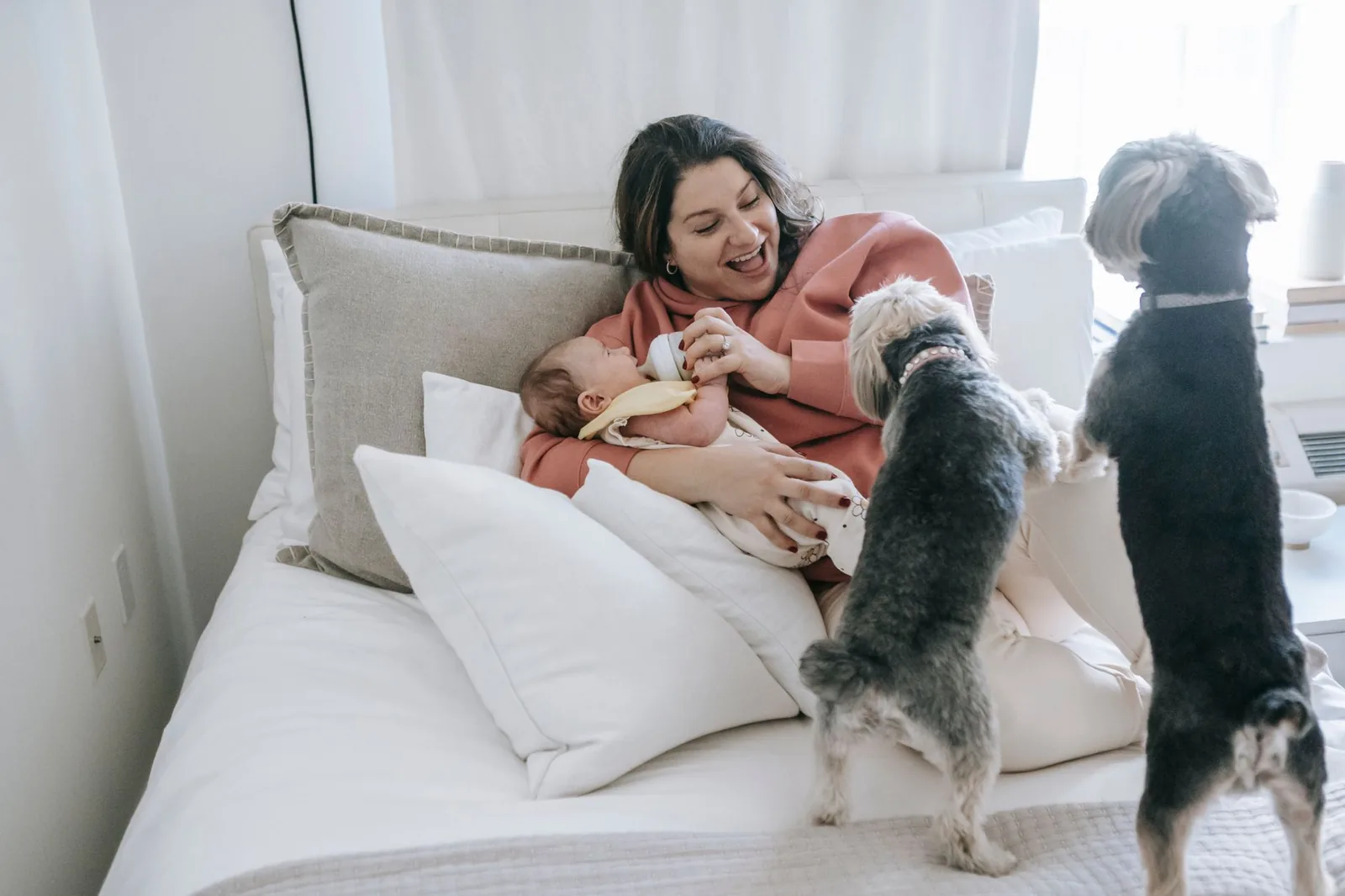
Some situations need a professional before the baby arrives. Any history of growling at people, guarding food or resting places, or reacting badly to children outside warrants a qualified behaviorist while there is time.
That is not a sign the dog cannot stay. It is how it stays safely — our guide to understanding aggression covers what these behaviors mean and what they do not.
Frequently asked questions
When should I start preparing my dog for a baby?
Three to six months before the birth. The aim is that every change — sleeping arrangements, furniture rules, walk times, nursery access — is old news by the time the baby arrives, rather than something the dog associates with it.
How do I introduce my dog to a newborn?
Keep it low key. Send a blanket with the baby’s scent home first, greet the dog properly before the baby comes in, then simply be in the same room with the dog on lead or behind a gate. No face sniffing, no ceremony.
Can I leave my dog alone with my baby?
No. Not for a moment, regardless of how gentle the dog is. If you leave the room, one of them goes with you. Most incidents happen in the seconds an adult stepped away.
When is the riskiest stage?
Not the newborn phase but around six to twelve months, when the baby becomes mobile, grabs and moves unpredictably at the dog’s eye level. Households often relax just as the risk rises.
Should I rehome my dog before the baby comes?
Very rarely necessary. Most difficulties are preventable with preparation started early enough. If your dog has a history of growling or guarding, get a behaviorist involved while there is still time.
If you are considering rehoming
A new baby is one of the commonest stated reasons for surrender, and among the most avoidable.
Talk to somebody before you decide. Our guide to rehoming options opens with problems that turn out to be solvable, and the surrender and rehoming page is where to reach us. Doing it early and calmly gives the dog a far better outcome than doing it in crisis.