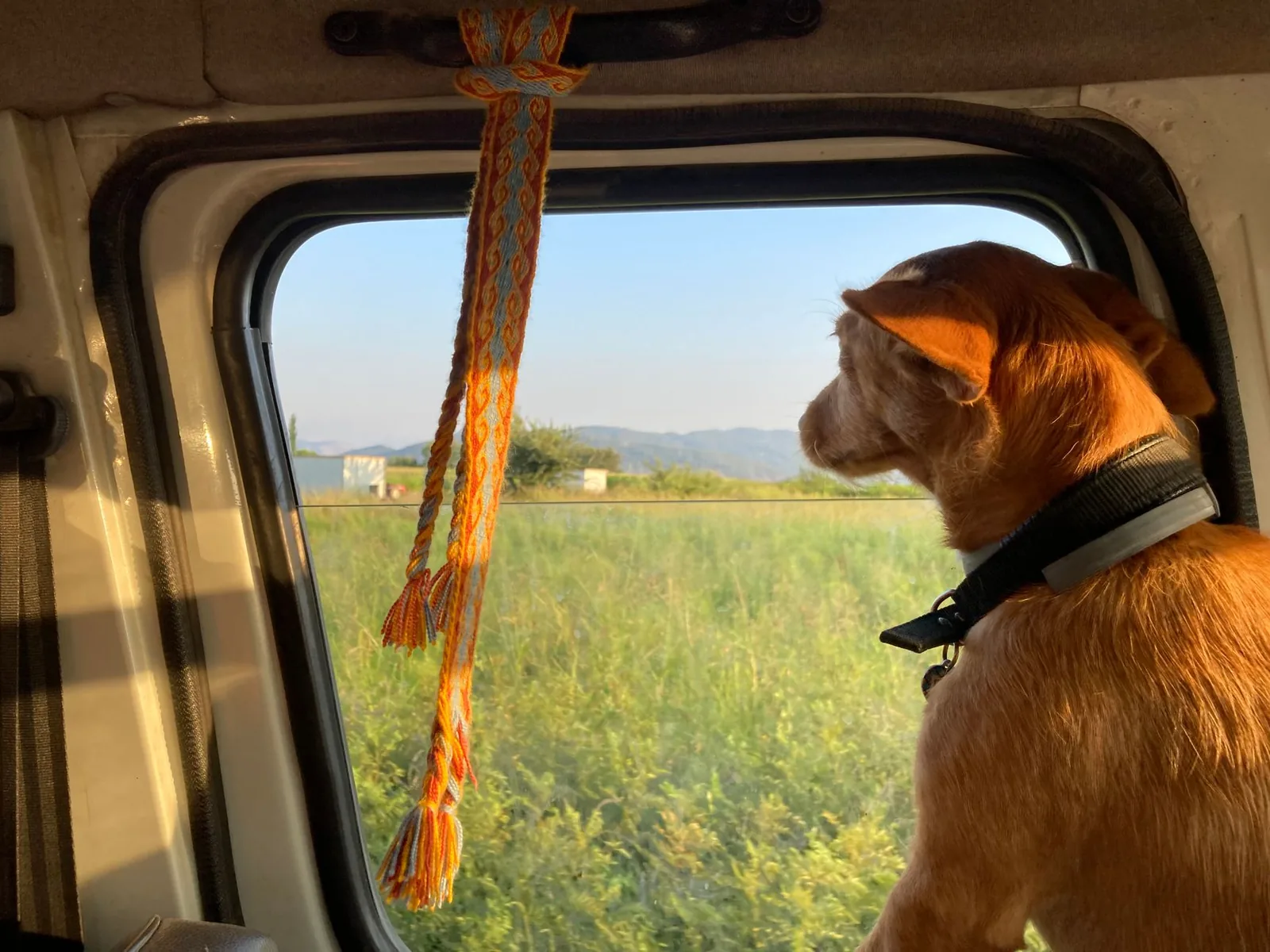
A Westie is small enough that cabin flying is realistic, which is not true of most breeds, and exactly the wrong size to be loose in a car.
This covers the practical decisions: securing the dog on the road, what cabin travel actually involves, and how to choose between taking the dog and leaving it in good hands.
The short version
- An unsecured small dog is a projectile in a crash and a hazard to the driver.
- Cabin travel means the carrier stays under the seat for the whole flight.
- Book flights, boarding and paperwork weeks ahead. Availability is the constraint.
- Rest stops are a common escape point — harness on before the door opens.
Car travel
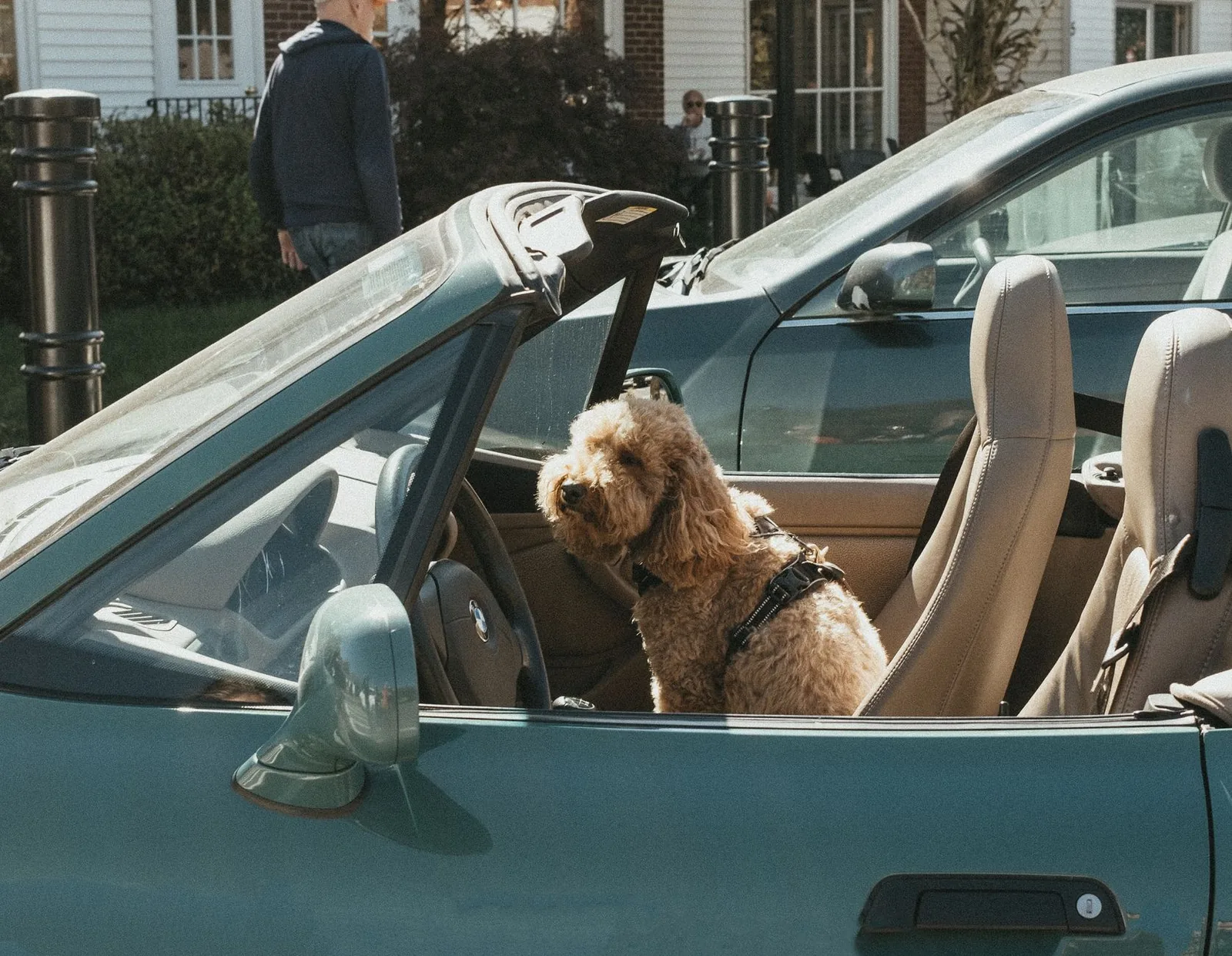
This is where most dogs actually travel and where the risk is routinely underestimated. A 17-pound dog in a 30 mph impact carries enormous force.
| Method | Safety | Notes |
|---|---|---|
| Crash-tested crate, secured | Best | Bulky, but the safest option available |
| Crash-tested harness on a seat belt | Good | Practical for most cars |
| Ordinary walking harness clipped to a belt | Poor | Not designed for impact loads; better than nothing |
| Booster seat with a tether | Fair | Comfort and visibility, limited crash protection |
| Loose in the car | Dangerous | Projectile risk, driver distraction, escape at doors |
| Front seat | Dangerous | Airbags are designed for adult humans |
- Build up gradually if the dog is unused to cars — sitting in a stationary car, then short trips somewhere good.
- Skip the meal before travel, but not the water.
- Stop every two to three hours for a toilet break and a stretch.
- Never leave the dog in a parked car. Temperature rises faster than people expect in both directions.
- Harness on before the door opens, every time. Rest stops are where dogs are lost.
That last point matters more for terriers than most breeds — why terriers bolt and what to do if one gets out covers the recovery method if it happens.

Flying
At this size a Westie can usually travel in the cabin, which is far preferable to cargo. Cargo carries real risk for any dog and should be a last resort.
Cabin rules are strict and vary by airline: the carrier must fit under the seat in front, the dog must stay inside it for the whole flight, and there is a limit on pets per cabin, so booking early is the real constraint.
| What to check | Why |
|---|---|
| Carrier dimensions for that specific aircraft | Limits differ by airline and by plane |
| Combined dog and carrier weight limit | Commonly around 20 lb total |
| How many pets are allowed per cabin | Often very few; first come, first served |
| Health certificate timing | Usually must be issued within a set window before travel |
| Destination entry requirements | Rabies documentation, microchip standards, sometimes quarantine |
| Breed or snub-nose restrictions | Not an issue for Westies, but check anyway |
IATA publishes the industry framework for transporting pets by air, which is a useful orientation before you talk to a specific airline.
Taking the dog, or leaving it
| Option | Suits | Watch for |
|---|---|---|
| Dog comes along | Road trips, dog-friendly accommodation, confident dogs | Restaurants and attractions that will not admit dogs |
| Pet sitter in your home | Anxious dogs, seniors, medical routines | Cost; availability at holidays |
| Staying with a friend or family | Dogs who know the household well | Being honest about medication and habits |
| Boarding kennel | Confident, sociable dogs | Vaccination requirements; noise stress for nervous dogs |
| Home boarding with a host family | Small dogs who dislike kennels | Check other dogs in the home and insurance |
If your dog struggles when you leave at all, that is worth resolving before a trip rather than during one — our guide to separation anxiety in Westies covers the difference between distress and simple protest.

Season matters too. Summer travel needs shade and water planning, and winter driving brings its own hazards — cold weather care for a Westie covers what changes below freezing.
What to take
- Two weeks of the usual food, even for a short trip. Diet changes plus travel is a reliable route to an upset stomach — see feeding and portions.
- All medication, plus a written list of doses.
- Vaccination records and your vet’s number.
- The dog’s own bed or blanket, unwashed. Familiar scent settles a dog faster than anything you can buy.
- A spare harness and lead, and a tag with your mobile number rather than your home address.
- The emergency vet number for where you are going, looked up in advance.

Frequently asked questions
Can a Westie fly in the cabin?
Usually yes, at 15 to 20 pounds, provided the dog and carrier together meet the airline’s weight limit and the carrier fits under the seat. Book early, as most airlines allow only a few pets per cabin.
What is the safest way for a dog to travel in a car?
A crash-tested crate secured in the back, or a crash-tested harness on a seat belt. An ordinary walking harness is not designed for impact loads, and a loose dog is both a projectile risk and a driver distraction.
Is boarding or a pet sitter better?
For confident sociable dogs, boarding is fine. For anxious or elderly dogs, and any dog on a medication routine, a sitter in your own home is usually much less stressful.
How often should I stop on a long drive?
Every two to three hours for a toilet break, water and a short stretch. Put the harness on before opening any door, because rest stops are a common place for dogs to bolt.
Can I leave my dog in the car for a few minutes?
No. Temperature inside a parked car rises and falls far faster than people expect, and a few minutes can become longer than intended. Take the dog with you or leave it at home.

If you are newly adopted
Give a new dog several months before a significant trip. A dog still learning that your house is home does not need an unfamiliar one on top of it, and an older dog may not travel well at all — caring for a Westie after ten covers what changes.
What to expect in the first 30 days with a rescue Westie covers the settling period, and if travel plans are what is making a dog difficult to keep, our guide to rehoming options starts with the problems that turn out to be solvable.