
Cold weather gives you warning. A dog shivers, lifts its paws, turns for home. Heat gives almost none, and by the time a dog looks distressed the damage is often already underway.
Two mistakes account for most summer emergencies: judging the ground by the air temperature, and believing a parked car is survivable.
The short version
- Press the back of your hand to the asphalt for seven seconds. If you cannot hold it there, neither can your dog.
- A parked car is never safe, at any temperature, with any window open.
- Heatstroke can begin below 80°F in humid air with no shade.
- Cool first, then travel. Cooling on the way to the vet matters more than speed.

Why small white dogs are not automatically safer
A pale coat reflects some sun, which helps. Almost everything else about a Westie works against it in heat.
| Feature | Effect in heat |
|---|---|
| Harsh double coat | Insulates in both directions, but traps heat once the dog is already hot |
| Short legs | Body sits close to radiating asphalt |
| Compact body | Less surface area relative to mass for shedding heat |
| Terrier drive | Will keep working long past the point of sensible |
| Thin belly coat | The one genuine advantage — a cool wet surface there helps |
| Any breathing difficulty | Panting is the only cooling system a dog has |
Clipping a double coat off for summer is usually counterproductive — our guide to hand-stripping and clipping explains why the coat is insulation rather than a jumper.
The seven-second test
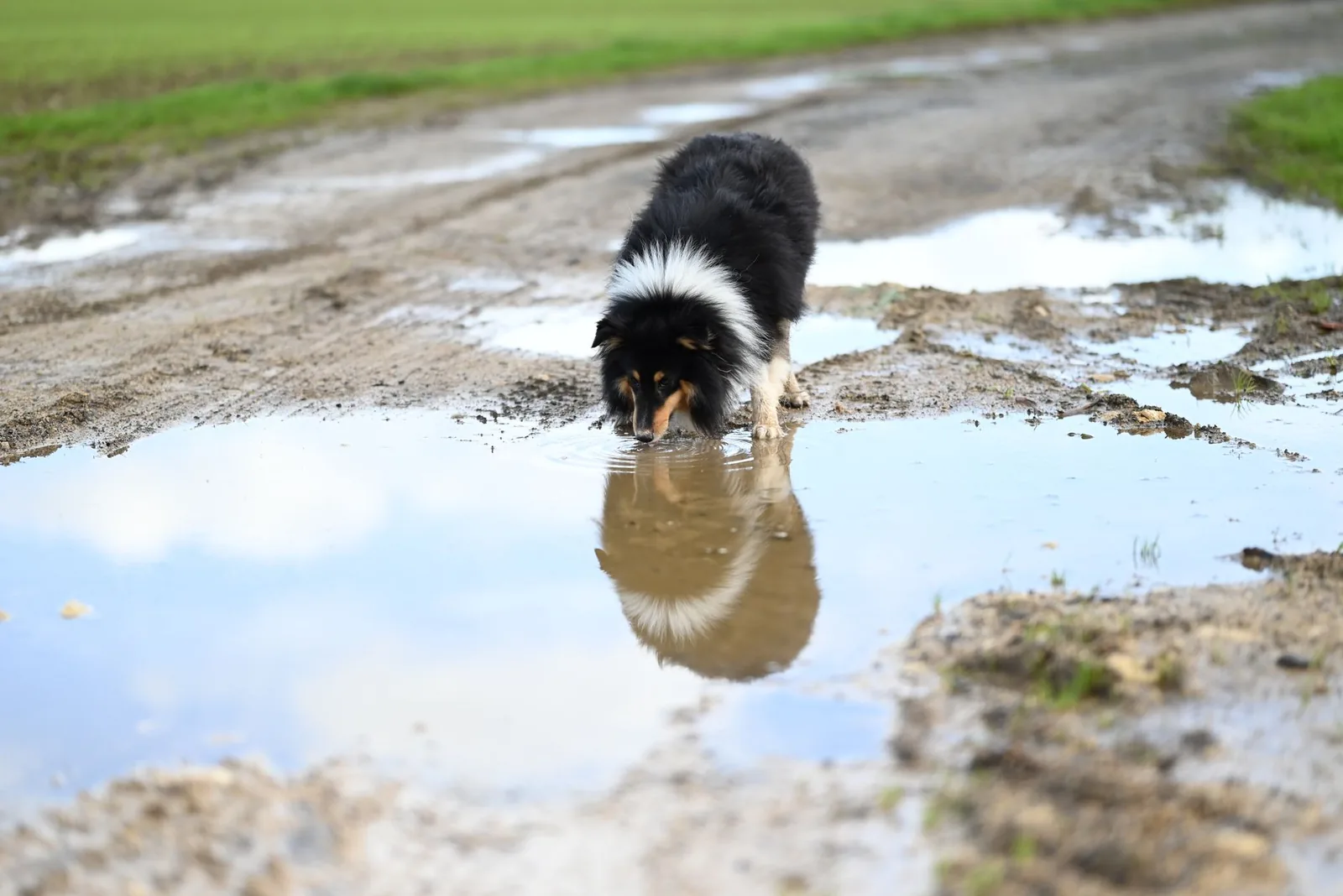
Asphalt in direct sun runs far hotter than the air. On an 86°F day it can reach 135°F, hot enough to blister paw pads within a minute.
- Press the back of your hand flat to the surface the dog will walk on.
- Hold it for seven seconds. Count them properly.
- If you pull away, the walk waits. There is no version of this where the dog is fine and you are not.
- Check the route, not the doorstep. Shaded grass at home says nothing about the open stretch halfway round.
- Remember that dark surfaces hold heat long after the sun has moved off.
Burned pads are painful, slow to heal and easy to miss until the dog starts limping — our guide to nail and paw care covers what healthy pads should look like.
Recognizing heatstroke
Heatstroke is an emergency with a narrow window, and the early signs are worth more than the late ones.
| Stage | What you see | What to do |
|---|---|---|
| Early | Heavy panting, seeking shade, slowing down | Stop. Shade, water, cool the dog |
| Concerning | Bright red gums, thick drool, unsteadiness | Active cooling, call the vet now |
| Serious | Vomiting, diarrhea, confusion, collapse | Cool while traveling to emergency care |
| Critical | Seizure, unresponsiveness, pale or blue gums | Emergency care immediately |
Cool with cool rather than ice-cold water over the belly, armpits and groin, and keep air moving. Ice water can constrict surface vessels and slow heat loss.
The AVMA publishes owner-facing guidance on warm weather pet safety, which covers the emergency steps in more detail.
Cars, and why the answer is never
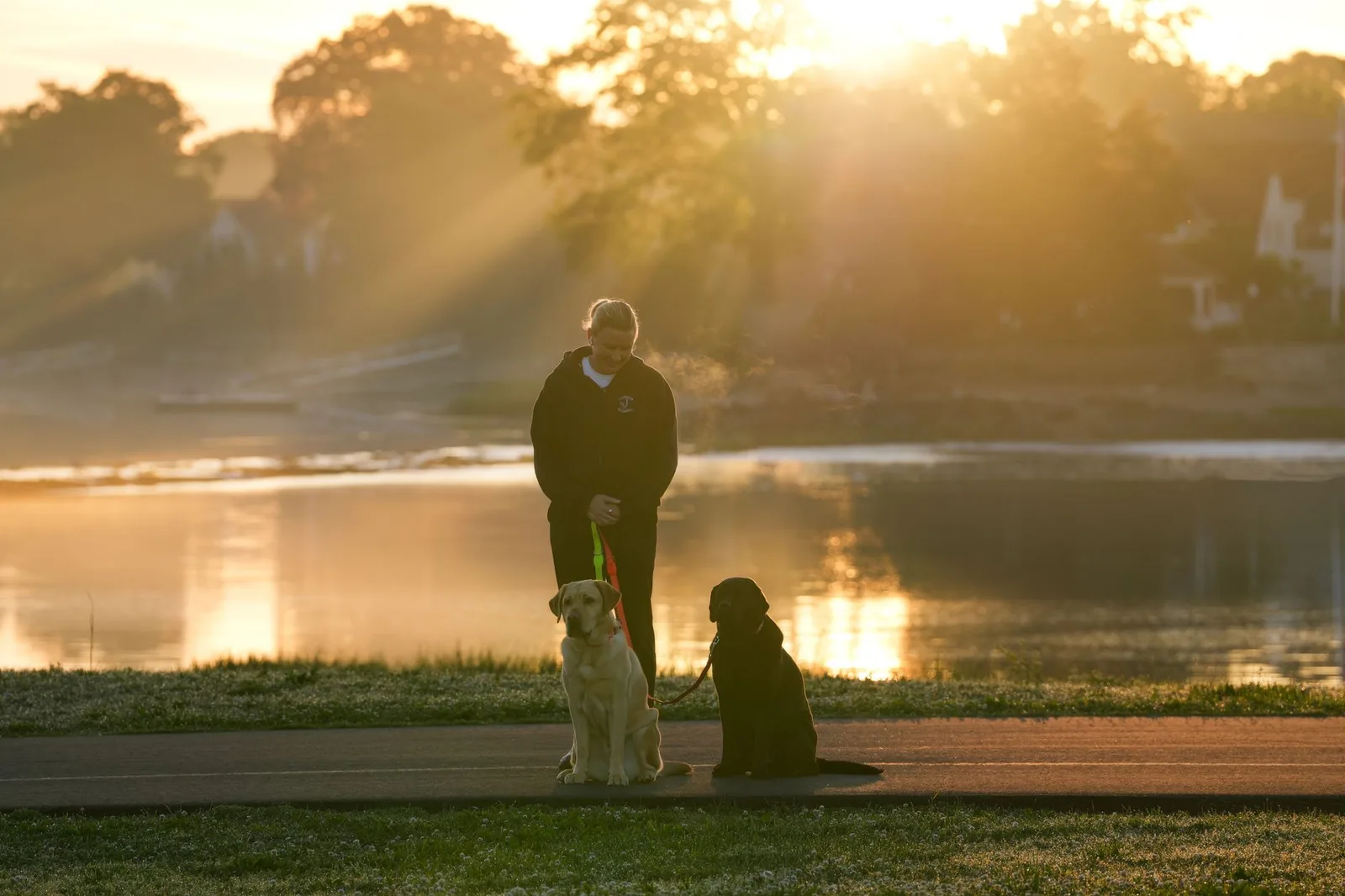
A car interior can rise 20°F in ten minutes and 40°F in an hour. Cracking the windows changes that by a couple of degrees at most.
On a pleasant 70°F day a parked car reaches around 100°F within twenty minutes. That is the case that catches out people who would never leave a dog in obvious heat.
If the errand cannot include the dog, the dog stays home. our guide to traveling with a Westie covers planning journeys around that constraint.
Practical changes that work
- Move walks to dawn and late evening. Not mid-morning, which is already too warm on the ground.
- Carry water on every outing, and offer it before the dog asks.
- Wet the belly, not the back. The thin coat underneath is where cooling actually happens.
- Provide deep shade in the yard, which moves through the day. A kennel or doghouse in sun is worse than no shelter.
- Watch senior and medicated dogs closely. They tolerate heat far less well than a healthy adult.
That last point matters for a rescue’s intake, which skews old — our guide to caring for a Westie after ten covers what else changes with age.
Water, and the risks around it
Swimming is excellent low-impact exercise, with two hazards worth knowing.
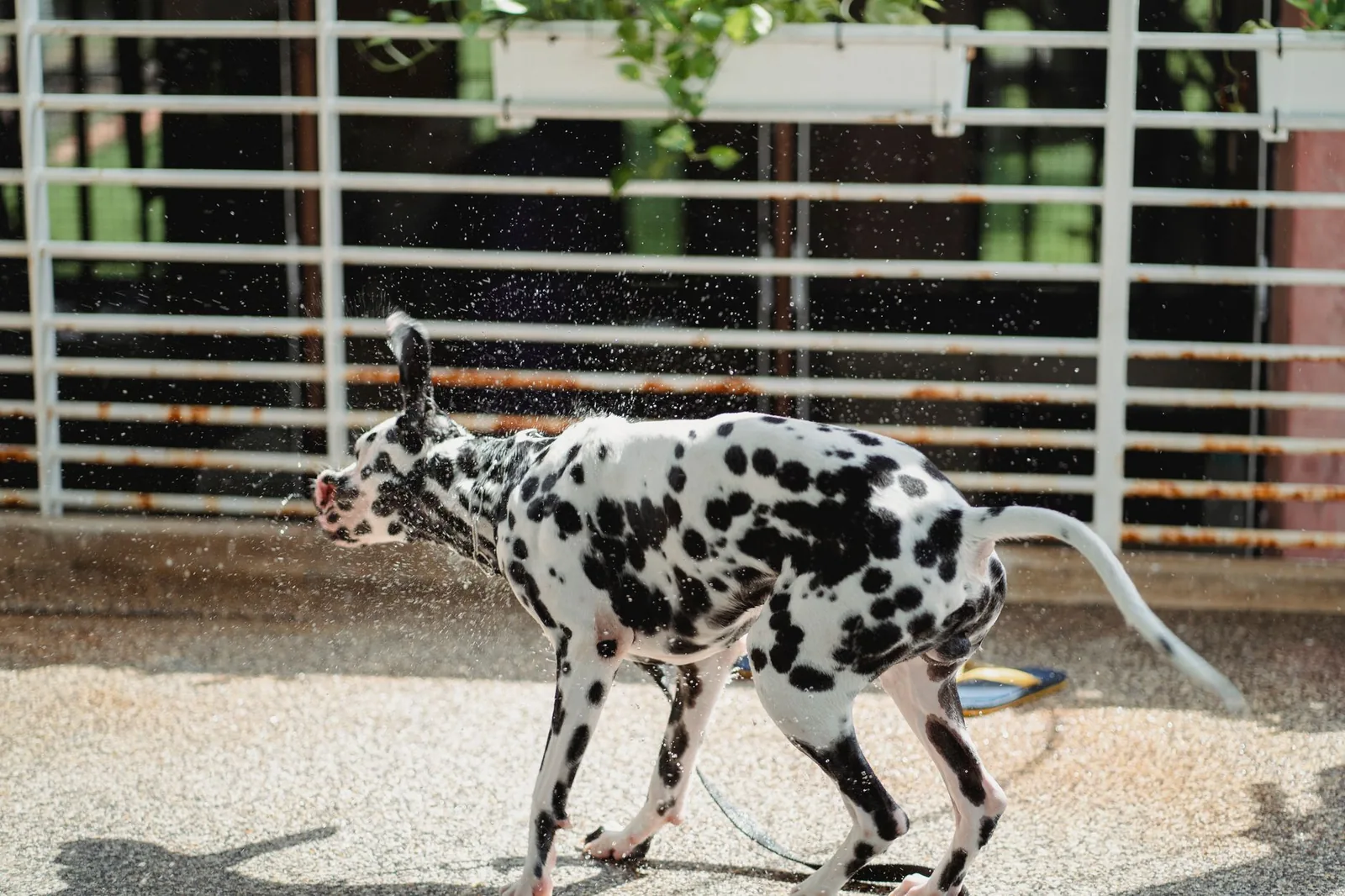
Water intoxication happens when a dog swallows large volumes while retrieving. Take breaks, and stop games involving repeated open-mouthed dives.
Blue-green algae blooms in warm still water and can be fatal within hours. If a pond looks like spilled paint, keep the dog away from the shoreline too.

Frequently asked questions
At what temperature is it too hot to walk a dog?
There is no single number, because humidity, shade and ground surface matter as much as air temperature. Use the seven-second ground test instead. Above roughly 80°F with sun and humidity, walk at dawn or after dusk.
Should I shave my Westie in summer?
Generally no. The double coat insulates against heat as well as cold and protects skin from sunburn. Clipping it out can leave the dog hotter and more exposed. Keep it clean and well brushed instead.
What are the first signs of heatstroke in a dog?
Heavy relentless panting, bright red gums, thick ropey drool, seeking shade and slowing or stopping. Confusion, vomiting and collapse are later signs. Act at the first stage, not the third.
Is it safe to leave a dog in a car with the windows cracked?
No. Cracked windows lower the interior temperature by only a degree or two. A car on a mild 70°F day reaches about 100°F within twenty minutes.
How should I cool an overheated dog?
Move to shade, wet the belly, armpits and groin with cool rather than ice-cold water, and keep air moving over the dog. Contact a vet, and keep cooling on the way there.
What we see each summer
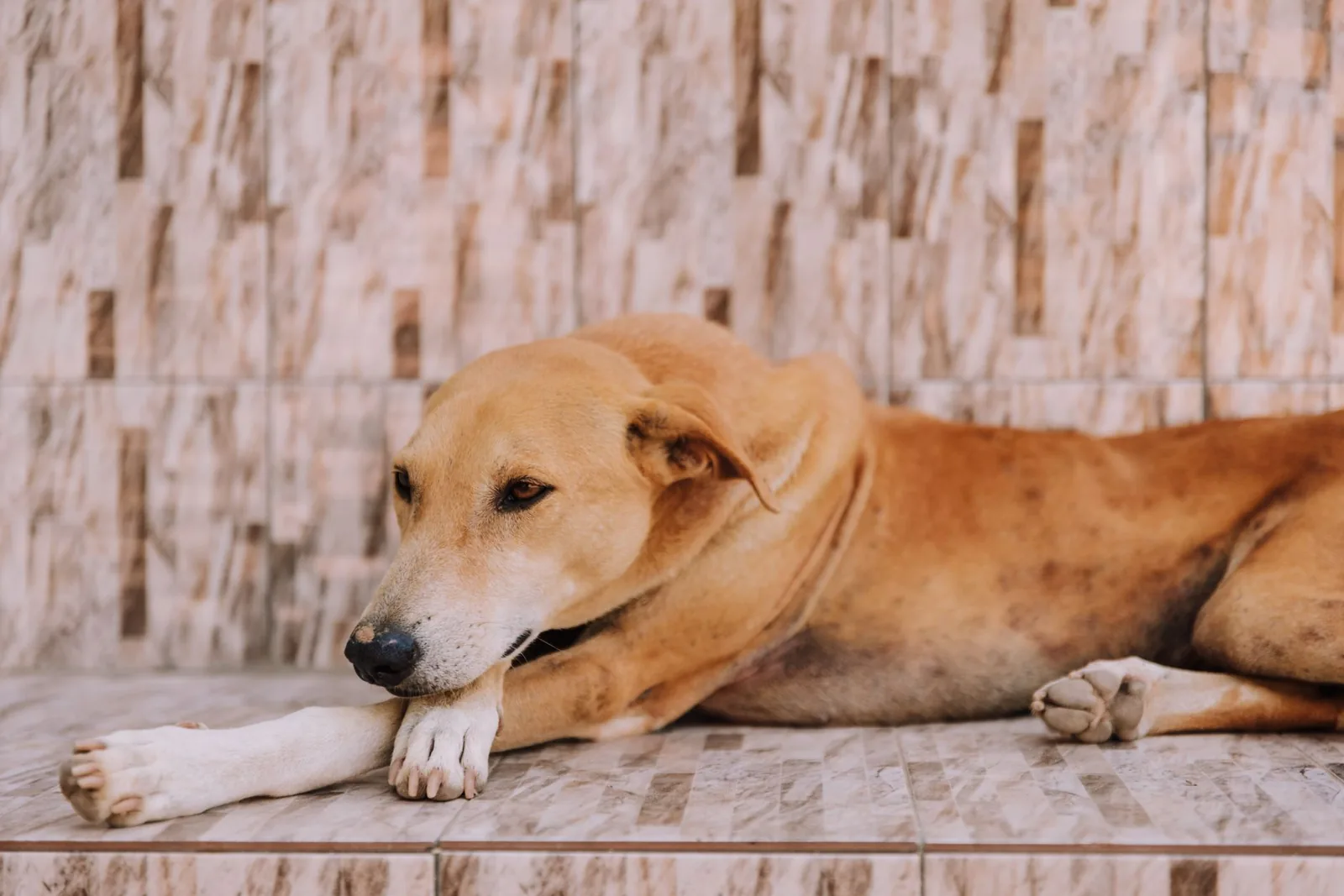
Heat cases arrive suddenly and are almost entirely preventable. The dogs most affected are the old ones and the ones with heart or airway problems — which is a large share of any rescue’s population.
If you are thinking about a summer adoption, factor the season into the first weeks. what to expect in the first 30 days with a rescue Westie covers settling in, and our dog first aid guide covers what to do before you reach the vet.