
A Westie takes up almost no room. Fifteen to twenty pounds, content on a sofa, and perfectly happy without a yard.
The constraint is not floor space. It is a breed developed to bark, living behind a shared wall next to a corridor full of footsteps.
The short version
- Space is rarely the problem. Alert barking usually is.
- Manage the environment first — where the bed sits matters more than training.
- No yard means every toilet trip is a walk, including the one at 6am in February.
- Adult and senior dogs suit apartments considerably better than young ones.

The barking question
Westies were bred to bark underground so a handler could locate them. In a corridor building, every passing neighbor, delivery and elevator ping is a trigger.
This is the thing that decides whether apartment living works, and it is manageable rather than solvable. The instinct does not go away.
| Approach | Effect | Effort |
|---|---|---|
| Move the bed away from the front door | Often dramatic | One afternoon |
| Film on the lower half of windows facing walkways | Large | One afternoon |
| White noise or radio near the door | Moderate to large | Ongoing, trivial |
| Reward coming to you when the door goes | Large, over weeks | Daily practice |
| Meet the mental need daily | Large — boredom amplifies everything | Daily |
| Bark collars | Suppresses the symptom, raises anxiety | Not recommended |
The training side is covered in our guide to terrier barking, digging and prey drive, including why punishing alert barking makes things worse.
No yard: what changes
Every toileting trip becomes a walk. That is fine in October and a genuine commitment in February, and it is the part people underestimate.
- Four to five trips daily for an adult, more during house training.
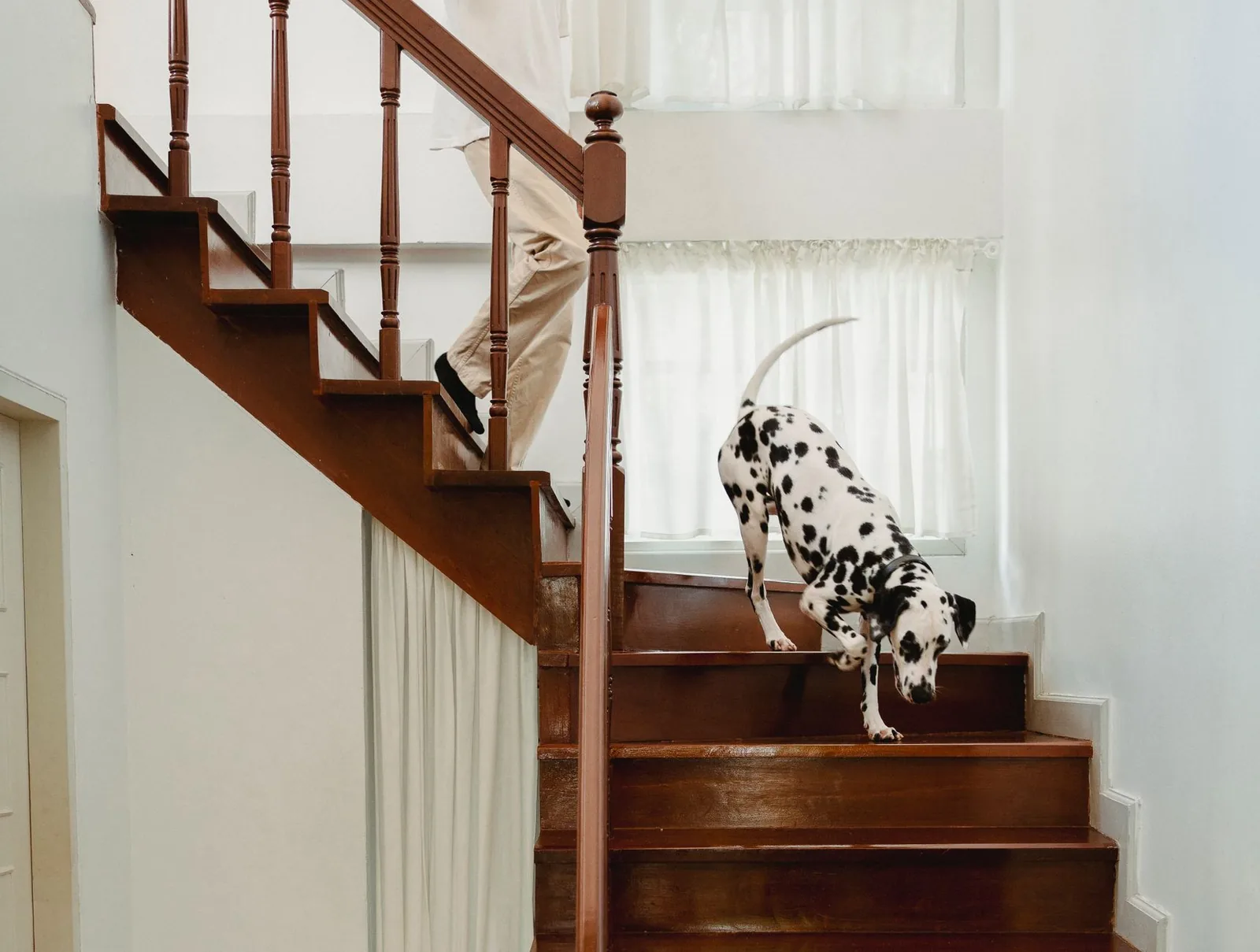
- Elevator or stairs each time, which adds minutes and, for a nervous dog, stress.
- Harness on before the door opens, every time — a corridor is not a secure space.
- Somewhere to clean paws by the door, particularly where sidewalks are salted.
- A plan for illness — a dog with diarrhea and no yard is a hard night.
Winter is the season that tests this. Cold weather care for a Westie covers the salt problem, which matters more for city dogs than anyone else.

Exercise without a yard
Apartment dogs are often better exercised than suburban ones, because nobody mistakes a yard for a walk.
A Westie needs roughly 45 to 60 minutes daily plus mental work, and the mental work is what fits an apartment best — scatter feeding, snuffle mats, find-it games and short training sessions all work in a hallway.
Our guide to how much exercise a Westie actually needs sets out the indoor options, which matter more here than anywhere.
Stairs, elevators and small spaces
| Situation | What to do |
|---|---|
| Stairs, young healthy dog | Fine; let the dog set the pace |
| Stairs, senior or arthritic dog | Carry, or move to a lower floor if possible |
| Elevator | Practice with treats before you need it; keep the leash short |
| Narrow corridors with other dogs | Turn and take another route rather than pass close |
| Balcony | Never unsupervised; check gaps a small dog could fit through |
| Communal entrance | Harness and leash on before leaving the apartment |
Fear Free publishes owner guidance on reducing stress in everyday handling and environments, which is useful for elevator and corridor work specifically.

Which dogs suit an apartment
| Dog | Suits an apartment? |
|---|---|
| Settled adult, 4–8 | Yes — usually the best fit |
| Senior | Yes, if stairs are manageable or there is an elevator |
| Puppy | Hard — house training without a yard is a long project |
| Known heavy barker | Risky; depends entirely on the building |
| Retired breeding dog | Difficult early on; corridors and elevators are overwhelming |
| Dog with separation anxiety | No — vocal distress and shared walls do not mix |
| Reactive to other dogs | Difficult; corridors force close encounters |
If a dog struggles with being left, shared walls make it everyone’s problem — our guide to separation anxiety covers how to tell before you commit.
Before you apply
- Get landlord permission in writing, including any weight or breed limits.
- Check the lease for pet deposits, numbers and rules about communal areas.
- Be honest about the building — a thin-walled studio next to a stairwell is a different proposition to a corner unit.
- Work out the toileting logistics for a bad-weather day, not a good one.
- Say all of it on the application. It narrows which dog suits rather than ruling you out.
What makes an adoption application strong explains why apartment living is one of the worries that is usually far smaller than applicants expect.
Frequently asked questions
Can a Westie live in an apartment?
Yes, comfortably. The breed is small, content indoors and does not need a yard. The real constraint is alert barking in a building with shared walls and a busy corridor.
How do I stop my dog barking at hallway noise?
Change the environment first: move the bed away from the front door, add background sound, and film windows facing walkways. Then reward the dog for coming to you when it hears something, rather than punishing the bark.
Do Westies need a yard?
No, but without one every toilet trip becomes a walk, four or five times a day in all weather. That is the commitment people underestimate rather than the exercise itself.
Are apartments bad for dogs?
Not inherently. Apartment dogs are often better exercised, because nobody confuses a yard with a walk. What matters is daily outdoor time, mental enrichment and managing noise.
Will a rescue turn me down for living in an apartment?
Not for the apartment itself. It narrows which dog suits, particularly ruling out heavy barkers and dogs with separation anxiety, but plenty of dogs do very well in one.

Which of our dogs suit city homes
Quite a few. Seniors in particular often do better in an apartment than in a house with stairs, and the dogs we take in are rarely high-energy.
The Westies currently available for adoption note how vocal each dog is and how it copes with being left, and our guide to adopting a Westie in New England explains how the matching works.