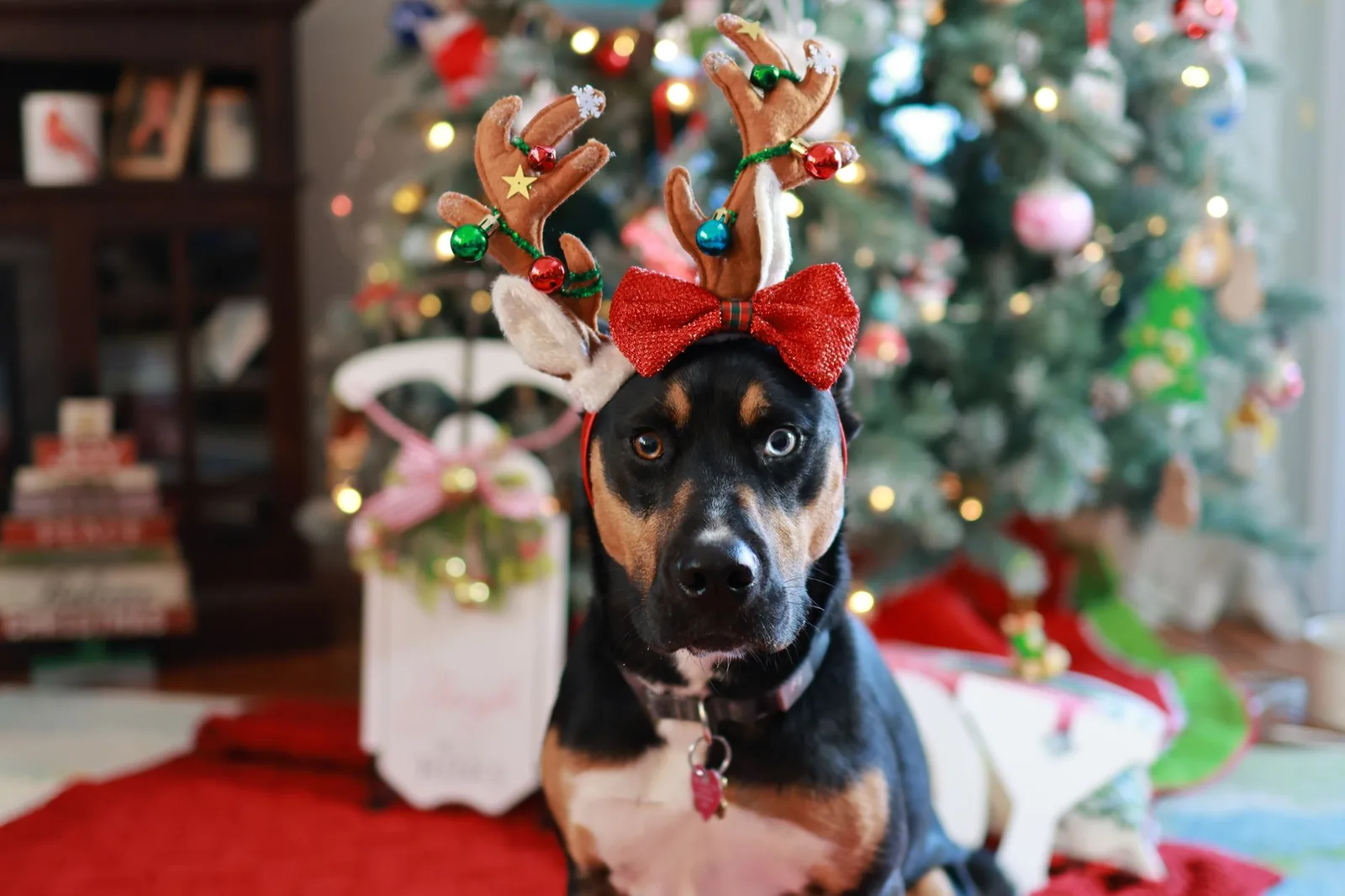
Chocolate gets all the holiday warnings. It is genuinely dangerous, and it is not what most dogs end up at the emergency clinic for.
The commoner problems are a rich meal, a swallowed decoration, and a front door that has been open twenty times in an afternoon.
The short version
- Fatty food causes pancreatitis, which is more common at holidays than any poisoning.
- Tinsel, ribbon and string cause gut obstructions that need surgery.
- The open door with guests arriving is how dogs get lost.
- A nervous dog needs a plan for the day, not just supervision.
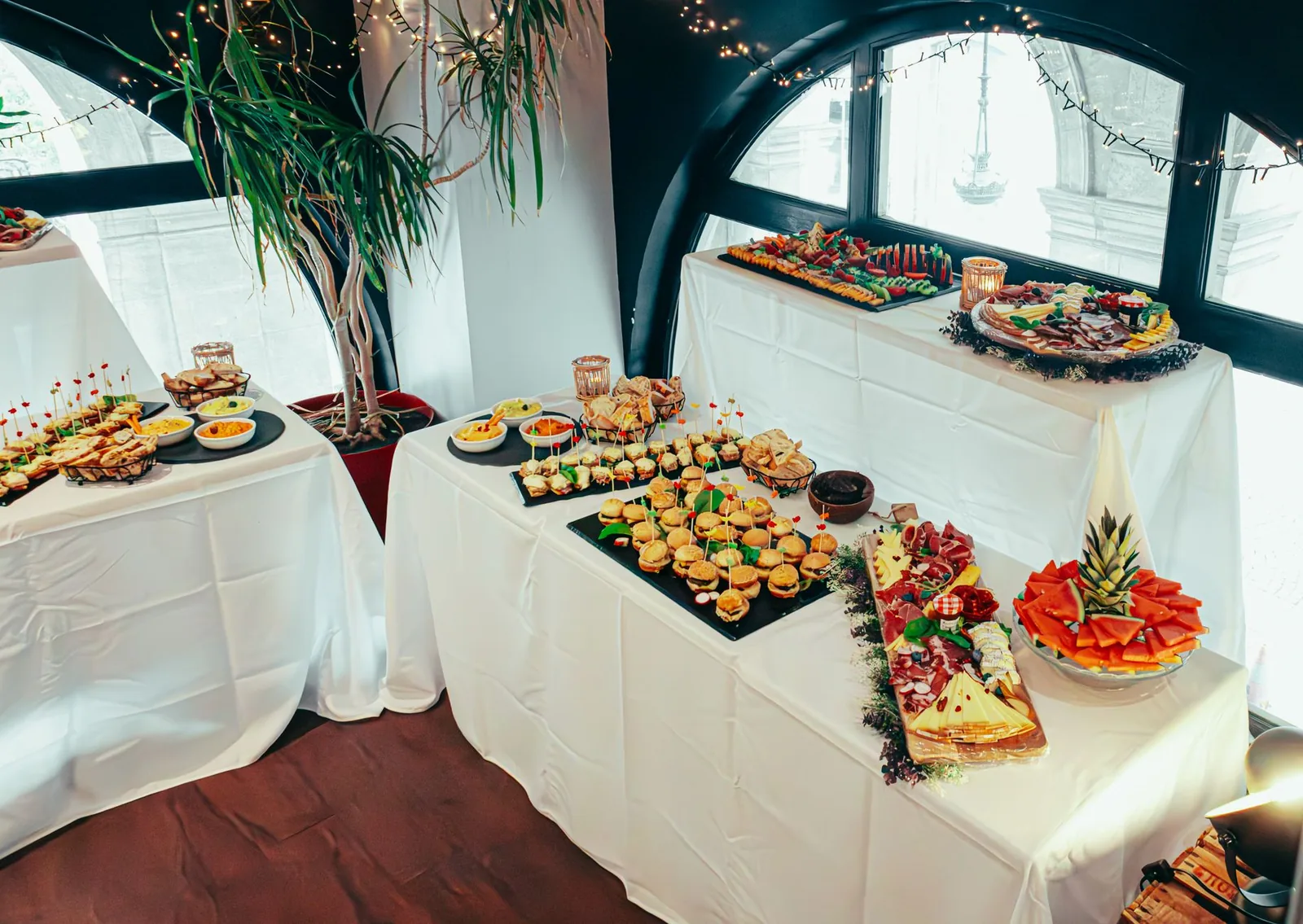
The food problems
| Item | Risk | Severity |
|---|---|---|
| Fatty trimmings, skin, gravy, butter | Pancreatitis | High — the commonest issue |
| Cooked bones | Splintering, perforation, obstruction | High |
| Grapes, raisins, currants in baking | Kidney failure | Severe, no safe dose |
| Chocolate, especially dark | Heart and nervous system | High, dose-dependent |
| Onions, garlic, stuffing, gravy granules | Red blood cell damage | Moderate to high |
| Alcohol, including in desserts | Rapid intoxication | High |
| Xylitol in sugar-free baking | Blood sugar crash, liver failure | Severe |
| Macadamia nuts | Weakness, tremors | Moderate |
Doses and what to do are covered in our guide to foods and household items dangerous to dogs — the short version is call poison control before doing anything.
Pancreatitis, specifically
Worth its own section because it is common, it is painful, and it is entirely caused by a well-meant plate of leftovers.
The signs are repeated vomiting, a hunched posture, a painful abdomen, lethargy and refusing food. It usually appears within a day or two of the rich meal.
It needs veterinary treatment, often including hospitalization and fluids. The prevention is simple and universally ignored: do not give the trimmings, and tell your guests not to either.
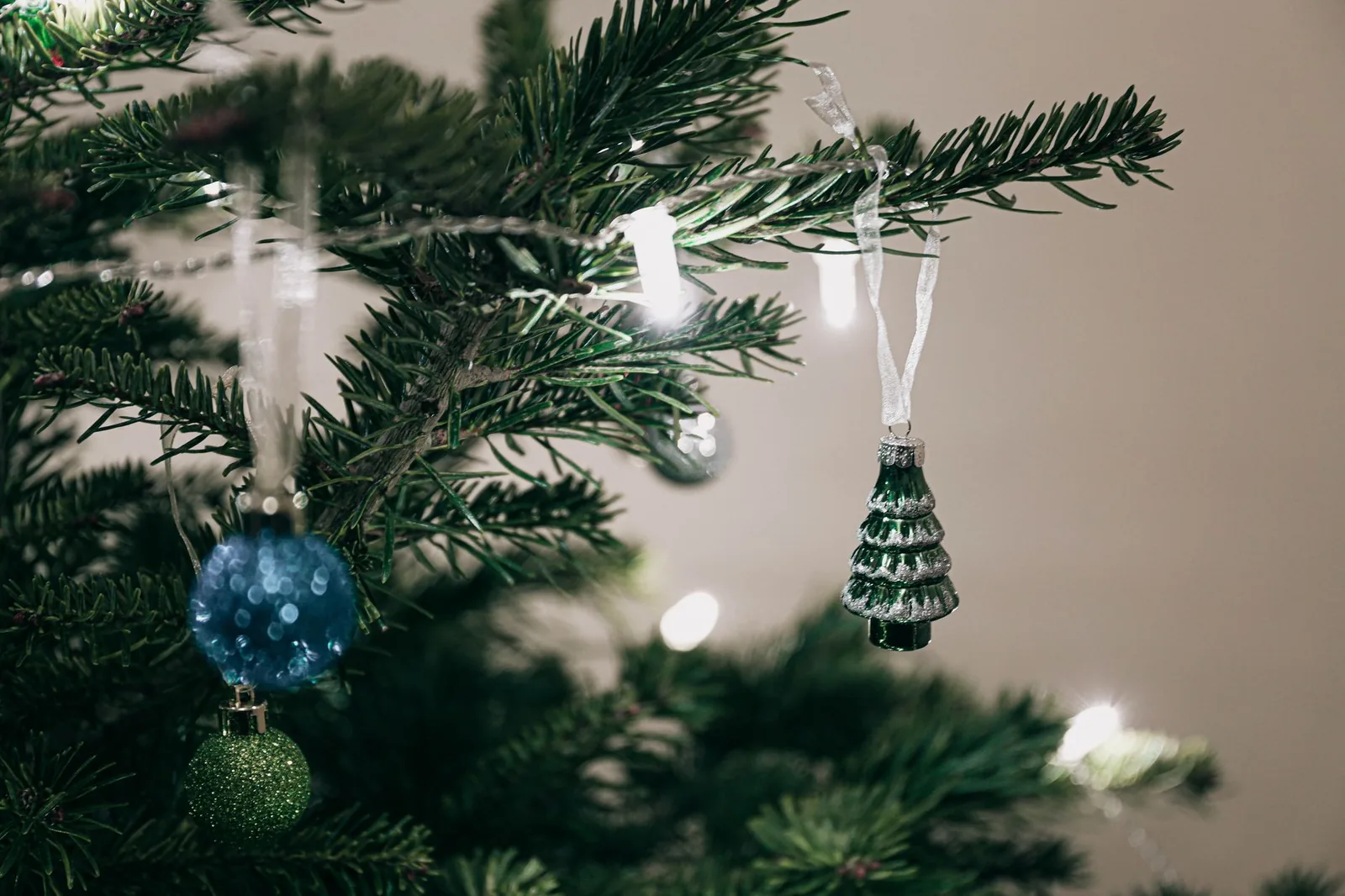
Decorations and objects
- Tinsel, ribbon and string — linear foreign bodies, which are among the more dangerous obstructions and usually need surgery.
- Glass ornaments at tail height, which break and cut paws.
- Light cables chewed by a bored terrier, with a real electrocution risk.
- Batteries from cards and gifts, which cause chemical burns.
- Small gift parts and packaging left within reach.
- Candles at wagging-tail height.
Keep the bottom third of any tree free of anything swallowable, and secure the tree itself. A dog that has never shown interest in decorations can change its mind when the house is unusually exciting.
Plants
| Plant | Actual risk |
|---|---|
| Lilies | Severe — particularly dangerous to cats, avoid entirely |
| Holly and mistletoe | Gut upset; mistletoe berries more serious |
| Poinsettia | Mild irritation — the reputation exceeds the risk |
| Amaryllis | Vomiting and lethargy; bulbs are worse |
| Christmas tree water | Preservatives and bacteria; block access |
| Pine needles | Irritation and puncture risk if eaten in quantity |
The National Capital Poison Center maintains a public poison information service covering plants and household substances alongside the veterinary-specific lines.

The part people plan for least
For a nervous or newly adopted dog, the genuine holiday risk is social rather than chemical.
A house full of unfamiliar people, children behaving unpredictably, the front door opening repeatedly, routine abandoned, and nowhere quiet to go. That combination produces both bolting and bites.
- Set up a quiet room before guests arrive, with water, a bed and something to chew.
- Put the dog there before the doorbell, not after it has already been overwhelmed.
- Brief guests once, clearly — do not let the children follow the dog, do not feed it, leave it alone in its room.
- Use a gate rather than a closed door where the dog tolerates it, so it is separated rather than isolated.
- Check the microchip details are current before the season, not after.
- Keep the walks going. Routine is what holds a dog together in a week where nothing else is normal.
The children point is where most holiday bites happen — our guide to canine stress signals covers the warnings that precede them, and our guide to dogs and small children covers supervision properly.
Travel and boarding
If the dog is coming, plan the journey rather than adding it to an already long day. If it is staying, book early — boarding and sitters fill up months ahead for holiday weeks.
A newly adopted dog is usually better left with a sitter in its own home than taken somewhere unfamiliar, and better again if that sitter has met it before.
Our guide to traveling with a Westie covers car safety and the boarding decision in more detail.
Frequently asked questions
What is the most common holiday emergency for dogs?
Pancreatitis from fatty food — trimmings, skin, gravy and butter. It is far commoner than chocolate poisoning and is caused almost entirely by well-meant leftovers.
Are poinsettias poisonous to dogs?
Mildly irritant rather than dangerous; the reputation exceeds the risk. Lilies and amaryllis deserve much more caution, and lilies should be avoided entirely in households with cats.
Why is tinsel dangerous for dogs?
Swallowed string, ribbon and tinsel form linear foreign bodies, which can saw through the gut and usually require surgery. Keep them off the tree entirely if your dog chews.
How do I keep a nervous dog calm at a family gathering?
Set up a quiet room before guests arrive, with water, a bed and something to chew, and put the dog there before the doorbell rather than after. Brief guests clearly and keep the usual walks.
Should I take my newly adopted dog to a family holiday?
Usually not in the first few months. A sitter in the dog’s own home is far less stressful than an unfamiliar house full of people, and book early because holiday weeks fill months ahead.
Before the season starts
Two things are worth doing in advance rather than on the day: check the microchip registration is current, and find out where your nearest emergency clinic is and what hours it keeps over the holidays.
Michigan State’s veterinary college publishes seasonal pet health guidance for owners, and our first aid guide covers what warrants that trip. If the dog is new, the first 30 days with a rescue Westie explains why a quiet holiday is the better plan.