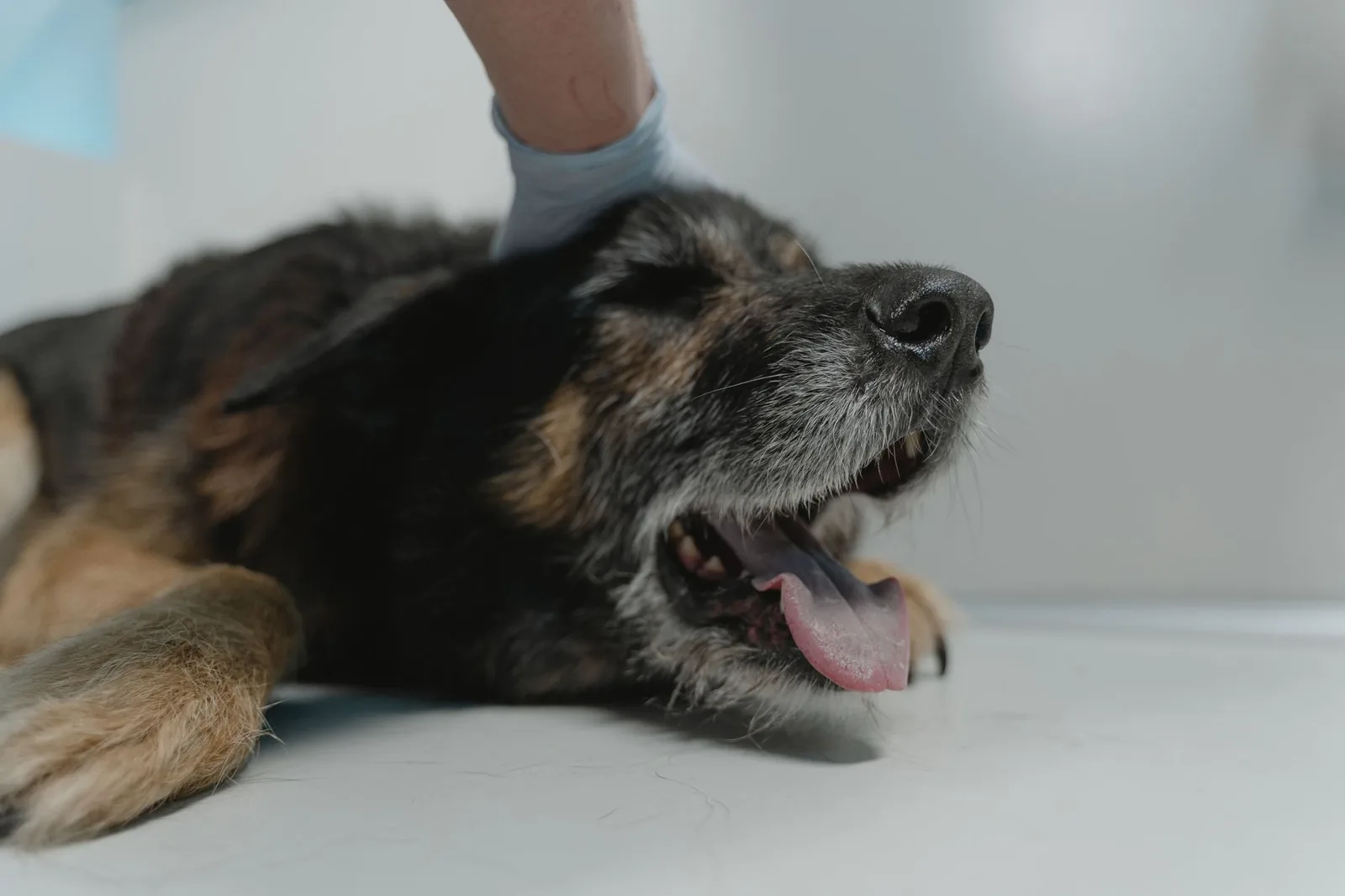
Every dog we place has already been spayed or neutered. Adopters reasonably ask what that involved, and whether it was done at the right time.
The honest answer is that the surgery is routine, the population argument is settled, and the ideal timing is genuinely debated in the literature.
The short version
- Both are routine procedures, done daily, with low complication rates.
- Rescues alter before placement because unaltered dogs produce more unwanted dogs.
- Health effects cut both ways, and the balance differs by breed and size.
- Recovery is 10 to 14 days of genuinely restricted activity, which is the hard part.
What the procedures are
| Spay (female) | Neuter (male) | |
|---|---|---|
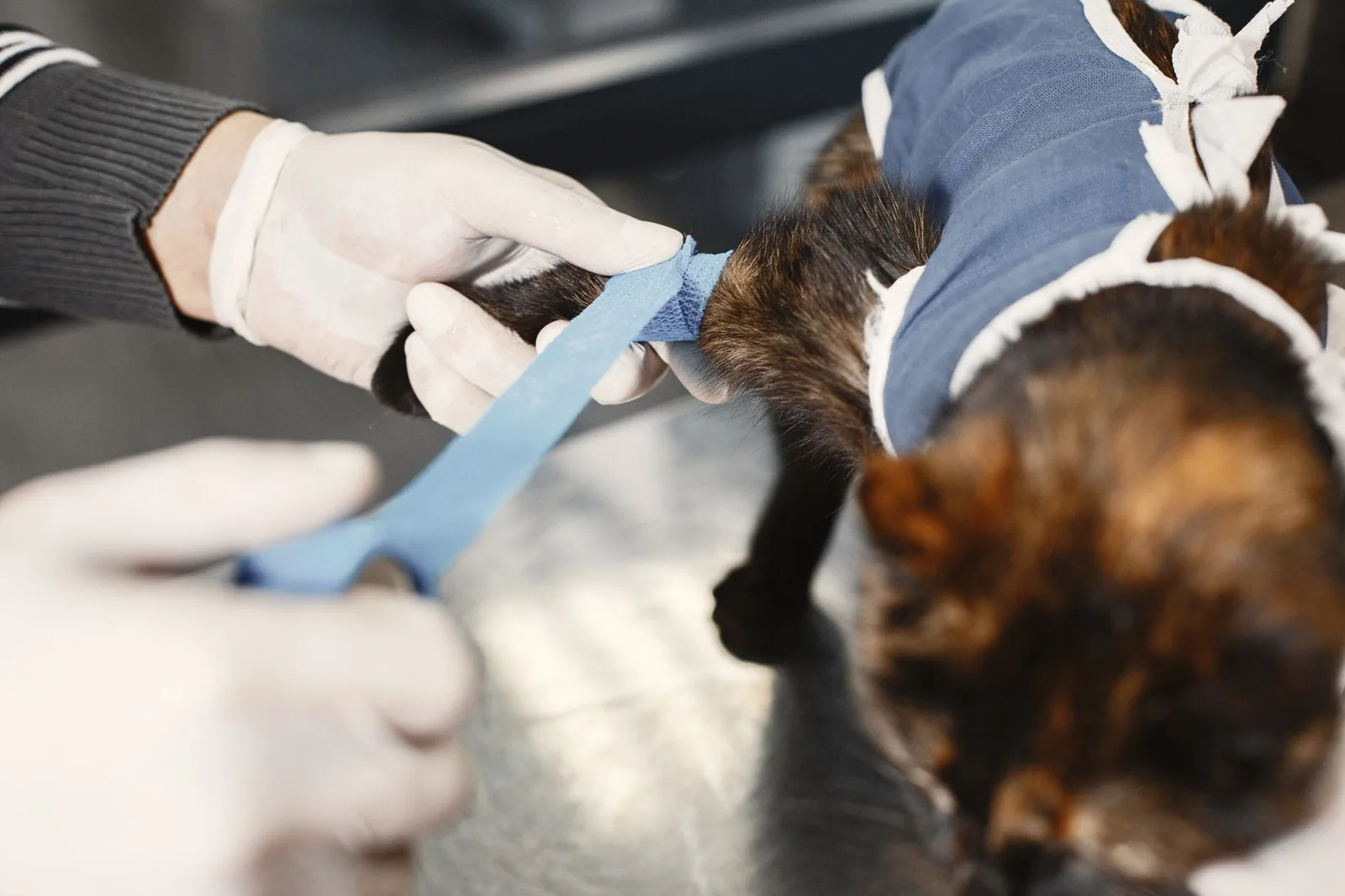
| What is removed | Ovaries, usually with the uterus | Both testicles |
| Incision | Abdominal | In front of the scrotum |
| Anesthesia | General | General |
| Typical duration | 30–90 minutes | 15–30 minutes |
| Home the same day | Usually | Usually |
| Restricted activity | 10–14 days | 10–14 days |
| Typical cost privately | $300–$800 | $200–$500 |
Why rescues alter before placement
Not as a moral position, but as an arithmetic one. An unaltered dog placed in a good home can still produce a litter, and rescues exist because there are more dogs than homes.
It also removes a decision from a household that has just taken on a new dog, and it eliminates the risk of an accidental litter during the settling period when a dog is most likely to escape.
There are practical benefits too: no seasons, no roaming driven by hormones, and no risk of pyometra, which is a life-threatening uterine infection in older unspayed females.
The health trade-offs, honestly
This is where the internet is least useful, because both sides quote real studies at each other.
| Reduced risk | Increased risk |
|---|---|
| Pyometra — common and often fatal in older unspayed females | Urinary incontinence in some spayed females |
| Mammary tumors, particularly if spayed young | Weight gain without a matching reduction in calories |
| Testicular cancer | Some orthopedic conditions in large breeds altered very young |
| Prostate enlargement | Some cancers, in specific large breeds |
| Roaming and associated road accidents | Coat texture changes in some breeds |
| Unwanted litters |
The Alliance for Contraception in Cats and Dogs maintains research summaries on spay and neuter timing and alternatives, which is the least partisan source available on a contested question.
Timing
For a small breed such as a Westie, the orthopedic concerns that dominate the large-breed literature carry much less weight, and conventional timing is generally considered reasonable.
For an adopted adult, the question is usually moot, because it has already been done. Where it has not, it is a conversation with your own vet about this dog rather than about dogs in general.
What is not in dispute: leaving a dog unaltered indefinitely because the timing question is complicated carries its own risks, pyometra chief among them. In an older female that risk rises with every season — our guide to caring for a Westie after ten covers what else changes.

Recovery
The surgery is the easy part. Ten to fourteen days of a terrier not being allowed to do anything is the difficult part.
- Restrict activity properly. Short lead walks only, no stairs where avoidable, no jumping on or off furniture, no running.
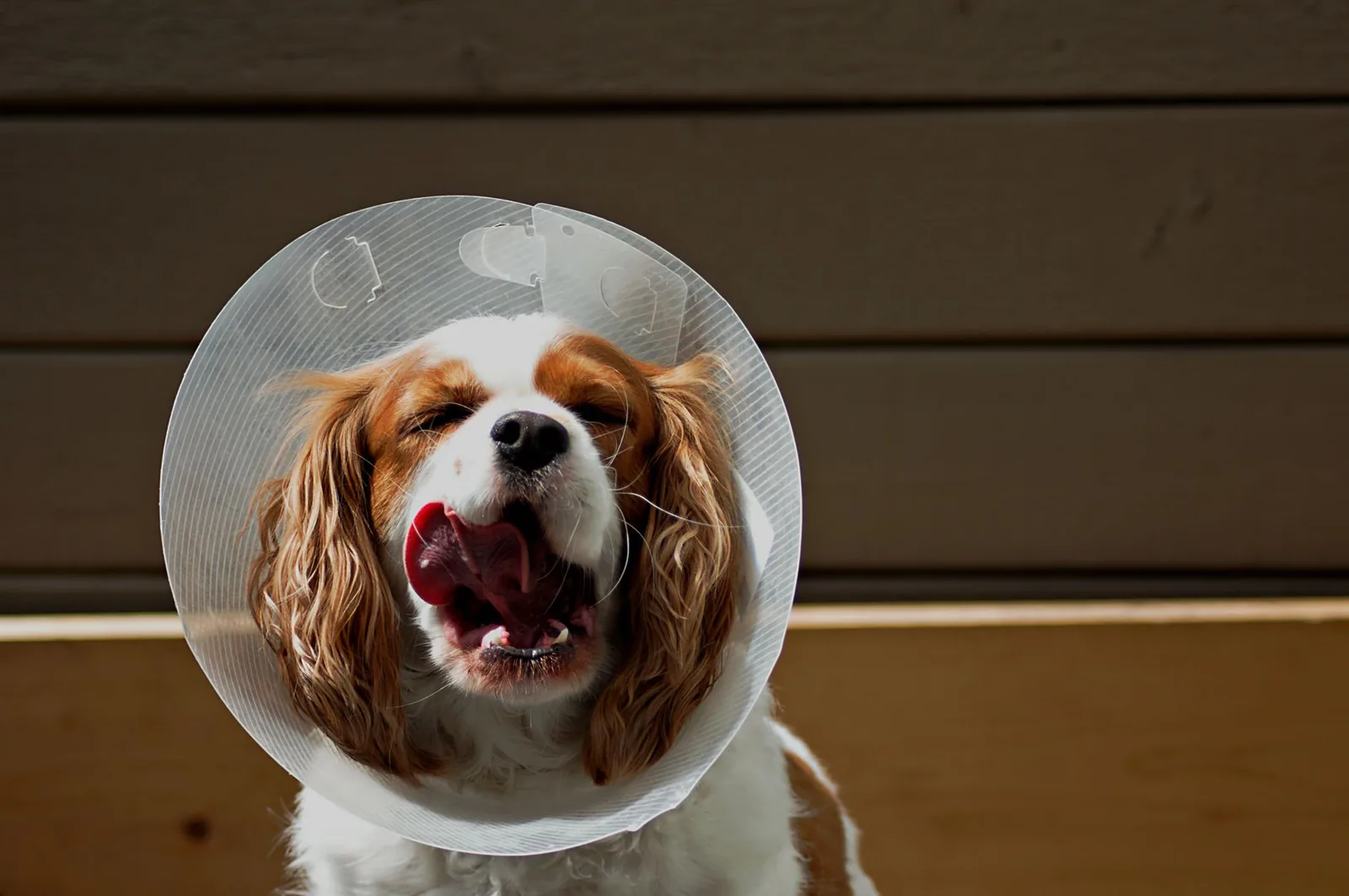
- Keep the collar or suit on. One session of licking can open an incision that was healing perfectly.
- Check the site twice daily for swelling, redness, discharge or gaping.
- Keep it dry. No baths or swimming until your vet says otherwise.
- Give the pain relief as prescribed, even if the dog seems comfortable. A comfortable dog is often comfortable because of it.
- Use mental enrichment to fill the gap where exercise used to be.
That last point is what makes those two weeks survivable with a terrier. Scatter feeding, snuffle mats and short training sessions all work at rest — our guide to enrichment that tires a terrier has the full list.
When to call the vet
- Swelling that is increasing rather than settling after day three.
- Discharge, particularly if it smells or is not clear.
- The incision opening at any point.
- Not eating beyond the first 24 hours.
- Vomiting, lethargy or a distended abdomen.
- Persistent licking despite the collar.
Most of these are minor if caught early and serious if left. The general rule for post-operative worry is that calling is free — our first aid guide covers the wider set of signs that mean go now.
Weight afterwards
Altered dogs need meaningfully fewer calories, and the commonest post-surgery problem is not surgical at all. It is a dog that gains weight over the following year because nothing changed in the bowl.
Reduce the portion, weigh the food rather than scooping it, and check body condition monthly — our guide to feeding and portions covers how to assess it by hand.
Frequently asked questions
Why do rescues spay and neuter before adoption?
To prevent unwanted litters, which is the reason rescues exist. It also removes the risk of an accidental litter during the settling period, when a newly adopted dog is most likely to escape.
Does neutering calm a dog down?
It reduces hormone-driven behaviors such as roaming and some marking. It does not change temperament, energy level or trained behavior, and it will not fix barking, digging or reactivity.
Will my dog get fat after being spayed or neutered?
Only if the food does not change. Altered dogs need fewer calories, so reduce the portion and monitor body condition rather than waiting to notice the weight.
How long does recovery take?
Ten to fourteen days of genuinely restricted activity — short lead walks only, no jumping, no stairs where avoidable, and the recovery collar left on. The restriction is harder than the surgery.
Is it safe to neuter an older dog?
Usually yes, with pre-anesthetic bloodwork and appropriate monitoring. Age alone is not a contraindication, and for unspayed older females the risk of pyometra often argues for proceeding.
What is done before placement
Spay or neuter, vaccinations, microchip, dental assessment and any outstanding treatment are all completed before a dog is made available.
The veterinary care every rescue Westie receives sets out the full list, and our adoption fees page explains how much of it the fee actually covers, which is usually well under half.