Owners expect a dog in pain to cry, limp or flinch. Most do none of those things, and the ones that do are usually well past the early stage.
What actually changes is behavior, which is why pain is so often filed under aging, stubbornness or a difficult temperament instead.
The short version
- Vocalizing is a late sign. Behavior change comes first.
- A dog that has slowed down has usually slowed down for a reason.
- Sudden grumpiness in a friendly dog is a medical question first.
- A trial of pain relief is a legitimate diagnostic step. Ask about it.

What owners see, and what it usually means
| What you notice | What it can mean |
|---|---|
| Slower on walks, stops sooner | Joint or back pain |
| Hesitates at stairs or the car | Pain on jumping or on landing |
| Sleeps more, in a new position | Discomfort in the old position |
| Snaps when touched or lifted | Pain in that area, not aggression |
| Off food, or chewing on one side | Dental pain |
| Licking one spot repeatedly | Pain underneath it |
| Restless at night, cannot settle | Pain that is worse lying still |
| Less interested in greeting people | Generalized discomfort |
The snapping row causes the most misunderstanding, and dogs lose homes over it — our guide to terrier behavior problems explains why a medical cause has to be excluded first.
Why dogs hide it
There is nothing mysterious about this. An animal that advertises weakness is at a disadvantage, and the instinct did not disappear on the sofa.
Dogs also mask more in front of people, which is why so many are bright and bouncy in the consulting room and stiff at home an hour later.
Chronic pain hides best of all. It arrives slowly enough that the family adjusts alongside it, and nobody notices the dog stopped using the stairs eight months ago.
Acute pain versus chronic pain
| Acute | Chronic | |
|---|---|---|
| Onset | Sudden, often traceable | Gradual, no clear start |
| Vocalizing | More likely | Uncommon |
| Typical picture | Limping, guarding, obvious distress | Slowing down, mood change |
| How it is spotted | Quickly | Often only in hindsight |
| Common causes | Injury, surgery, dental abscess, pancreatitis | Arthritis, dental disease, spinal disease, cancer |
| Urgency | Same day | Weeks matter, but it needs addressing |
In older dogs the chronic column also gets mistaken for cognitive decline — our guide to canine cognitive dysfunction sets out which is which.
What to bring your vet
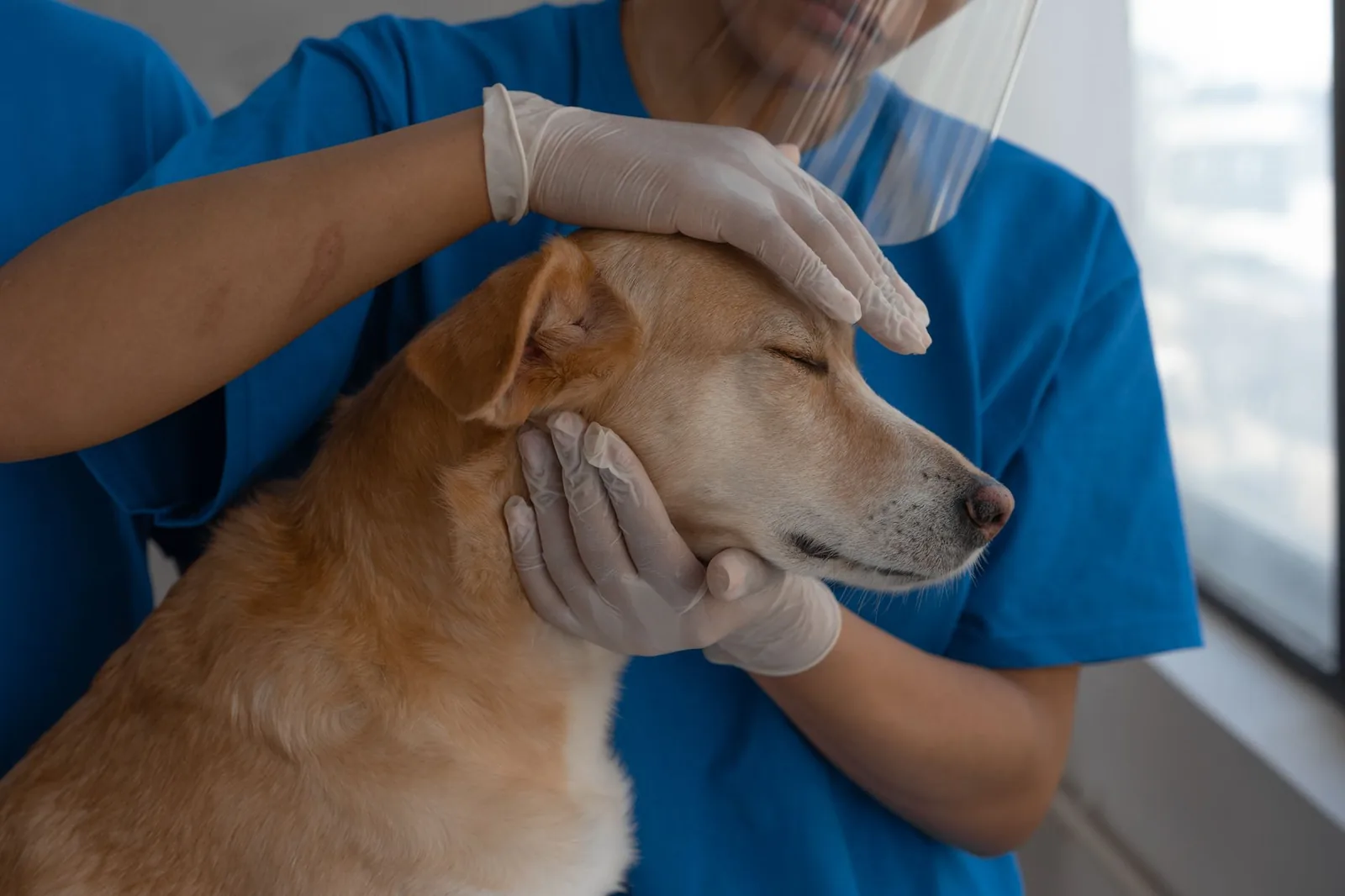
A pain assessment depends heavily on history, because the dog will not demonstrate the problem on the table.
- Film the dog at home, getting up from lying down and walking away from the camera. This is the single most useful thing you can bring.
- Note what it stopped doing, and roughly when. Jumping on the bed, the last flight of stairs, the long walk.
- Record time of day, since most joint pain is worse after rest and after cold.
- List everything it takes, including supplements.
- Ask about a scoring tool, so change can be tracked in numbers.
- Ask about a treatment trial if the picture is unclear. Response to pain relief is itself diagnostic information.
The International Veterinary Academy of Pain Management publishes resources on recognizing and managing animal pain, including material written for owners rather than clinicians.

What helps at home
- Traction on hard floors. Runners and rugs on the routes the dog uses most. Slipping hurts and frightens.
- Ramps or steps for the car and the furniture the dog is used to.
- A supportive bed away from drafts, and out of the traffic of the house.
- Keep the weight down. This is the single largest thing an owner controls for joint pain.
- Shorter, more frequent walks rather than one long one on the weekend.
- Give medication as prescribed, including on good days. Chronic pain relief works by staying ahead of it.
Weight is worth taking seriously in this breed, which gains easily — our guide to feeding a Westie covers portions, and how much exercise a Westie actually needs covers keeping a sore dog moving safely.

Frequently asked questions
How can I tell if my dog is in pain?
Look for behavior change rather than crying: slowing down, hesitating at stairs, sleeping in new positions, reacting to being touched, going off food, or licking one spot. Vocalizing is a late sign.
Do dogs cry when they are in pain?
Rarely, and mostly with sudden severe pain. Chronic pain almost never produces vocalizing. A quiet dog is not necessarily a comfortable one.
My dog has started growling when picked up. Is it pain?
It is a medical question until proven otherwise, particularly in a dog that never did it before. Sudden reactivity to handling is one of the most reliable indicators of pain there is.
Can I give my dog human pain medication?
No. Ibuprofen, naproxen and acetaminophen are toxic to dogs, sometimes fatally, and aspirin complicates the safer options a vet would otherwise use. Call your vet instead.
What is a pain trial?
A course of appropriate pain relief given to see whether the dog improves. Where the diagnosis is uncertain, the response itself is useful evidence, and many owners are surprised by how much changes.

Why we look for this first
A significant share of the dogs surrendered to us as grumpy, snappy or withdrawn turn out to be in pain, most often dental or arthritic.
Treating it changes the dog, and it is the reason we complete a full veterinary workup before we describe any dog’s temperament. The care every rescue Westie receives sets out what that includes, and our guide to arthritis in older dogs covers the commonest finding.