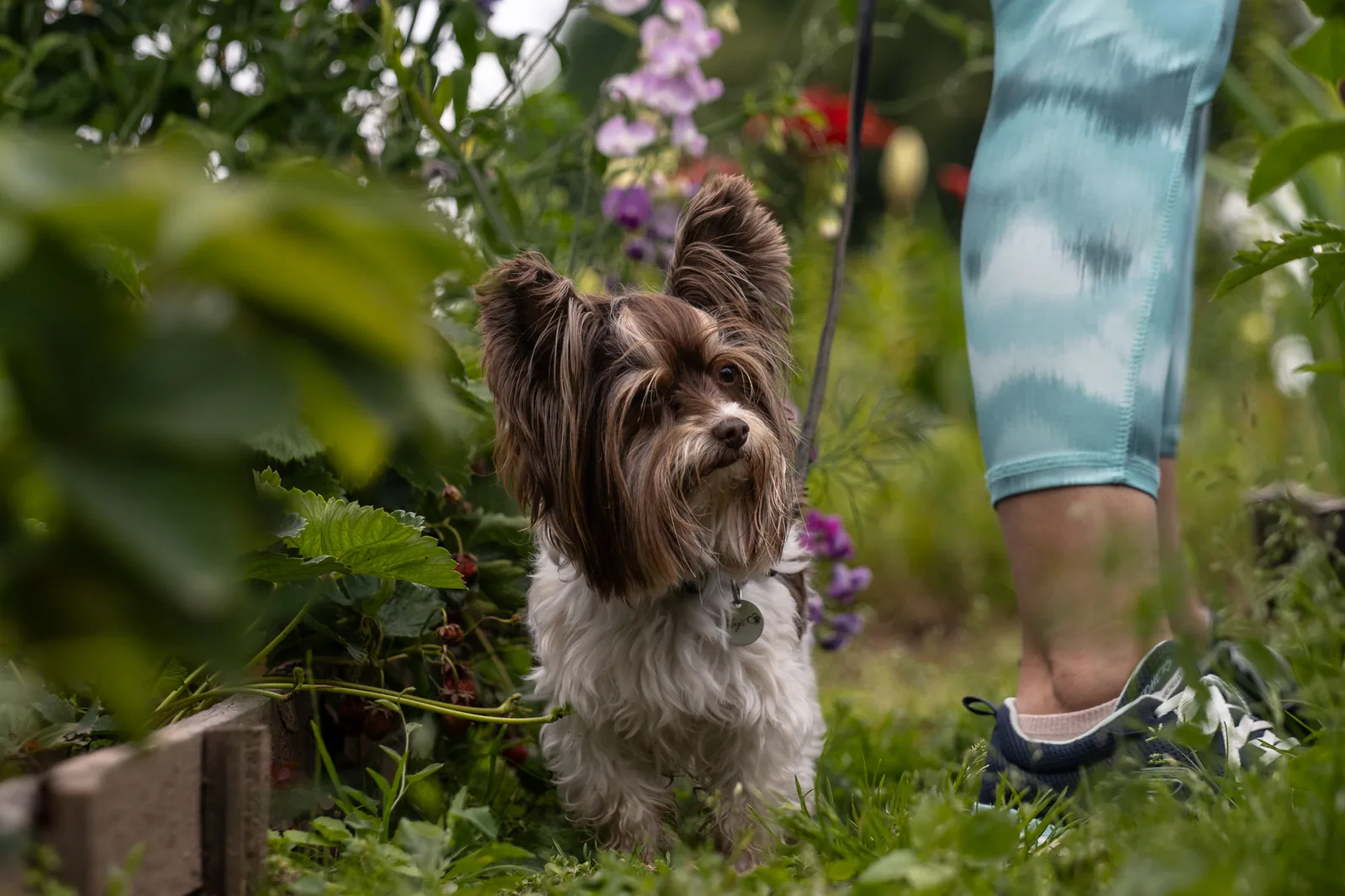
A yard is the part of a home most owners assume is already safe, and the part a terrier investigates most thoroughly.
A dog that digs reaches things a dog that does not will never find, which makes several of these risks materially higher for this breed.
The short version
- Secure the bottom foot of the fence, not the top. Terriers go under.
- Rodent bait is the single most dangerous thing likely to be in or near a yard.
- Give the dog somewhere legal to dig rather than trying to stop the behavior.
- Check the fence line seasonally — ground shifts and gaps open.
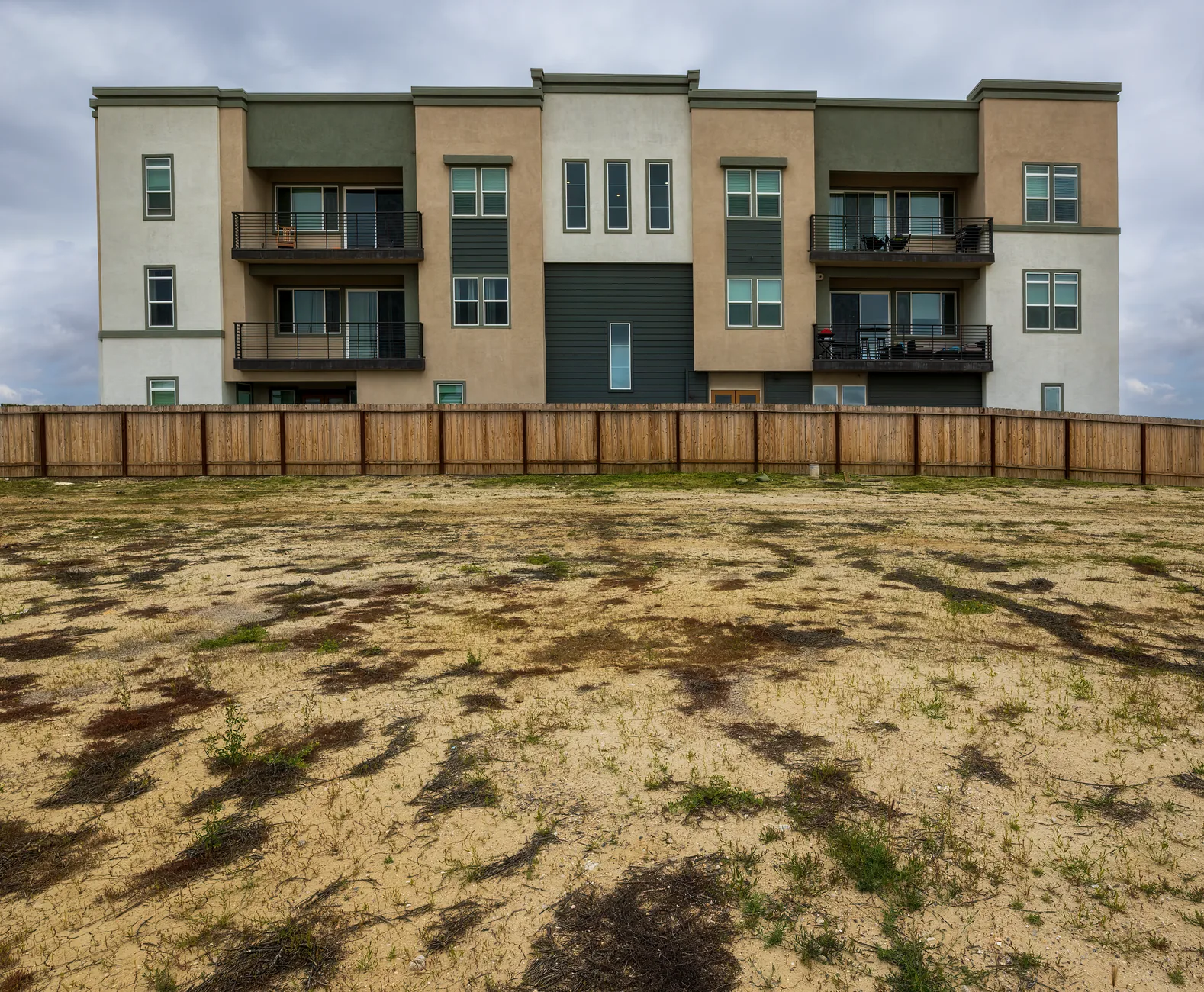
Fencing for a digger
| Weak point | Fix | Effort |
|---|---|---|
| Gap under the fence | Buried wire mesh turned inward, or a gravel trench | Half a day |
| Soft soil along the line | Paving slabs or a concrete footer laid flat | A day |
| Gaps at gate posts | Close anything wider than four inches | An hour |
| Gate latch | Self-closing hinge plus a spring latch, not a drop bolt | An hour |
| Chain link at ground level | Secure the bottom rail properly | Varies |
| Neighboring fence you do not own | A secondary internal barrier | Varies |
| Height under four feet | Only relevant for climbers; rare in this breed | Varies |
The recovery method if it does happen is in our guide to escape-proofing and lost dog recovery, including why chasing is the wrong instinct.
Plants worth knowing about
Most garden plants cause nothing worse than an upset stomach. A short list is genuinely dangerous, and one of them kills dogs regularly.
| Plant | Risk |
|---|---|
| Sago palm | Severe liver failure; frequently fatal, including the seeds |
| Lilies | Extremely dangerous to cats; avoid in mixed households |
| Foxglove, oleander, yew | Cardiac effects; serious |
| Spring bulbs — daffodil, tulip, hyacinth | Bulbs are the dangerous part |
| Azalea and rhododendron | Vomiting, weakness, cardiac effects |
| Autumn crocus | Severe multi-organ effects |
| Wild mushrooms | Unidentifiable and sometimes fatal; remove on sight |
If something has been eaten, identify it if you can and call before doing anything — our guide to foods and household items dangerous to dogs covers the first ten minutes. The National Capital Poison Center runs a public information service covering plants and household substances.
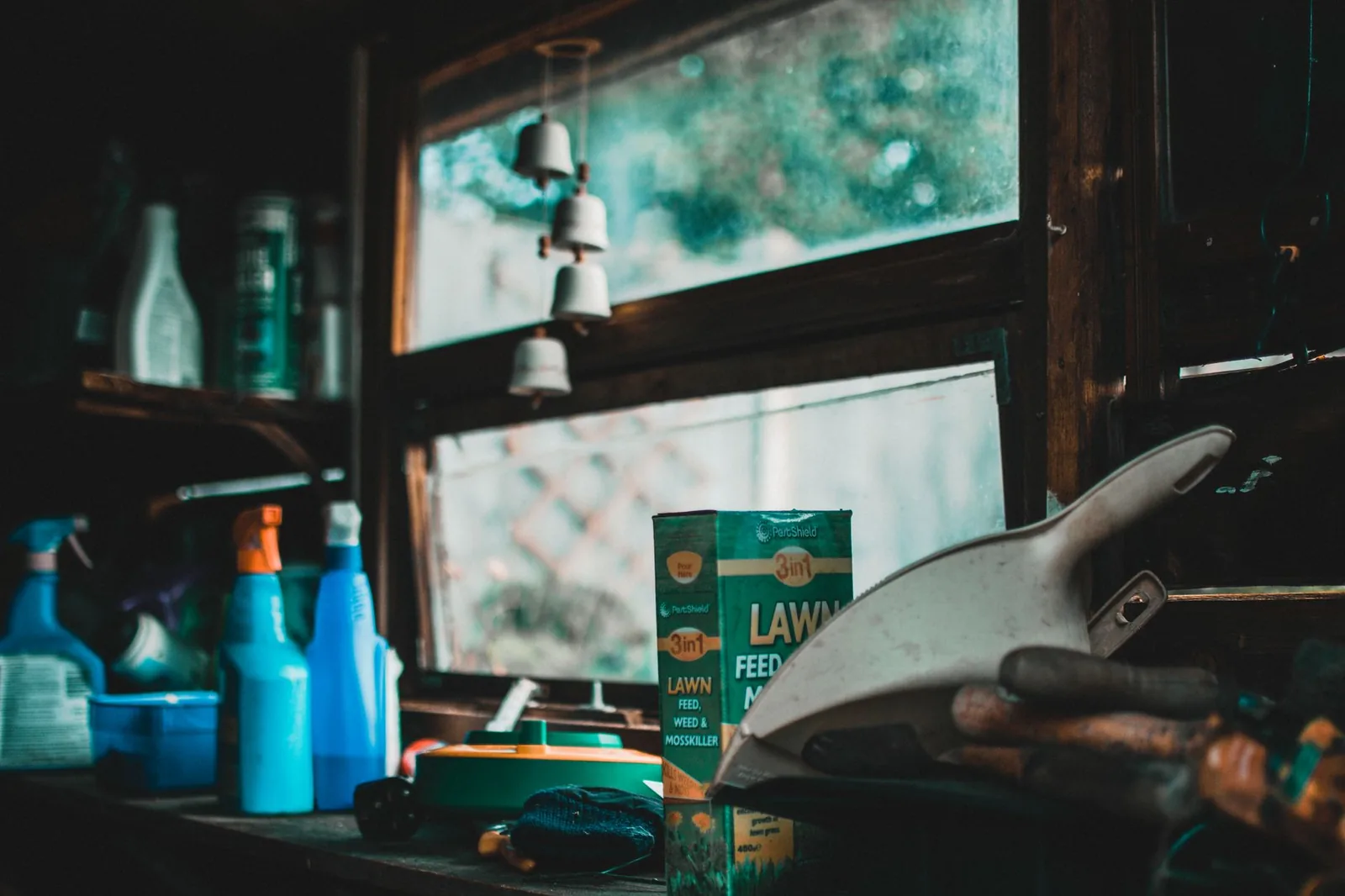
Chemicals and the shed
- Rodent bait — the most dangerous thing likely to be present. Ask neighbors too, because a dog that roams a fence line finds theirs.
- Slug pellets — rapid tremors and seizures; use pet-safe alternatives.
- Antifreeze — sweet, lethal in tiny amounts, and often stored in a garage a dog can reach.
- Cocoa mulch — contains theobromine and smells appealing.
- Fertilizers and weedkillers — keep the dog off treated areas for the stated period.
- Compost heaps — moldy material causes seizures; fence it or bin it.
The compost point is underrated. A terrier will dig into a heap, and the mycotoxins in decomposing food are genuinely neurotoxic.
Water
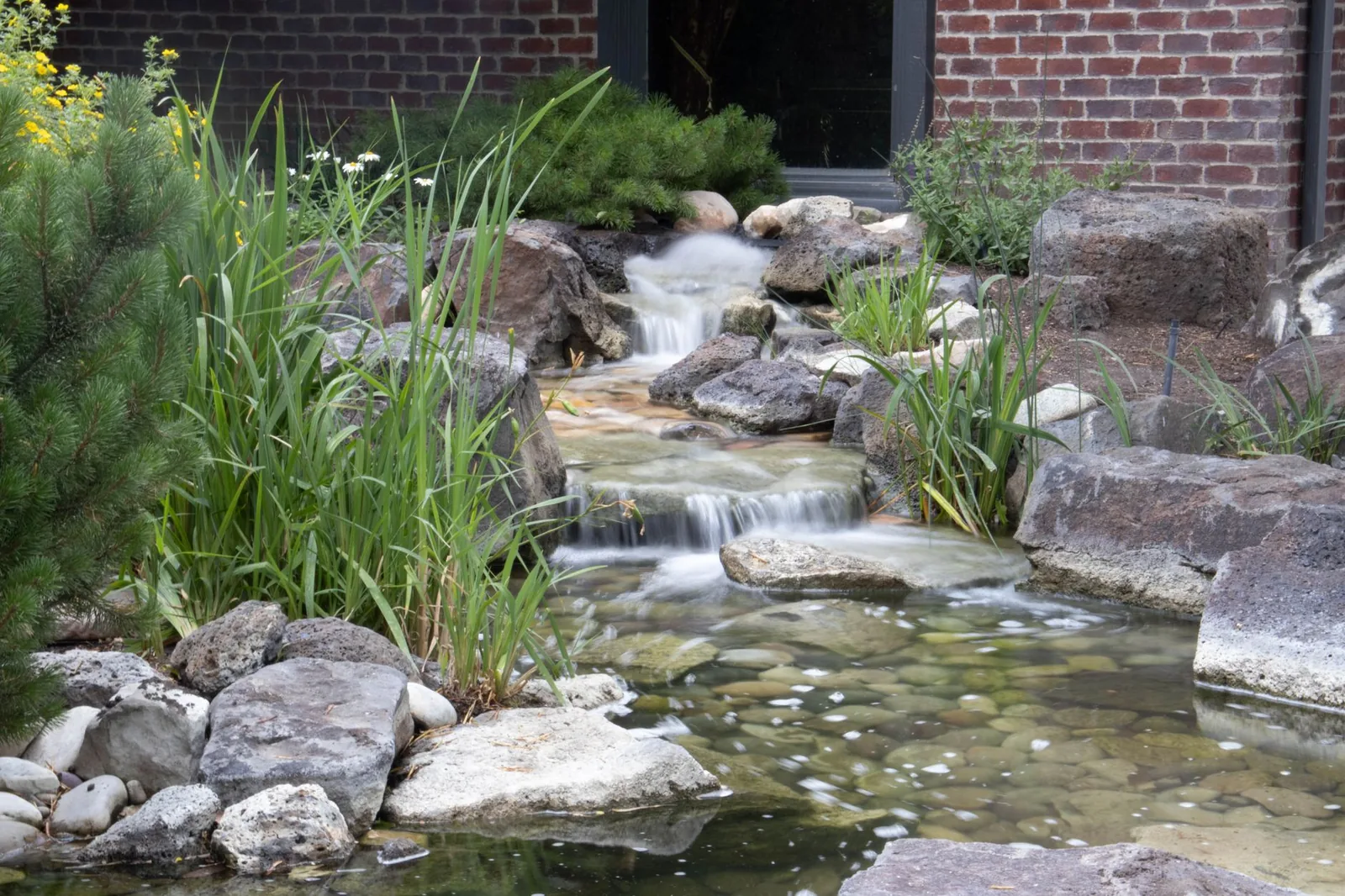
Ponds, pools and water butts all need thinking about, and small dogs are worse placed than large ones.
A dog that falls into a pond with steep sides frequently cannot get out, and a pool cover is not a floor. Fence, cover securely, or supervise — and if you have a pool, teach the dog where the steps are.
Standing water also grows blue-green algae in warm weather, which is rapidly fatal and does not look dangerous. If a pond has a bloom on it, the dog does not go near it at all.
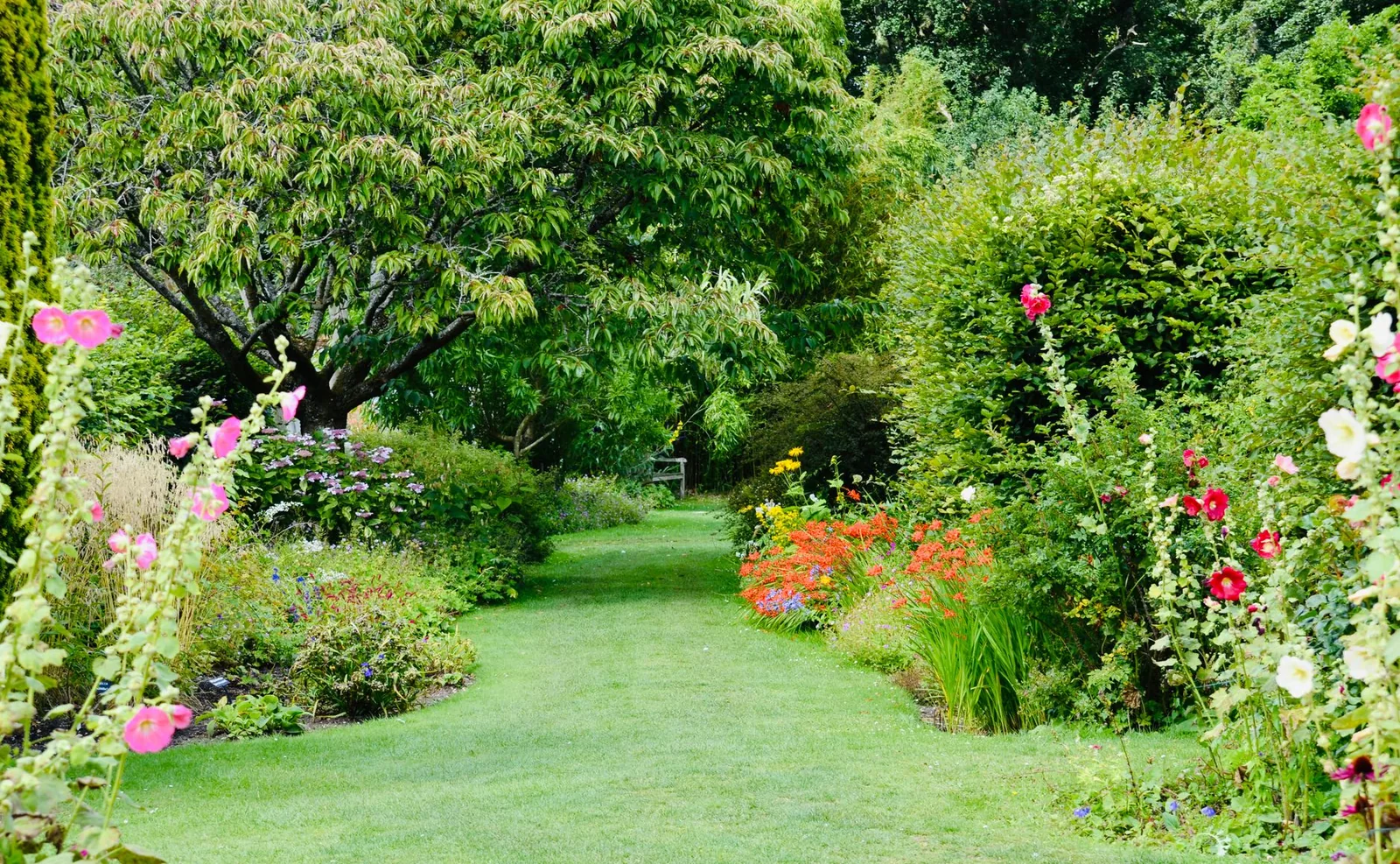
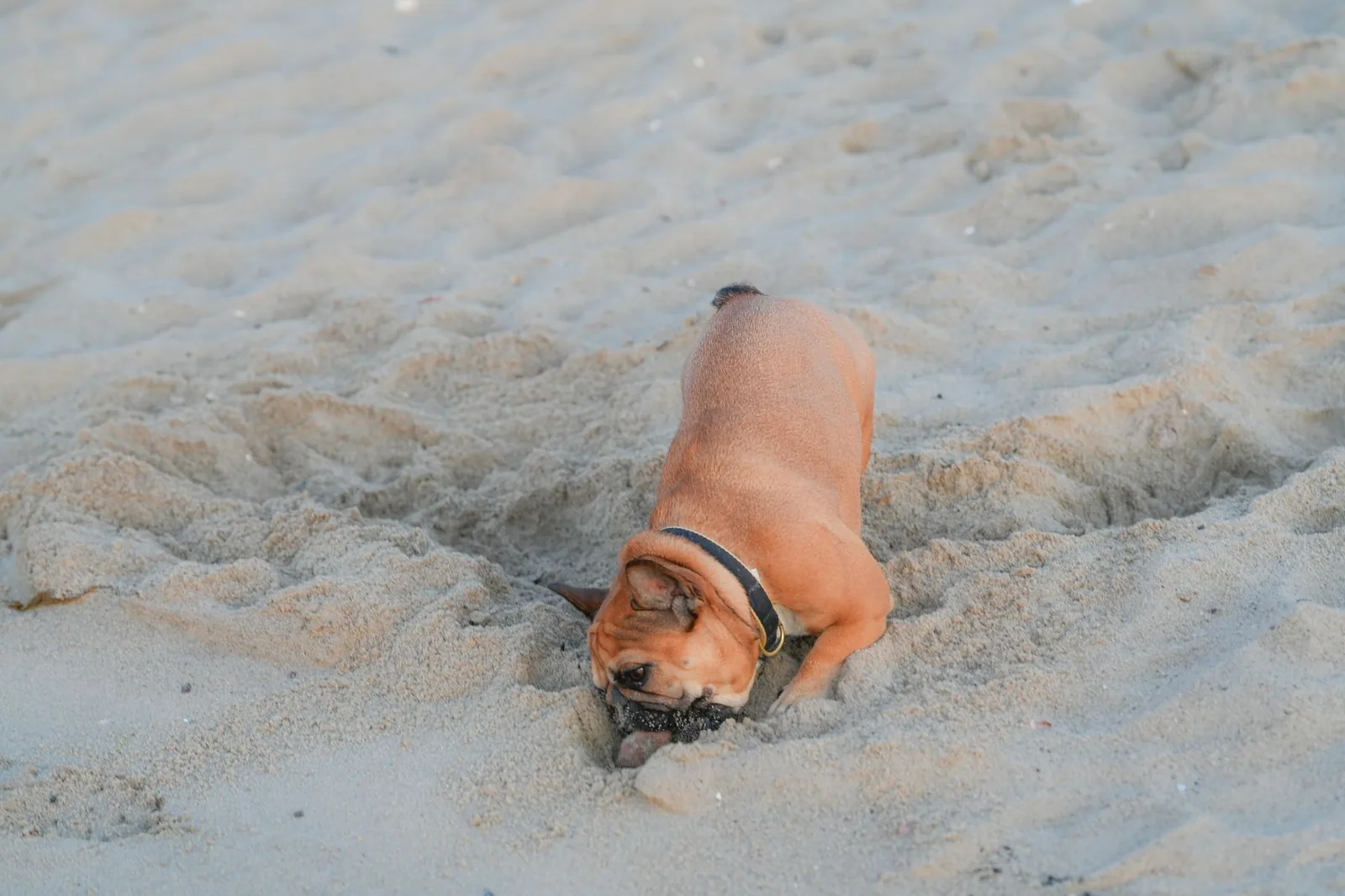
Somewhere legal to dig
Trying to stop a terrier digging is a losing project. Redirecting it works remarkably well and takes an afternoon.
- Pick a corner and define it — a sandpit, a raised bed, a patch edged with timber.
- Fill it with loose sand or soft soil, which is easier to dig than lawn.
- Bury things in it — toys, a chew, something that smells interesting.
- Take the dog there and dig a bit yourself. This is less undignified than it sounds and it works.
- Make the illegal spots dull — chicken wire just under the surface, or stone over the favorite corner.
- Restock it occasionally, so it stays more interesting than the borders.
Persistent digging in one specific spot usually means something is genuinely under it — and escalating digging generally means unspent energy, which is covered in our guide to barking, digging and prey drive.
Seasonal checks
| Season | What to check |
|---|---|
| Spring | Bulbs coming up; fence gaps opened by winter ground movement |
| Summer | Standing water and algae; hot paving; wasp nests |
| Fall | Mushrooms; conkers and acorns; leaf piles hiding hazards |
| Winter | Antifreeze spills; ice on ponds; salt and grit stores |
| Any time | New neighbors, new bait, new plants over a shared fence |
Winter has its own set — cold weather care for a Westie covers ice, salt and the paw problems that come with them.
Frequently asked questions
How do I stop my dog digging under the fence?
Secure the bottom rather than the top. Buried wire mesh turned inward, a gravel trench or paving slabs laid flat along the line all work. Adding height achieves nothing against a digger.
What garden plants are most dangerous to dogs?
Sago palm is the most serious and is frequently fatal. Foxglove, oleander, yew, azalea and autumn crocus are all significant, and spring bulbs matter particularly for dogs that dig borders.
Is compost dangerous for dogs?
Yes. Moldy decomposing material contains mycotoxins that cause tremors and seizures, and terriers dig into heaps readily. Fence it securely or use a sealed bin.
How do I give my terrier somewhere to dig?
Define a corner with loose sand or soft soil, bury toys and chews in it, and take the dog there to start it off. Then make the illegal spots dull with wire just under the surface or stone.
Is a garden pond safe with a small dog?
Only if fenced, covered or supervised. Steep-sided ponds are hard for a small dog to climb out of, and standing water can grow blue-green algae in warm weather, which is rapidly fatal.
Why we ask about the yard
Fencing comes up in every adoption conversation, and this is why. It is rarely about whether you have a yard and almost always about whether the bottom of the fence holds.
What actually happens at a home visit explains what a visitor looks at, and our adoptable dogs page notes which dogs need secure fencing specifically.