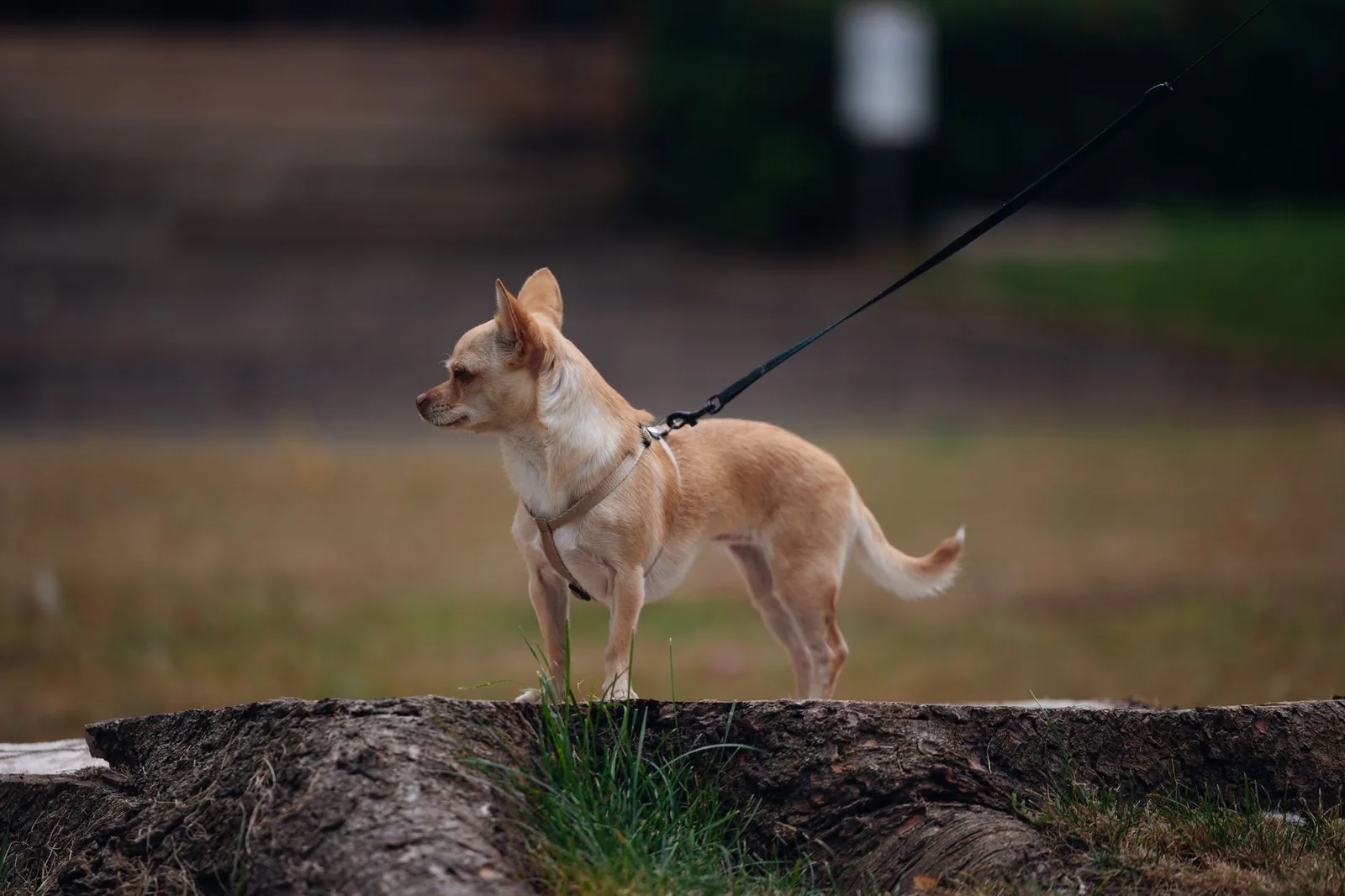
A dog that walks politely off lead and turns into a barking, lunging problem the moment another dog appears on a walk is not being aggressive. In most cases it is frustrated or frightened.
The leash is a large part of the cause, which is why the behavior often looks dramatic and the same dog is fine in a park.
The short version
- Most leash reactivity is frustration or fear, not aggression.
- Distance is the whole tool. Find the distance where your dog can still think.
- Reward noticing calmly, rather than waiting for the reaction and correcting it.
- Punishment adds a bad association to the trigger and reliably makes it worse.
Why the leash makes it worse
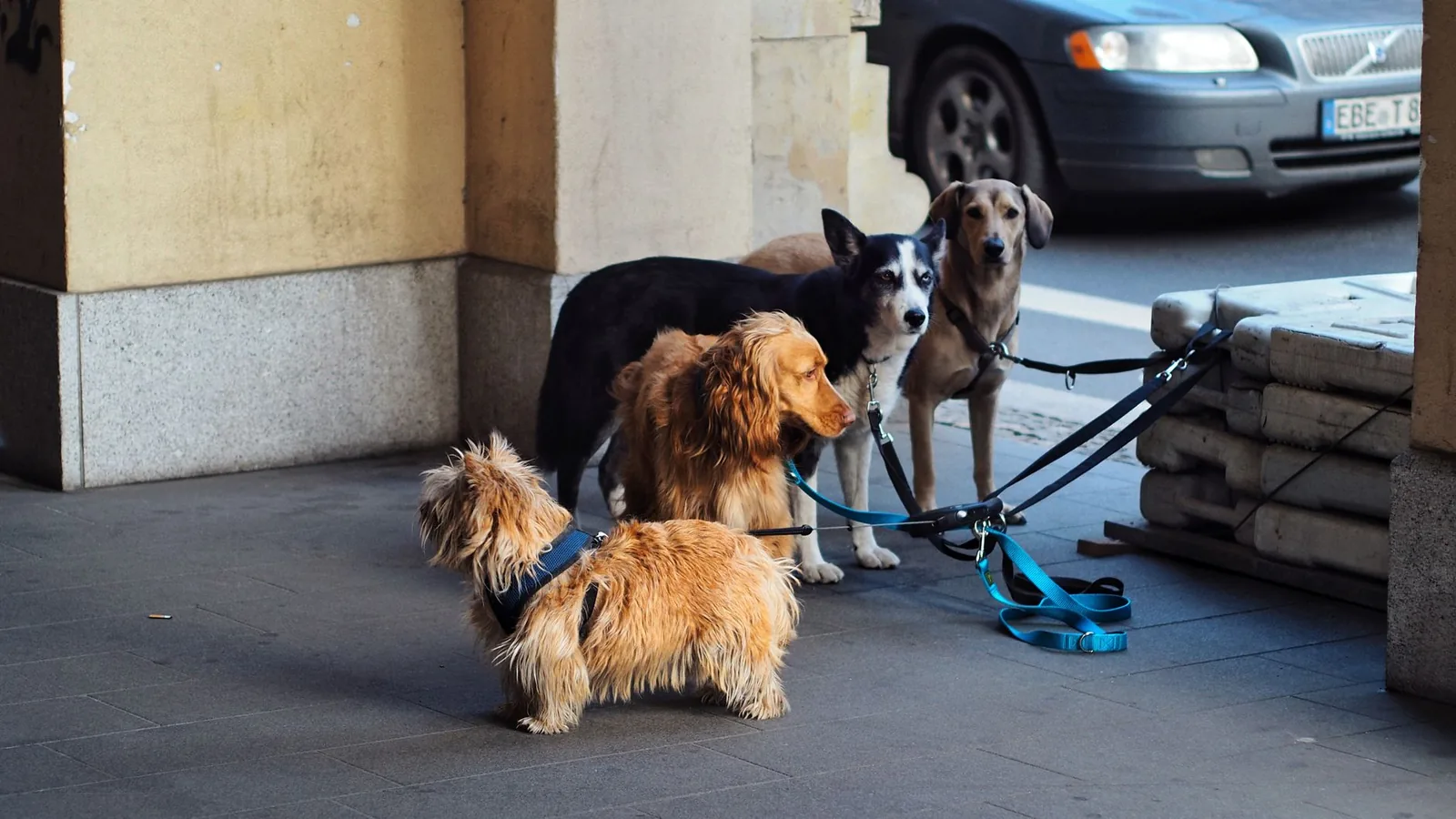
Off lead, an uncomfortable dog increases distance — it curves away, sniffs the ground, or leaves. On lead all of that disappears. The dog is held facing something it wants to avoid or reach, and the tension travels down the leash from a handler who has already braced.
What is left is the only strategy available: make the thing go away by being loud. It appears to work, because the other dog does pass, which teaches the dog to repeat it.
Which kind you have
| Type | What it looks like | What it needs |
|---|---|---|
| Frustrated greeting | Whining, straining forward, tail high and loose | Impulse control and calm greetings |
| Fear-based | Barking with weight shifted back, hackles up, retreating if allowed | Distance and counter-conditioning |
| Barrier frustration | Fine off lead, explosive on lead or behind a fence | Management plus training |
| Learned | Started as one of the above, now habitual | Same method, longer |
| Pain-related | New in an adult dog, or worsening suddenly | A veterinary check before any training |
That is particularly true in an older dog — our guide to arthritis and mobility covers how often irritability turns out to be joints.
Finding the threshold
The threshold is the distance at which your dog notices another dog but can still respond to you and take food. Everything useful happens on the far side of it.
To find it, walk somewhere you can see other dogs at a long distance and simply watch yours. Note the point where it stiffens, stares, or stops taking treats. That is the edge; work further back than that.
Most people start far too close. If your dog will not eat, you are over threshold and nothing is being learned except that other dogs mean tension.
The method
- See the other dog first. Scan ahead constantly; your advantage is noticing before your dog does.
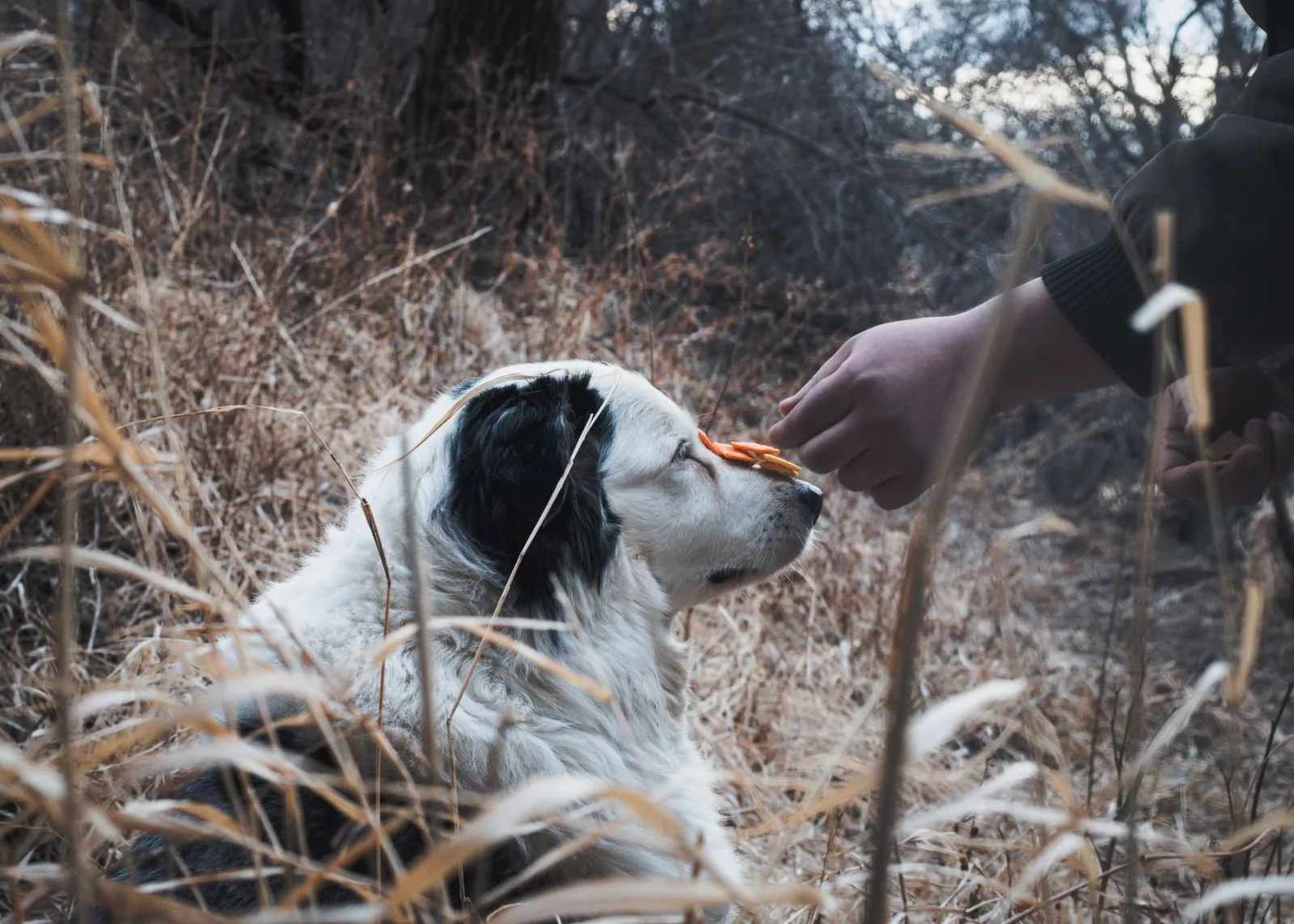
- Mark the moment your dog notices, calmly, and feed. You are rewarding the noticing, not the ignoring.
- Feed continuously while the trigger is visible, and stop the moment it is gone. The contrast is what teaches.
- Move away if the dog cannot eat. Add distance rather than pushing through.
- Close the distance in small steps over weeks, never in one session.
- Use high-value food reserved for this, not the usual biscuits. You are competing with a strong emotion.
The second point matters most: rewarding the dog for looking changes what the other dog predicts, which is the mechanism.
The Academy for Dog Trainers publishes evidence-based training resources and a directory of certified trainers, which is the route if you want help rather than an article.
Management while you train
Every reaction rehearses the behavior. Management is not cheating; it is what stops the training being undone between sessions.
- Walk at quiet times — early morning and late evening.
- Choose open routes where you can create distance rather than narrow paths.
- Cross the road early, before your dog fixates.
- Use a U-turn cue taught in advance, so leaving is cheerful rather than panicked.
- Put a barrier between — a parked car, a hedge, your own body.
- Skip walks occasionally and use enrichment instead. A bad walk is worse than no walk.
Ten minutes of nosework at home beats a walk that ends in three explosions — our guide to enrichment that tires a terrier covers the alternatives.
What not to do
| Approach | Why it backfires |
|---|---|
| Correcting the lunge | Adds pain or fear to the sight of another dog |
| Tightening the leash on approach | Your tension becomes part of the trigger |
| Forcing a greeting | Removes the distance the dog was asking for |
| Prong or spray collars | Suppresses the display, raises the underlying fear |
| Flooding at a busy park | Repeated panic sensitizes rather than habituates |
| Telling the dog off afterwards | Poisons your presence during the trigger |
Realistic expectations
Weeks to months for meaningful change, and the endpoint is usually a dog that passes another calmly at a reasonable distance — not one that wants to play with everybody. That is a perfectly good outcome.
Setbacks happen, usually after a surprise encounter. One bad week is not lost progress — building confidence in a fearful dog covers why regression is normal.
Frequently asked questions
Is leash reactivity aggression?
Usually not. Most of it is frustration at not being able to greet, or fear at not being able to create distance. The display looks alarming but the motivation is different.
Why is my dog fine off lead but reactive on it?
Off lead a dog can increase distance, curve away or leave. On lead all of those options are removed, and the only strategy left is to make the other dog go away by being loud.
What is a threshold in dog training?
The distance at which your dog notices a trigger but can still respond to you and take food. Training works below that distance; above it the dog cannot learn.
Will my reactive dog ever be normal?
Most improve substantially. The realistic goal is a dog that passes others calmly at a reasonable distance, rather than one that wants to greet everybody — which is a fine outcome.
Do prong or spray collars help reactivity?
No. They suppress the display while leaving the underlying fear or frustration, and they add pain to the sight of another dog. That can turn a noisy dog into a silent one that bites.
Reactive dogs in rescue
Leash reactivity is one of the commonest things foster carers report, and it reads far worse on a listing than it is to live with.
A dog described as reactive on lead usually needs quiet routes and a patient handler rather than an expert. Our adoptable dogs page says which dogs need that, and how rescues assess temperament explains how the notes are reached.
If it is making walks miserable enough to reconsider the adoption, our guide to what happens when an adoption is not working is worth reading before you decide anything.