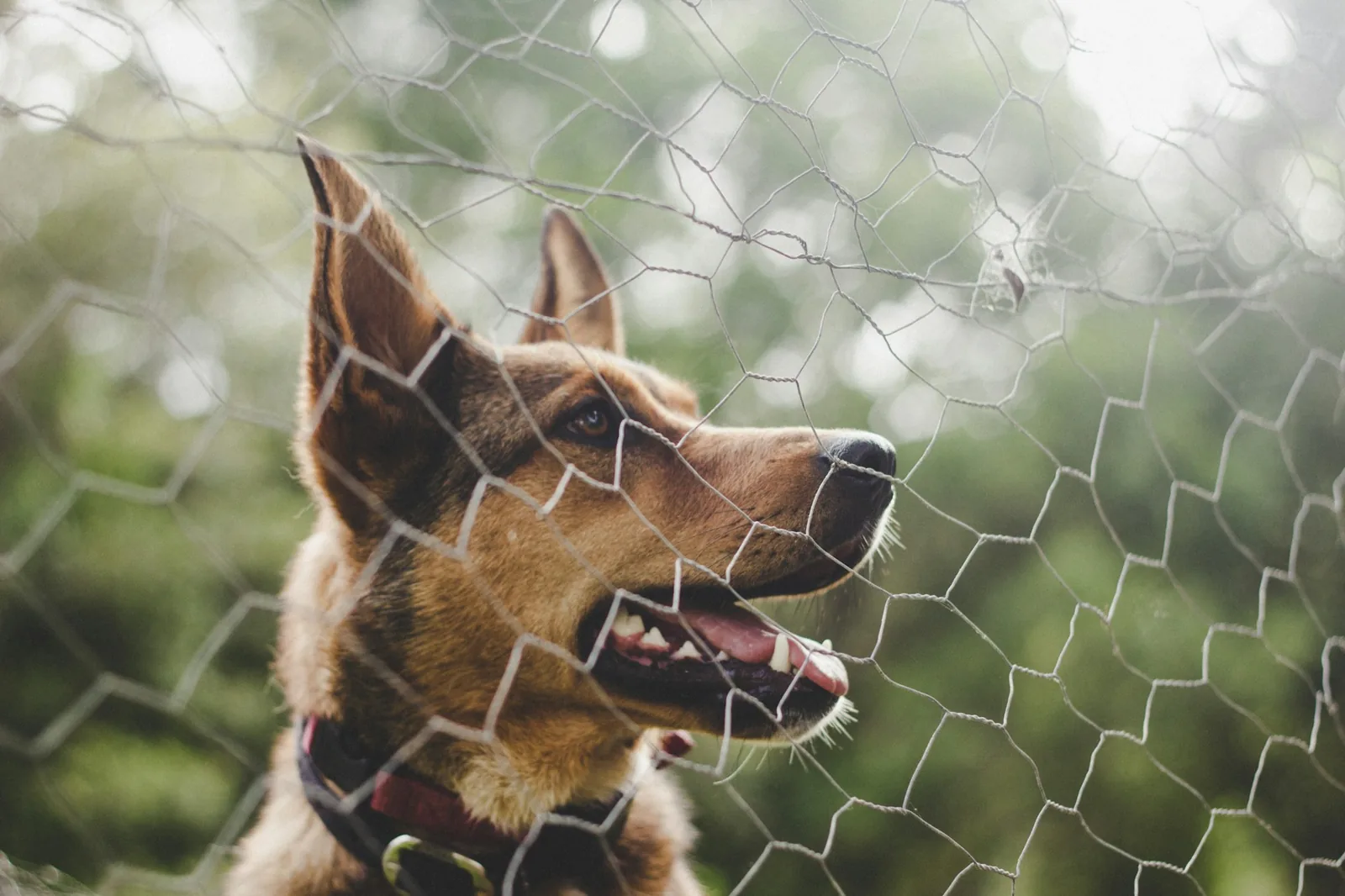
Terriers were bred to follow quarry underground. That instinct does not stop at a fence line, and it explains both how they escape and why they are so hard to recover once out.
Two things matter here, and both run against instinct: secure the ground rather than the height, and if your dog does get out, do not chase it.
The short version
- Terriers dig under and squeeze through. Height is rarely the weak point.
- The highest-risk window is the first two weeks after adoption.
- A microchip only works if the registration details are current. Most are not.
- Never chase or call a frightened loose dog. Both make it run further.
How terriers actually get out
| Route | Why it happens | The fix |
|---|---|---|
| Digging under | The original job description | Buried wire mesh, gravel trench or a concrete footer along the line |
| Gaps at gate posts | A 15-pound dog fits through less than you think | Close anything wider than four inches |
| Gate left unlatched | The single most common cause | Self-closing hinge and a spring latch, not a drop bolt |
| Following a person out | Doors opening to deliveries and visitors | A baby gate set back from the front door |
| Slipping a collar | A frightened terrier reverses out of a flat collar | A properly fitted harness, always |
| Bolting after prey | Squirrel, cat, rabbit — recall does not compete | Long line in any unfenced space |
The first two weeks are the danger
A newly adopted dog has no bond to hold it, no attachment to the house, and no reason to come back. Most rescue dogs that are lost are lost in week one.
Use a harness with a tag from the first day, keep the dog on lead in the yard until you have watched it test the boundary, and warn everyone about doors. This is one reason our adoption process includes a home visit.
The wider picture of that period is in what to expect in the first 30 days with a rescue Westie.
Identification that actually works
- Update the microchip registration. A chip with a previous owner’s disconnected number is functionally no chip at all. Do this on adoption day.
- Put a tag on the harness, with a mobile number rather than a name and address.
- Add a second contact on the tag or the chip record, in case you are unreachable.
- Photograph the dog properly, including any distinctive markings, from the side and front. A generic white terrier photo helps nobody.
- Check the chip scans at the next vet visit. They occasionally migrate or fail.
If your dog gets out: the first hour
This is where most people do the wrong thing with the best intentions. A loose dog in an unfamiliar place is usually in flight mode, and a running, shouting human is a threat.
| Instinct | What actually works |
|---|---|
| Chase the dog | Stop moving. Sit or crouch, side-on, and look away |
| Call its name urgently | Stay quiet, or talk calmly to somebody else |
| Spread out and search wide | Search close first — frightened dogs usually stay within a mile |
| Approach directly | Let the dog come to you. Scatter food and wait |
| Post everywhere immediately | Post locally and specifically, with a clear photo and one number |
| Assume it has run far | Check under decks, sheds, hedges and parked cars nearby |
The Missing Animal Response Network publishes search methods based on how lost dogs actually behave, including why the calming approach works better than pursuit.
What to do beyond the first hour
- Leave scent at the escape point — a worn item of clothing and the dog’s bed, outside the door.
- Call the microchip registry and flag the chip as missing.
- Contact every shelter and vet within a fifteen-mile radius, and repeat daily rather than once.
- Post in local neighborhood groups with one clear photograph and one phone number.
- Ask people to report sightings, not to catch the dog. Well-meaning pursuit pushes a frightened dog out of the area.
- Search at dawn and dusk, when a frightened dog moves.
Off-leash: the honest answer
Most Westies are never reliably off leash in unfenced open ground. Recall does not compete with a moving squirrel, and no amount of training makes it reliable enough to bet on near a road.
That is not a failure of training. It is the breed doing what it was selected for over a couple of centuries.
A long line gives most of the freedom with none of the risk. Our guide to prey drive and terrier behavior covers the disengagement training that makes walks manageable.


Frequently asked questions
How do I stop my terrier digging under the fence?
Secure the bottom rather than the top. Buried wire mesh turned inward, a gravel trench or a concrete footer along the fence line all work. Height is rarely the weak point with a terrier.
What should I do first if my dog runs off?
Stop moving and stop calling. Crouch side-on, look away, and let the dog approach. Chasing and shouting both push a frightened dog further, which is the opposite of what you want.
How far do lost dogs usually go?
Frightened dogs often stay within a mile of where they were lost, hiding under decks, sheds, hedges and cars. Search close and thoroughly before widening out.
Does a microchip help if my dog is lost?
Only if the registration is current. A chip still listing a previous owner or a disconnected number cannot return your dog. Update it on adoption day and check it scans at vet visits.
Can a Westie ever be let off leash?
In securely fenced areas, yes. In open unfenced ground most cannot be trusted, because prey drive overrides recall. A long line is the practical compromise.
Why we ask about fencing
Fencing comes up in every adoption conversation, and it is not box-ticking. A frightened dog with no bond and no recall, loose near a road, is the outcome the question exists to prevent.
It rarely rules anyone out. It changes which dog suits — what makes an adoption application strong explains how that assessment works, and our adoptable dogs page notes which dogs need secure fencing specifically.
If a dog you have lost is not yours to begin with, or you have found one, our New England coverage page explains how to reach us, and the surrender and rehoming page is the right route for a stray nobody claims.