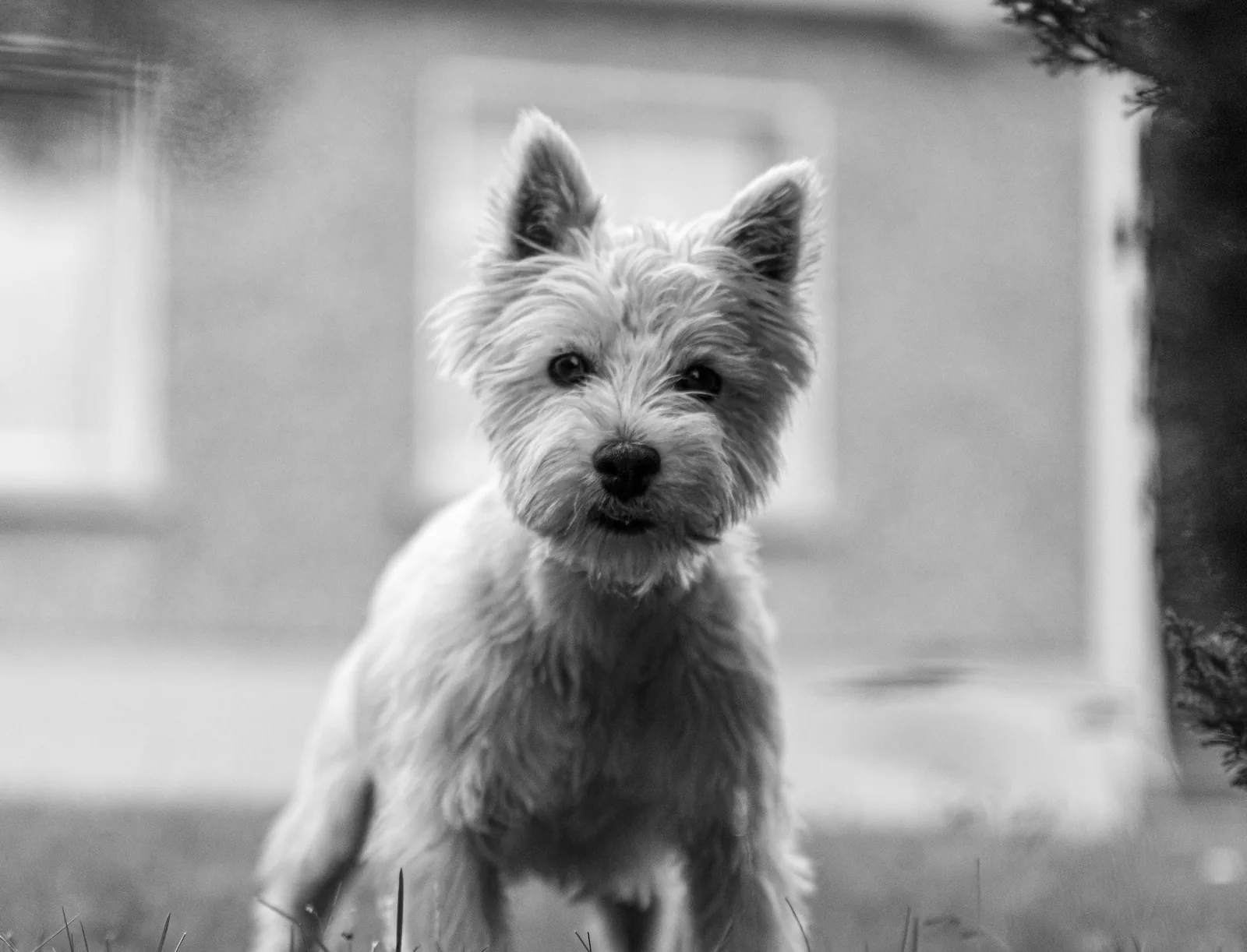
Westies, Cairns and Scotties come from the same corner of Scotland and were once bred from overlapping stock. People mix them up constantly.
It matters more than it sounds. Breed rescues can generally only take their own breed, so a misidentified dog gets sent to the wrong door.
The quick answer
- Westie: always white, upright pointed ears, rounded head, the most outgoing of the three.
- Cairn: any color but white, shaggier and more natural-looking, slightly smaller.
- Scottie: longer body, distinctive beard and eyebrows, usually black, the most reserved.
- All three are working terriers. None is a low-maintenance lap dog.
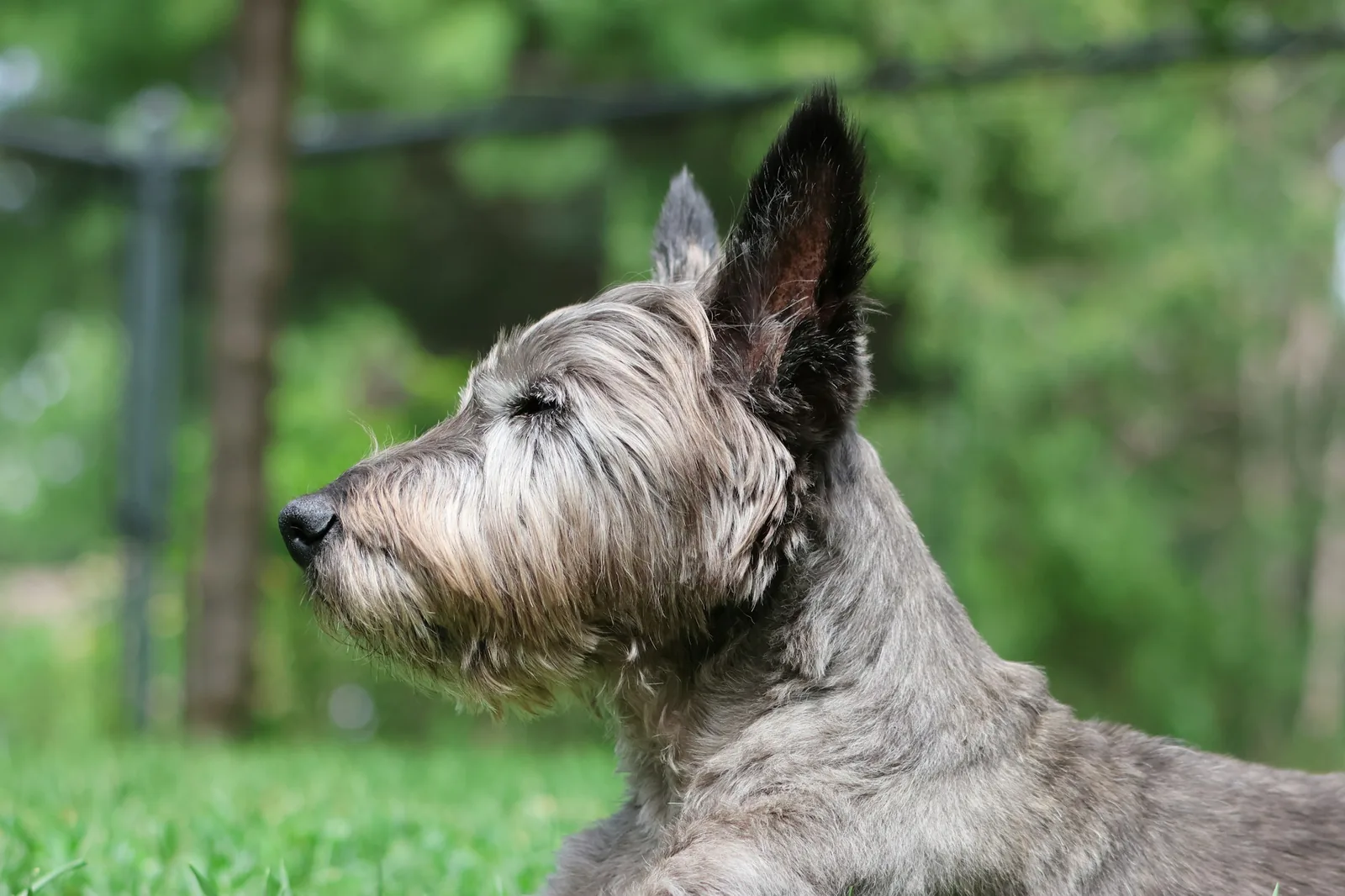
The three breeds side by side
| West Highland White Terrier | Cairn Terrier | Scottish Terrier | |
|---|---|---|---|
| Height | 10–11 in | 9–10 in | 10 in |
| Weight | 15–20 lb | 13–14 lb | 18–22 lb |
| Build | Compact, square | Small, sturdy, shaggy | Long-bodied, low-slung |
| Coat color | White only | Any color except white | Black, wheaten or brindle |
| Head | Rounded, short muzzle | Broad, wide-set eyes | Long, with beard and eyebrows |
| Ears | Small, pointed, erect | Pointed, erect, slightly larger | Pointed, erect, set high |
| Tail | Carrot-shaped, upright | Short, upright | Upright, slightly thicker at base |
| Temperament | Outgoing, merry, confident | Busy, sensible, adaptable | Dignified, reserved, independent |
| With strangers | Friendly | Friendly but alert | Aloof |
| Lifespan | 12–16 years | 13–15 years | 11–13 years |
The Kennel Club publishes the full West Highland White Terrier breed standard if you want the formal description against which show dogs are judged.
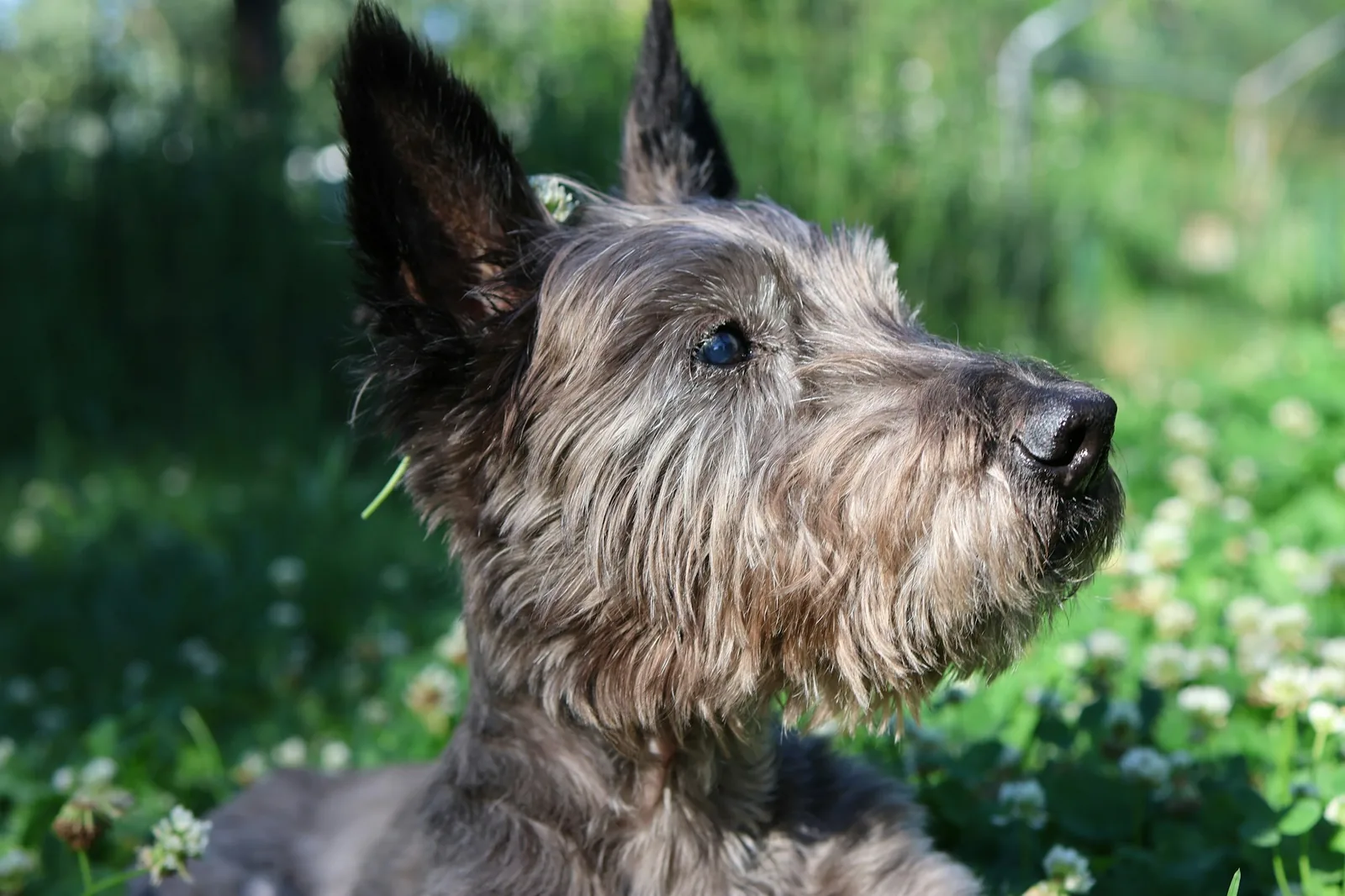
How to tell which one you are looking at
Three checks settle it in almost every case, in this order.
- Color first. Pure white means Westie. Cairns are specifically not white. Scotties are almost always black or dark brindle.
- Then body length. A Scottie is noticeably longer than it is tall. A Westie is close to square.
- Then the face. A pronounced beard and long eyebrows over a long muzzle is a Scottie. A rounded head with a short muzzle and a soft expression is a Westie. A broad head with a shaggy, unshaped look is a Cairn.
A common point of confusion: a Cairn can be very pale cream and look almost white in some light. Check the ear tips and the roots of the coat, which stay darker.
Living with each of them
| Westie | Cairn | Scottie | |
|---|---|---|---|
| Energy | Moderate to high | High | Moderate |
| Exercise needed | About an hour daily | About an hour, plus mental work | 45–60 minutes |
| Barking | Moderate to high | High | Moderate |
| Trainability | Willing but stubborn | Quick, easily bored | Independent, slow to comply |
| With children | Good with older children | Generally good, robust | Better with respectful older children |
| With other dogs | Usually fine | Usually fine | Can be same-sex reactive |
| With cats | Often poor | Often poor | Often poor |
| Alone time tolerance | Low | Low | Moderate |
| First-time owners | Case by case | Case by case | Usually not |
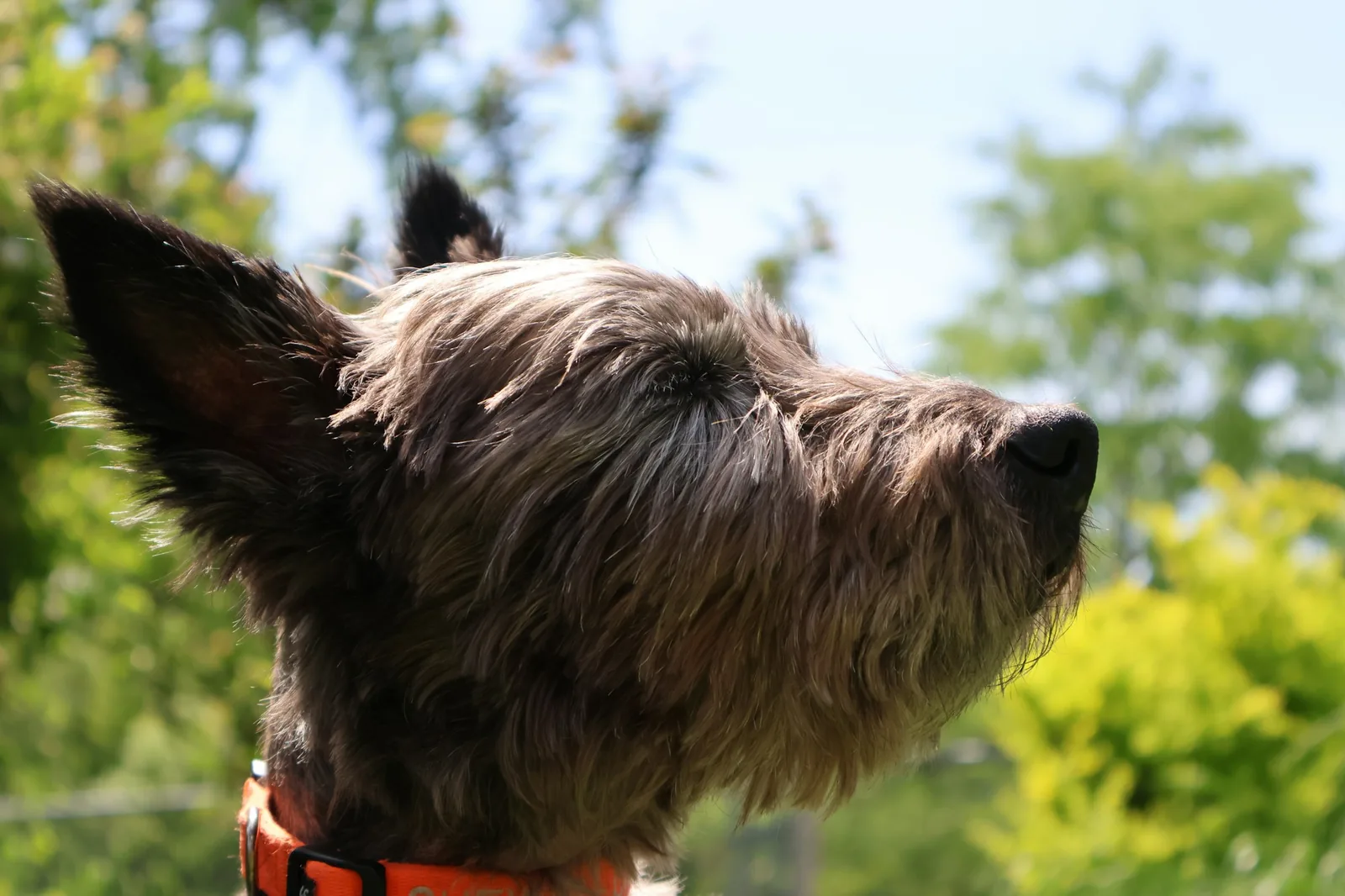
Grooming and health
| Westie | Cairn | Scottie | |
|---|---|---|---|
| Coat type | Harsh double coat | Harsh, shaggier double coat | Harsh, long furnishings |
| Professional grooming | Every 6–10 weeks | Every 8–12 weeks | Every 6–8 weeks |
| Home brushing | 2–3 times a week | 2 times a week | 3 times a week |
| Shedding | Low | Low | Low |
| Signature health risk | Atopic dermatitis, Westie lung | Generally robust; portosystemic shunt | Von Willebrand disease, Scottie cramp |
| Shared risks | Patellar luxation, dental disease | Patellar luxation, dental disease | Patellar luxation, dental disease |
The Westie column is covered in depth in our guide to the health problems this breed is prone to, and coat care in our guide to Westie grooming and coat texture.
Which one suits you?
- Choose a Westie if you want the most sociable of the three and can commit to grooming and possible skin management.
- Choose a Cairn if you want a busy, hardy, low-fuss terrier and can keep a clever dog occupied.
- Choose a Scottie if you want a dignified, self-contained dog and do not need one that greets everybody.
- Choose none of them if you want a quiet dog that can be left for long days and trusted off leash.
If it is the Westie you keep coming back to, our honest guide to whether Westies suit your household goes considerably further than a breed comparison can.
Frequently asked questions
What is the difference between a Westie and a Cairn Terrier?
Color is the reliable one: Westies are always white, and Cairns are any color except white. Westies are also slightly larger, more squarely built and generally more outgoing with strangers.
Are Westies and Scottish Terriers related?
Yes. Both descend from the working terriers of the Scottish Highlands, along with the Cairn, Skye and Dandie Dinmont. They were separated into distinct breeds in the late nineteenth century.
Which is calmer, a Westie or a Cairn?
Westies are usually a little calmer indoors; Cairns tend to be busier and bore more easily. Neither is a low-energy breed, and both bark.
Can breed rescues take mixes?
It varies. Many breed rescues, including ours, will consider Westie mixes where the breed is clearly predominant. Ask rather than assume.
Which of the three is best for a first-time owner?
A Westie or a Cairn, with realistic expectations. Scotties are the most independent and the least forgiving of inconsistent training.
If you think you have a Westie
We cover West Highland White Terriers and Westie mixes across New England. If you are unsure what your dog is, send us a photograph through the contact page and we will tell you honestly, including when the answer is another breed’s rescue.
Our guide to adopting a Westie in New England explains the process, and the Westies currently available for adoption shows who is with us now.