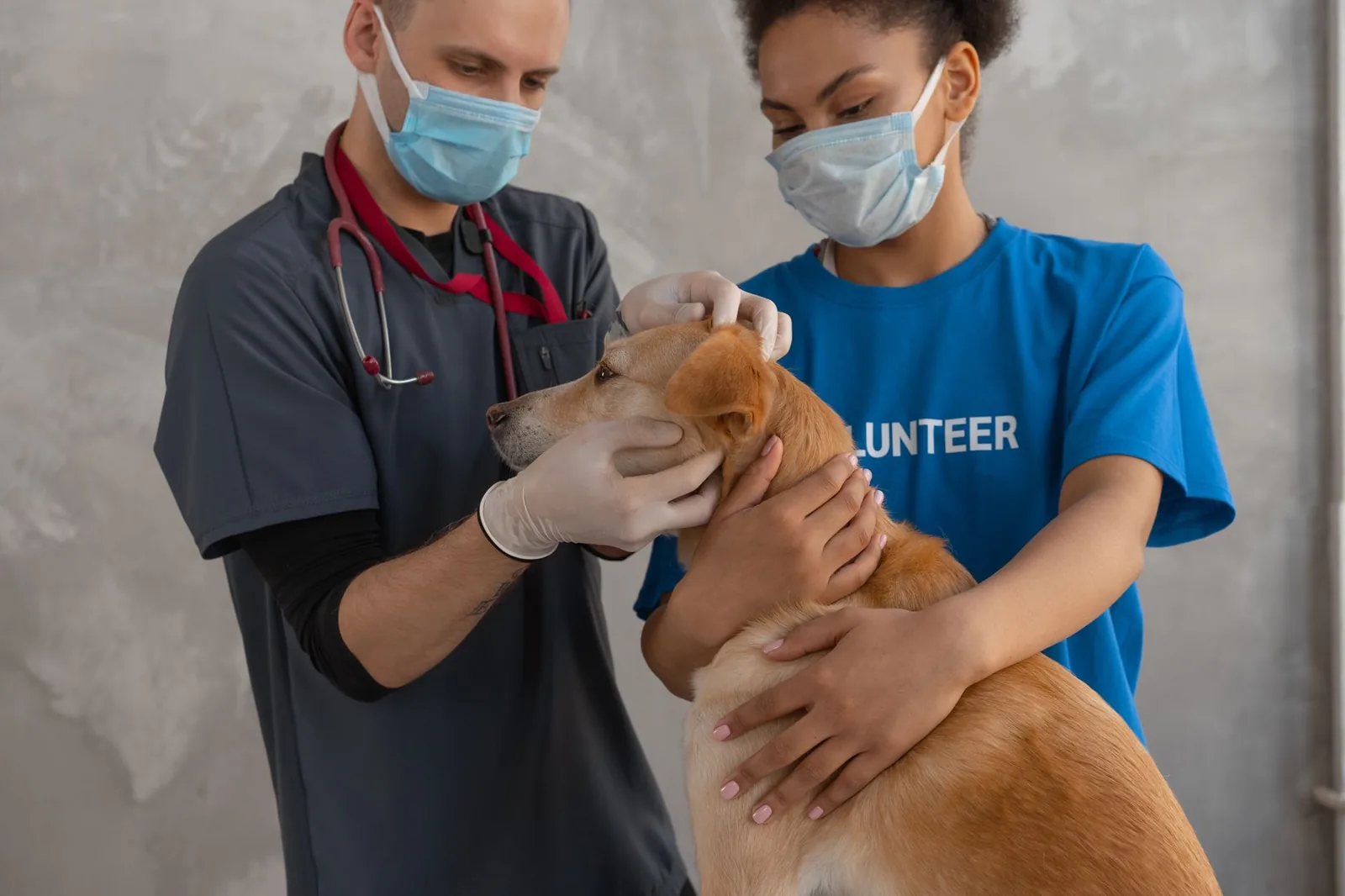
People assume the adoption fee covers the dog. For the dogs breed rescues actually take in, it rarely covers half.
This sets out where the money goes, and how to check any animal charity’s claims yourself rather than taking them on trust.
The short version
- Veterinary care is the overwhelming majority of what a foster-based rescue spends.
- One medically complex dog can cost more than several adoption fees combined.
- A volunteer-run rescue has almost no overhead, which is checkable rather than claimed.
- Any US charity’s filings are public. Look before you give, to anyone.

What taking in one dog costs
These are indicative ranges for the kind of dog a breed rescue typically receives — an owner surrender or bereavement case, usually middle-aged or older, frequently with untreated problems.
| Item | Typical range | How often needed |
|---|---|---|
| Intake examination and bloodwork | $150–$350 | Every dog |
| Vaccinations and microchip | $120–$250 | Most dogs |
| Spay or neuter | $200–$800 | Where not already done |
| Dental treatment with extractions | $500–$2,000 | Very common |
| Skin and ear investigation and treatment | $300–$1,200 | Common in this breed |
| Parasite treatment | $40–$120 | Every dog |
| Ongoing medication while in care | $30–$200 monthly | Frequent |
| Transport and supplies | $50–$200 | Most dogs |
Set that against an adoption fee and the gap is obvious. Our adoption fees page explains what the fee contributes towards, and the veterinary care every rescue Westie receives lists what is completed before placement.
Why foster-based rescues spend differently
A rescue with a building has premises, utilities, insurance and paid staff before it treats a single dog. A foster-based rescue has none of that.
| Cost | Shelter with premises | Foster-based volunteer rescue |
|---|---|---|
| Premises and utilities | Substantial | None |
| Paid staff | Usually the largest line | Usually none |
| Veterinary care | Significant | The overwhelming majority of spending |
| Food and daily supplies | Significant | Largely absorbed by foster carers |
| Transport | Moderate | Volunteer drivers, fuel reimbursed on request |
| Administration | Moderate | Minimal — volunteer time |
That constraint is the honest reason most breed rescues turn dogs away — what fostering actually involves explains what opening one costs a household, which is less than people assume.

How to check any charity, including this one
Do not take a claim about efficiency on trust from anybody. US nonprofits file annually and those filings are public.
- Confirm the registration. A 501(c)(3) can be verified independently through the IRS exempt organizations search.
- Read the Form 990. It shows revenue, expenses by category, and any compensation paid.
- Look at the expense split. For a foster-based animal rescue, program expense should dominate heavily.
- Check for paid staff. Not a red flag in itself, but it should match what the organization says about itself.
- Look for consistency over years, rather than judging a single filing.
- Ask directly. An organization that will not discuss its finances is telling you something.
Candid, which operates GuideStar, aggregates nonprofit filings and transparency data for US charities, and is the simplest starting point for checking any of this.
What different amounts actually buy
| Amount | Roughly covers |
|---|---|
| $25 | A month of parasite prevention, or a bag of prescription food |
| $50 | A month of medication for a dog with managed skin disease |
| $100 | An intake examination, or a course of treatment for an ear infection |
| $250 | Vaccinations, microchip and parasite treatment for one dog |
| $500 | A substantial contribution towards dental surgery |
| $1,000+ | A full dental with extractions, or months of hospice care |
The dental row recurs because dental disease is the most common finding in this breed and the most common thing found untreated at intake — our guide to dental care explains why it tops the list.

The dogs nobody else takes
The reason donations matter more to a breed rescue than the adoption numbers suggest is the dogs that never get adopted at all.
A dog in long-term care generates no adoption fee, ever, and continues to need medication, monitoring and eventually end-of-life care. Those dogs are funded entirely by donations.
Our long-term care and hospice program covers what that involves, and sponsoring a dog in our care is the mechanism that funds a specific dog rather than the general pot.
Ways to help that are not money
- Foster. The single biggest constraint on how many dogs can be taken.
- Transport. Occasional, flexible, and chronically short-handed.
- Home visits. Two hours, and it unblocks an adoption.
- Administration and applications. A backlog here stalls everything behind it.
- Photography. A good photograph shortens how long a dog waits.
- Sharing a listing. Most adopters first heard about a dog from someone they know.
The roles and what each asks are set out in our guide to the volunteer roles beyond fostering.

On giving generally
Give where you can verify what happens to the money, and prefer regular small amounts to occasional large ones. Predictable income is what lets a rescue commit to a dog before knowing what it will cost.
That applies to any organization. You should not need to take our word for it either.

Frequently asked questions
Does the adoption fee cover the dog’s costs?
Rarely, for the dogs breed rescues typically take in. Intake examination, vaccination, spay or neuter and dental treatment alone commonly exceed the fee, before any chronic condition is treated.
How do I check whether an animal charity is legitimate?
Verify the 501(c)(3) registration independently, read the Form 990 for revenue and expenses by category, look at consistency across years, and ask the organization directly. All of it is public.
What proportion of donations should go to the animals?
For a volunteer-run foster-based rescue, program expense should dominate heavily, because there are no premises and usually no salaries. Compare what the filings show against what the organization says about itself.
Is it better to donate money or supplies?
Usually money, because veterinary care is the overwhelming cost and cannot be donated in kind. Supplies help foster carers, but treatment is what the funding gap actually is.
What is the most useful thing I can do if I cannot donate?
Foster, if you possibly can — it is the constraint on how many dogs can be taken. Transport, home visits, application processing and photography all directly unblock adoptions.

If you want to help
Sponsoring a dog in our care funds a named dog’s treatment, and our donations page covers general giving. Our tax information page has the registration details you would need to verify any of the above.
And if you are reading this because you are worried about affording your own dog’s care, that is a different conversation — our guide to planning for veterinary costs covers the options, and contacting us early is better than late.